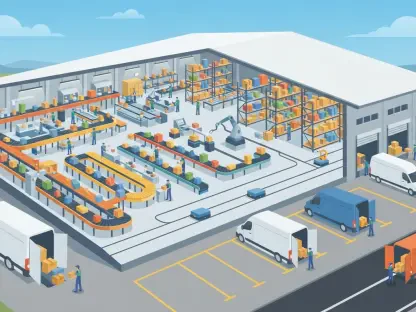

The logistical landscape across the United Kingdom is currently experiencing a profound and irreversible paradigm shift that has moved beyond the simple adoption of digital tools toward a complete structural overhaul driven by necessity. This evolution signifies that technology investment has transitioned from an optional enhancement to a fundamental requirement for maintaining operational viability in a globalized economy. As the complexities of modern supply chains intensify, industry leaders are increasingly aware that sticking to legacy methodologies is no longer a sustainable strategy for growth. Strategic automation and digital integration are now central themes in boardrooms, as firms strive to navigate a world where speed, transparency, and data accuracy are the primary currencies of success. The current market dynamics demand a high degree of agility, forcing companies to reconsider their long-term roadmaps to ensure they remain competitive against international peers who have already embraced rapid innovation.
Accelerating the Digital Roadmap
Implementation Priorities: Artificial Intelligence and Cybersecurity
Recent data indicates that technology budgets have expanded significantly as organizations recognize the critical role of advanced software in securing their future operations. Cybersecurity has surged to the forefront of executive priorities, as the interconnected nature of modern logistics makes networks more vulnerable to sophisticated digital threats. Alongside this defensive posture, artificial intelligence has become a cornerstone of the sector’s modernization efforts, with a specific focus on optimizing complex decision-making processes. Companies are deploying AI-driven algorithms to manage everything from predictive maintenance for vehicle fleets to real-time demand forecasting and warehouse optimization. This dual focus on protection and intelligence ensures that businesses can withstand disruptions while simultaneously improving their profit margins through enhanced efficiency. By integrating these high-tech solutions, the industry is creating a resilient framework that can adapt to the unpredictable shifts of the global market.
The Investment Paradox: Navigating the Confidence Gap
While the availability of capital for technological upgrades remains relatively high, there is a distinct and troubling disconnect between financial readiness and the actual commencement of major projects. Many logistics providers have opted to delay or even cancel significant investments over the past eighteen months, reflecting a cautious approach in the face of broader economic uncertainty. This hesitation is largely attributed to external pressures such as stagnant business growth and a perceived lack of clear direction from government policy makers regarding future transport regulations. Despite having the resources and a clear desire to modernize, executives are finding it difficult to justify massive capital expenditures when the political and economic landscape remains so volatile. This paradox suggests that while the industry is technically prepared for a digital leap, it requires a more stable environment to transform its ambitious plans into reality. Bridging this confidence gap is essential for maintaining the momentum of the sector’s digital transformation.
Overcoming Structural and Regulatory Obstacles
Physical Foundations: Infrastructure and Decarbonization Needs
The physical efficiency of the UK logistics sector remains deeply intertwined with the quality and reliability of national infrastructure, spanning from port facilities to rail and road networks. For many operators, the ongoing transition to greener energy and electric fleets is currently hindered not by a lack of vehicle technology, but by the inadequacy of the national charging grid. Decarbonization goals are increasingly seen as unattainable without a significant and sustained commitment from the government to improve the underlying physical assets that support heavy transport. Industry leaders emphasize that the modernization of the supply chain must happen in tandem with infrastructure upgrades to prevent bottlenecks that stifle productivity. Without a robust and future-proof network of roads and specialized charging hubs, even the most advanced logistics firms will struggle to meet their sustainability targets. Addressing these infrastructure gaps is therefore a prerequisite for the industry to fully realize the benefits of its recent technological and digital investments.
Forward Strategy: Fiscal Pressures and Regulatory Stability
Industry leaders recognized that the path forward necessitated a fundamental recalibration of fiscal and regulatory frameworks to support long-term investment. Organizations prioritized the reduction of administrative friction and advocated for clearer guidelines regarding employment taxes and fuel duties to restore operational confidence. Stakeholders implemented more collaborative models between private logistics firms and public authorities to ensure that national policy aligned with the rapid pace of technological advancement. Successful businesses moved beyond reactive measures and established proactive strategies for workforce training in anticipation of an AI-augmented workplace. This proactive stance allowed the sector to bridge the gap between financial potential and tangible modernization, ensuring that digital resilience became a permanent fixture of the supply chain. Ultimately, the industry shifted its focus toward holistic system integration, which paved the way for more sustainable and efficient transport networks across the region.