
The relentless pace of digital commerce is exerting unprecedented pressure on the physical world, stretching traditional supply chains to their breaking point. In an environment where consumer expectations for speed and accuracy are non-negotiable, the conventional warehouse model is proving to be fundamentally insufficient. This analysis delves into the rise of smart logistics infrastructure—a sophisticated ecosystem powered by automation, robotics, and artificial intelligence—as the indispensable solution for modern commerce. By examining market growth, a pivotal real-world partnership, and expert perspectives, a clear picture emerges of the future of this transformative trend.
The Accelerating Adoption of Smart Logistics
Market Growth and Investment Momentum
The Asia-Pacific (APAC) logistics market is at the forefront of this transformation, projected to expand at a compound annual growth rate (CAGR) of 15.2% between 2026 and 2030. This rapid expansion positions it as the fastest-growing logistics region in the world, signaling a monumental shift in global trade dynamics. The momentum is not speculative; it is anchored in powerful structural trends that are reshaping economies across the globe.
Fueling this growth is a convergence of factors that make automation a necessity rather than a choice. The sustained expansion of e-commerce continues to drive demand for faster, more efficient fulfillment centers. Simultaneously, demographic shifts, including aging populations in key markets, and rising labor costs are compelling companies to seek automated solutions. Furthermore, ongoing efforts by multinational corporations to rationalize and fortify their supply chains have intensified the need for modern, technologically advanced logistics hubs.
This robust demand has, in turn, sparked a wave of significant investment. Major players are demonstrating their confidence in the sector through substantial capital commitments. For instance, a leading asset manager like CapitaLand Investment (CLI) has already deployed approximately S$500 million ($390 million) into logistics developments across Southeast Asia in recent years, a clear indicator of the financial community’s belief in the long-term viability and growth potential of smart infrastructure.
Real World Implementation The CapitaLand ALP Partnership
A prime example of this trend in action is the strategic alliance between CapitaLand Investment and smart logistics specialist Ally Logistic Property (ALP). CLI’s minority investment in ALP moves beyond a simple financial transaction, creating a powerful synergy that integrates investment capital with deep technological and operational expertise. This partnership model is rapidly becoming the blueprint for developing next-generation logistics facilities capable of meeting complex modern demands.
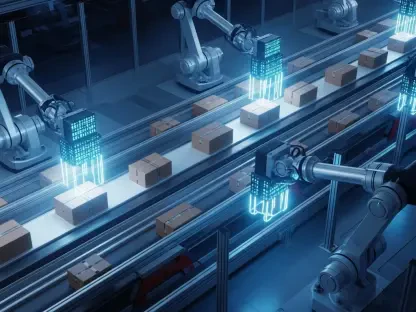
The collaboration’s flagship project, OMEGA 1 Singapore, crystallizes this vision. Set for completion in 2028, the S$260 million ($203 million) facility is being developed in the strategic Jurong Industrial Estate. This five-story, 71,000-square-meter hub is designed from the ground up for automation, featuring an advanced Automated Storage and Retrieval System (ASRS), sophisticated robotics, and a fleet of Automated Guided Vehicles (AGVs). It represents a significant leap forward in creating highly efficient, end-to-end inventory management systems.
Moreover, this strategic approach extends well beyond a single location. Through the CapitaLand Southeast Asia Logistics Fund (CSLF), the partnership is pursuing an ambitious regional expansion. This includes the development of OMEGA 1 Bang Na in Thailand, which is poised to become the nation’s largest standalone logistics campus. In Vietnam, the fund is constructing a modern Ready-Built Factory designed to accelerate time-to-market for manufacturers, demonstrating a tailored strategy that addresses the unique needs of different markets within the region.
Perspectives from Industry Leaders
Industry leaders view such partnerships as essential for navigating the evolving landscape. Patricia Goh, CEO for Southeast Asia at CLI, emphasizes the synergy created by combining ALP’s specialized operational and technological knowledge with CLI’s proficiency in fund management and deal sourcing. This integrated approach enhances the ability to capitalize on growth opportunities not only within the burgeoning APAC region but also in other high-growth markets like Australia, Japan, and the United States, creating a scalable global platform.
From the technology provider’s perspective, the benefits are equally compelling. Charlie Chang, Co-founder and CEO of ALP, highlights his firm’s end-to-end capabilities—from real estate development to automation integration—as a key market differentiator. He points to the proprietary “OMEGA platform,” which utilizes AI and robotics to deliver one-stop smart solutions that tangibly reduce operational inefficiencies for clients. For ALP, the partnership with a global player like CLI provides the resources and reach necessary to accelerate its international expansion and deploy its innovative solutions on a much larger scale.
The Future Trajectory of Logistics Infrastructure
The evolution of logistics is moving decisively beyond standalone technologies toward the creation of fully integrated smart ecosystems. Future facilities will be conceived and built as critical nodes within a more intelligent and predictive global supply chain. These buildings will be designed from their very foundation to accommodate automation, leverage data analytics for decision-making, and operate with a strong commitment to sustainability.
This shift unlocks significant benefits and opportunities for all stakeholders. For businesses, the primary advantages include drastic improvements in operational efficiency, reduced dependency on manual labor, and enhanced inventory accuracy, leading to faster fulfillment and greater supply chain resilience. For investors, these technologically advanced assets offer stable, growing income streams through long-term master lease agreements that often feature built-in rent escalations, making them an attractive asset class.
However, this transformation is not without its challenges. The development of such sophisticated facilities requires substantial upfront capital investment, creating a high barrier to entry. There is also a growing need for a specialized workforce skilled in operating and maintaining complex automated systems. As these facilities become more connected and data-driven, cybersecurity emerges as a critical consideration to protect against operational disruptions and data breaches.
Ultimately, this trend is redefining the industrial real estate sector itself. Asset value is no longer determined solely by location and size. Instead, technological integration and sustainability credentials—such as the Green Mark GoldPLUS certification targeted by OMEGA 1 Singapore—are becoming primary drivers of value and long-term viability, separating modern, future-proof assets from their legacy counterparts.
Conclusion Building the Supply Chain of Tomorrow
The surge in demand for smart logistics infrastructure proved to be an irreversible and defining trend, driven by powerful market forces. Strategic alliances, exemplified by the partnership between CapitaLand and ALP, pioneered a new and effective model that successfully fused investment capital with deep technological expertise to build the advanced facilities required for the future.
Smart logistics transitioned from a niche competitive advantage to a foundational requirement for economic competitiveness. These automated, data-rich facilities formed the essential backbone of modern commerce, enabling the speed, reliability, and efficiency that contemporary consumers and businesses came to demand as standard.
As the pace of digital transformation continued to accelerate, the investment in and adoption of smart logistics infrastructure was the definitive factor for companies that successfully built resilient, agile, and future-ready supply chains, positioning them to thrive in an increasingly complex global economy.