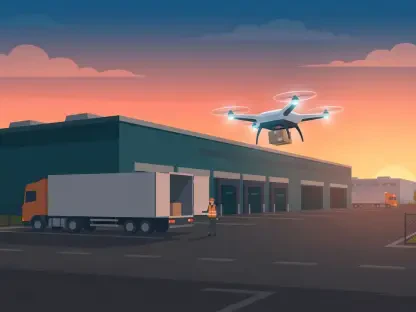

Recent flight tests have successfully demonstrated that Aviern’s proprietary software can handle autonomous taxiing, takeoff, and landing without human intervention. Building on this achievement, the Los Angeles-based startup Aviern is positioning itself to disrupt the traditional logistics sector by eliminating the need for human pilots in regional cargo operations. Supported by the startup accelerator Y Combinator, the company focuses on bridging the gap in short-haul freight where traditional trucking is often too slow and conventional air transport is prohibitively expensive. The ultimate goal is to achieve an ambitious efficiency benchmark known internally as the 1,000-1,000-1,000 metric. This vision entails moving 1,000 pounds of freight over a 1,000-mile distance for an operating cost under $1,000. By removing heavy cockpit instrumentation and human life-support systems, Aviern seeks to maximize every cubic inch of the airframe for cargo, fundamentally altering the economics of the regional supply chain.
Evolution of AviernOS: The A600 Platform
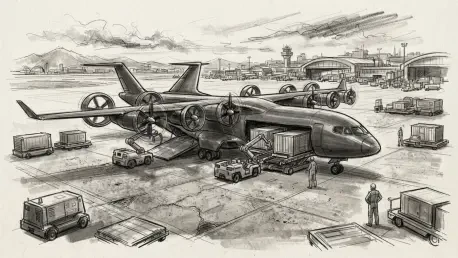
The backbone of this autonomous revolution is AviernOS, a specialized software ecosystem that integrates autopilot functions with sophisticated perception systems and remote ground control. This software is not merely a replacement for a human pilot but a comprehensive management layer designed to handle the nuances of flight in crowded domestic airspace. To prove the efficacy of this system, the engineering team has utilized a scaled composite prototype that has already completed over 150 miles of autonomous flight. This prototype serves as a vital data collection tool, allowing developers to refine the algorithms that govern critical flight phases. While the initial testbed was a proof of concept, the transition to the A600 platform represents a significant leap in capability. The A600 is a purpose-built aircraft specifically engineered to transport 600 pounds of payload. By designing the airframe from the ground up to be pilotless, the company avoids the aerodynamic and weight penalties.
Transitioning from a software demonstration to a fully operational cargo fleet requires a phased approach that balances innovation with practical engineering milestones. The development roadmap currently focuses on modifying a standard, small-scale conventional aircraft to run entirely on AviernOS by early 2027. This intermediate step allows the company to validate its autonomous systems in a frame already recognized by aviation authorities before moving to their proprietary design. Following these evaluations, the debut of the dedicated A600 cargo airframe is scheduled for 2028, marking the transition from testing to commercial-grade operations. Each iteration of the software aims to lower the estimated operating cost to approximately $100 per flight hour, a figure that would drastically undercut current regional freight options. This strategic progression ensures that by the time the custom airframes enter service, the underlying autonomous protocols will have undergone thousands of hours of validation.
Market Infrastructure: Regulatory and Economic Sustainability
One of the most compelling aspects of the startup’s strategy is its focus on utilizing the vast network of underused public-use airports scattered across the United States. While major commercial airlines primarily service only about 520 large hubs, there are nearly 5,000 smaller airfields that currently see limited traffic. Aviern’s pilotless planes are designed to operate from these smaller regional strips, effectively creating a point-to-point network that bypasses the congestion and delays inherent in major logistics hubs. This decentralized model provides a significant advantage for high-value or time-sensitive shipments, such as emergency medical supplies or critical machinery parts needed for immediate repairs. By moving the point of arrival closer to the final destination, the company can significantly reduce the last-mile trucking requirements that often inflate shipping times and costs. This approach transforms local airports into vital nodes of a modernized national distribution system.
Industry leaders recognized that the path forward required a dual focus on both hardware reliability and deep integration with existing ground logistics. Stakeholders emphasized that for pilotless freight to succeed, companies had to look beyond the aircraft and invest in automated ground handling and standardized modular cargo containers. Successful implementation hinged on creating seamless handoffs between autonomous flight systems and regional trucking fleets, ensuring that the speed gained in the air was not lost on the tarmac. Future considerations moved toward the development of more sustainable propulsion systems, such as hybrid-electric engines, to further reduce the carbon footprint of regional air transport. By focusing on these logistical synergies and pushing for standardized regulatory compliance, the industry established a foundation for a truly efficient point-to-point shipping network. These actions ensured that the transition to autonomous aviation provided lasting value.