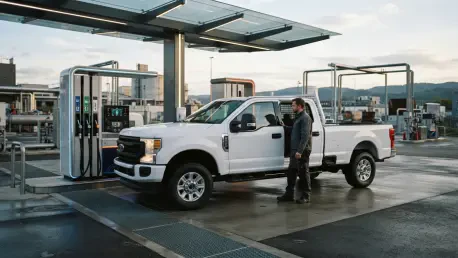

Many organizations are now keeping older vehicles as spare units to mitigate the productivity losses caused by increasingly slow repair schedules and part delays. This strategic pivot reflects a broader shift in the commercial fleet landscape, where the predictability of the past has been replaced by a state of permanent volatility. What was once viewed as a temporary disruption following the global events of 2021 has now solidified into a complex economic paradigm characterized by persistent inflation, geopolitical instability, and a fundamental restructuring of the global supply chain. In this environment, the primary challenge for fleet professionals is no longer simply waiting for a return to normalcy but rather building resilient operational frameworks that can withstand constant fluctuations in cost and availability. As the industry moves through 2026, the focus has shifted toward aggressive cost containment and long-term planning, ensuring that fleets remain fiscally viable despite a baseline of expenses that has stabilized at levels roughly 20 percent higher than previous benchmarks. Success now depends on the ability to leverage data-driven insights to manage the variables within direct control, such as vehicle specifications and utilization rates, while insulating the organization against external shocks that continue to redefine the market.
Fuel Management: Bridging the Gap Between Cost and Consumption
The volatility of the energy market remains the most significant and unpredictable variable for any commercial fleet operation, as fuel prices have continued their non-linear ascent over the past several years. Data from the U.S. Energy Information Administration and major fleet management organizations indicate that since early 2021, retail gasoline prices have surged by more than 60 percent, while diesel prices have seen even more aggressive climbs, exceeding 85 percent in some regions. These dramatic price swings have created a “fuel cost yo-yo” effect that frequently pushes organizations well beyond their projected annual budgets. For instance, companies like Essential Utilities have reported fuel expenditures exceeding initial projections by as much as 25 percent due to the sustained high cost of diesel. This sustained upward pressure on energy costs has rendered traditional budgeting models obsolete, forcing fleet managers to adopt more agile and responsive financial strategies that can account for rapid shifts in the global oil market and the associated impacts on daily operational liquidity and long-term capital reserves.
In response to these soaring energy expenses, organizations are fundamentally altering their vehicle selection criteria to prioritize fuel economy without compromising the functional requirements of the job. This transition involves a move toward more efficient powertrain options, such as downsizing from heavy-duty V8 engines to turbocharged four-cylinder units for light-duty applications and small-to-midsize pickups. Additionally, there is an accelerating integration of hybrid and battery-electric vehicles in areas where the supporting charging infrastructure has reached a level of maturity that ensures operational reliability. By institutionalizing these more efficient vehicle specifications at the point of acquisition, fleet managers are creating a permanent hedge against future price spikes. This proactive approach to energy management is no longer just an environmental consideration; it is a critical survival mechanism in a high-cost environment where every fractional improvement in miles per gallon translates directly into significant bottom-line savings over the multi-year lifecycle of the asset.
Asset Maintenance: Countering Inflation and the Technician Shortage
The secondary pillar of modern budget pressure is a maintenance crisis fueled by the convergence of aging fleet populations and rising labor and part costs. During the supply chain constraints of the past several years, many organizations were forced to extend their replacement cycles, leading to an average vehicle age that now often exceeds six years. There is a direct and quantifiable correlation between the age of a vehicle and its associated service spending, with data showing that maintenance requirements for a vehicle in its tenth year of service can be more than double those of a unit in its first year. Specifically, while a first-year vehicle might require roughly $2,000 in routine maintenance, that figure typically escalates to over $4,500 annually as major systems begin to fail and wear-and-tear items require more frequent attention. This aging fleet profile has created a compounding financial burden that requires precise monitoring to determine when the escalating cost of repair begins to outweigh the financing expenses of a newer, more reliable replacement vehicle.
Further complicating the maintenance landscape is the persistent shortage of skilled technicians, which has kept labor rates high and extended the duration of typical repair stays in the shop. Although there has been a notable 14.2 percent increase in trade school graduates entering the collision and mechanical repair fields recently, the supply of qualified labor still fails to keep pace with the increasing technical complexity of the modern vehicle population. This labor gap means that even routine repairs can result in extended downtime, during which the asset is not generating revenue or providing service. Fleet managers are now forced to navigate a difficult labor market where they must compete for priority service at dealerships and independent shops. To mitigate these delays, many are turning to advanced diagnostic tools and telematics data to identify potential mechanical issues before they lead to catastrophic failure, thereby shifting the focus from reactive repairs to a more controlled, preventive maintenance schedule that maximizes uptime and reduces the risk of expensive emergency service calls.
Technical Innovation: Assessing the Impact of High-Tech Components
Modern safety innovations, particularly the widespread adoption of Advanced Driver Assistance Systems (ADAS), have fundamentally changed the economics of collision management and vehicle repair. While technologies such as lane-keeping assist, adaptive cruise control, and automated emergency braking provide significant safety benefits, they also introduce a high level of technical complexity to even minor repairs. What used to be a simple replacement of a bumper or side mirror now involves the integration of sensitive cameras, radar units, and ultrasonic sensors. These components are not only more expensive to purchase than traditional parts, but they also require specialized diagnostic scans and precise recalibrations following any impact or major service work. In many cases, these recalibration procedures can add anywhere from $500 to $1,500 to a single repair bill, dramatically increasing the total cost of ownership and the average expense of an individual insurance claim or out-of-pocket repair transaction.
The technical complexity of these advanced systems also has a profound impact on vehicle downtime and employee productivity. Because recalibrating ADAS components requires specialized equipment and specific environmental conditions, many general repair shops are unable to perform these tasks, leading to bottlenecks at authorized dealerships or specialized service centers. This adds days or even weeks to the time a vehicle is out of service, forcing fleet managers to find temporary replacement transportation or accept the loss of productivity from their field staff. To manage these risks, organizations must adopt a more sophisticated approach to collision management that accounts for both the hardware costs and the sophisticated software requirements of the modern work truck. This includes training drivers on the limitations and proper use of these systems to prevent “avoidable” collisions and working closely with insurance providers and repair networks to streamline the diagnostic and recalibration process to get vehicles back on the road as quickly as possible.
Strategic Procurement: Managing Lead Times and Inventory Shifts
The vehicle acquisition market has shifted from a state of total scarcity to a period of “expensive availability,” where units are more accessible than in previous years but come with significantly higher price tags. Average factory-order costs for commercial vehicles have risen by approximately 9 percent over the last three years, with a standard sales fleet unit now averaging roughly $44,500 before upfitting or tax considerations. Furthermore, dealer inventory often remains heavily weighted toward high-trim packages designed for retail consumers rather than commercial users. These packages frequently include luxury features and unnecessary technology that do not contribute to the vehicle’s utility but do add thousands of dollars to the acquisition cost. This situation creates a “trim trap” for fleet managers who need immediate replacements for totaled or high-mileage units, forcing them to pay a premium for features that offer no operational return on investment.
To circumvent these procurement challenges, organizations are increasingly turning to advanced ordering cycles and more rigorous vehicle specifications. By placing factory orders earlier in the cycle, fleet managers can secure the exact base-level or “work-truck” trims they need, avoiding the inflated costs of retail-focused inventory. This strategy also provides greater control over the upfitting process, ensuring that specialized bodies and equipment are ready for installation as soon as the chassis arrives. However, this shift requires a high degree of foresight and accurate forecasting of future fleet needs, as lead times for specific models still remain longer than pre-2021 levels. Those who successfully manage these cycles can optimize their capital expenditure by ensuring that every dollar spent on a new asset is directed toward utility rather than aesthetic or luxury features, thereby maintaining a lower overall cost basis for the entire fleet population over its lifespan.
Operational Efficiency: Establishing New Protocols for Sustainable Growth
To navigate this landscape of permanent volatility, fleet leaders have begun to coalesce around several core strategies designed to maximize operational efficiency and reclaim control over their budgets. One of the most effective tactics has been the implementation of selective replacement policies, where data is used to identify “high-cost” outliers—vehicles that suffer from frequent breakdowns or excessive downtime—and prioritize them for retirement regardless of their age or mileage. This move away from blanket, age-based replacement schedules allows for a more surgical application of capital, ensuring that the newest vehicles are placed in the most demanding roles while less reliable assets are removed from the fleet. Additionally, aggressive right-sizing has become a standard practice, as managers re-evaluate whether every job role requires a heavy-duty or 4×4 configuration, often finding that smaller, more efficient 4×2 vehicles are sufficient for the majority of tasks.
The most successful organizations also utilized advanced telematics and regular utilization audits to eliminate underused assets and target avoidable expenses. By monitoring driver behavior, managers identified opportunities to reduce excessive idling, which can consume up to a gallon of fuel per hour, and optimized routing to minimize unnecessary mileage. These data-driven tactics transformed the “unexpected” from a series of uncontrollable crises into a set of predictable factors that were managed through disciplined oversight and clear communication with field staff. Looking back, the fleet managers who thrived were those who accepted that the era of low-cost, high-availability operations was over and instead built their success on the foundation of technical precision and strategic flexibility. They established new protocols that prioritized long-term resilience over short-term savings, ensuring that their organizations remained competitive in an unpredictable global market. This proactive stance allowed them to turn the challenges of market volatility into a catalyst for operational excellence and sustainable growth.