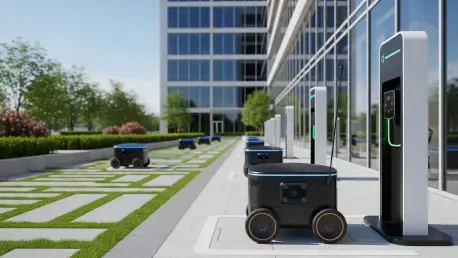

Small white robots are no longer a futuristic novelty but a common sight on city sidewalks, marking a profound shift in how societies move goods from door to door. Starship Technologies has officially completed 10 million autonomous deliveries, proving that the era of laboratory testing has ended. These machines have transitioned into essential infrastructure, fundamentally altering the global logistics landscape. This milestone signals that sidewalk-based automation is a permanent fixture rather than a temporary experiment.
A New Era in Autonomous Logistics
The achievement of 10 million deliveries represents a critical turning point for the robotics industry. While early critics dismissed sidewalk robots as toys, the sheer volume of successful missions demonstrates their reliability and utility. This transition from experimental prototype to essential service indicates that the technology has matured enough to handle the chaos of public spaces at scale.
Moreover, this success reflects a shift in consumer behavior and industrial expectations. Logistics providers now view autonomous delivery as a viable solution for the persistent challenges of urban transit. By proving that robots can coexist with pedestrians, the company has established a new standard for modern municipal operations.
The Evolution of Sidewalk Robotics
The journey began with a focused mission to solve the last-mile problem, which remains the most expensive part of the delivery process. Since its inception, the organization has expanded its footprint significantly. Today, a fleet of over 3,000 robots operates across 300 locations, showcasing an ability to adapt to diverse environments from college campuses to residential neighborhoods.
At the heart of this growth is the implementation of Level 4 autonomy. This technical foundation allows the robots to navigate complex routes without active human supervision. This level of independence was necessary for the company to scale its operations globally while maintaining a high standard of safety and efficiency.
Defining Milestones and Operational Success
The company has solidified its dominance through sheer operational experience and data accumulation. With over 22 million autonomous kilometers traveled, the fleet has encountered nearly every obstacle a city can offer. This massive volume of real-world experience provides a competitive edge that is difficult for newcomers to replicate.
Reaching the 10 Million Delivery Benchmark
Completing 10 million deliveries is a testament to the durability of the hardware and the sophistication of the software. This benchmark underscores a level of consumer trust that was once unimaginable for autonomous systems. Users have integrated these robots into their daily routines, relying on them for everything from groceries to hot meals.
Real-World Learning Through 200 Million Road Crossings
Safety and navigation are refined through a continuous data loop generated by 125,000 daily road crossings. Having reached a total of 200 million crossings, the AI systems have learned to interpret subtle human behaviors and environmental cues. This constant learning ensures that the robots remain predictable and safe in the presence of traffic and pedestrians.
What Sets Starship Apart in a Competitive Landscape
A unique combination of regulatory savvy and technological maturity distinguishes this operation from its rivals. Many competitors struggle with legal hurdles, yet this fleet has secured approval in numerous jurisdictions. This proactive approach to government relations has cleared the path for widespread deployment in both the United States and Europe.
Economically, the advantage is equally compelling. Autonomous deliveries currently offer a cost savings of $3–$4 per drop when compared to human couriers. Furthermore, a 97% approval rating on U.S. campuses suggests that the robots have achieved a level of social acceptance that is vital for long-term integration into the community.
Current Global Presence and Strategic Integration
The operational footprint now spans eight countries, including the United Kingdom, Germany, and the United States. These robots are not merely independent actors but are being integrated into existing delivery platforms. This collaboration allows traditional retailers and food services to leverage automation without building their own internal robotics divisions.
In addition to expanding its reach, the company has updated its hardware to handle various weather conditions. Newer models feature improved traction and sensor arrays that allow for uninterrupted service during rain or snow. This resilience ensures that the robots remain a dependable part of the local infrastructure throughout the entire year.
Reflection and Broader Impacts
Reflection on Operational Strengths and Scaling Challenges
The success of the autonomous model has proven that decentralized delivery is viable. However, the next major hurdle involves reaching the ambitious goal of $1 per delivery. Reducing operational costs to this level would represent a total disruption of the traditional logistics industry and require even greater technological optimization.
Broader Impact on Global Industry Trends
Shifting deliveries toward robots could eventually unlock $16 billion in annual profits for the global logistics sector. Beyond the financial gains, this transition helps reduce urban traffic congestion and lowers carbon emissions. Cities that embrace these autonomous solutions are likely to see cleaner air and safer streets as delivery vans are replaced by small robots.
The Future of Last-Mile Delivery
The completion of the 10-million-delivery milestone solidified the role of autonomous robots as a primary mode of transport for local goods. This phase of development demonstrated that autonomous technology could scale effectively across international borders and diverse climates. The operational data gathered from millions of trips provided a roadmap for making logistics more sustainable and affordable.
Moving forward, the focus shifted toward deeper technological refinement and further global expansion to redefine the final link in the supply chain. Engineers targeted even higher levels of efficiency to ensure that the $1-per-delivery target became a reality. These advancements paved the way for a world where autonomous delivery is as commonplace and reliable as the electricity running through city grids.