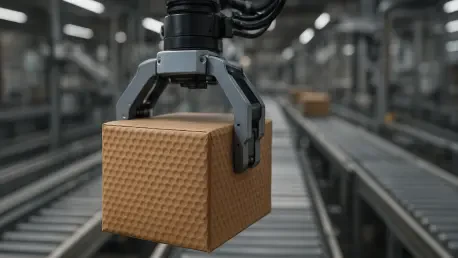

A robotic arm hovering over a chaotic pile of mismatched packages no longer waits for a human to clear the path; instead, it autonomously analyzes subtle shadows and surface textures to determine the optimal grip for a fragile parcel. This shift toward Physical AI represents the final bridge between digital logic and the material world. While previous iterations of warehouse technology focused on spreadsheets and predictive algorithms, the current landscape emphasizes machines that can reason with physical objects. Intelligence has officially stepped out of the computer monitor and onto the concrete floor of the modern distribution center.
Beyond the Digital Screen: The New Frontier of Supply Chain Robotics
The era of AI confined to spreadsheets is ending as intelligence becomes inseparable from physical action. Today, the most significant breakthrough in logistics isn’t a faster database, but a system that can “see” a crumpled box and figure out how to handle it without pre-programmed instructions. This transition marks a departure from machines that simply follow rigid code toward robots capable of reasoning with the material world.
These advancements represent a fundamental change in how the industry views automation. Instead of treating hardware as a secondary component to software, the two are now merged into a single, cohesive entity. This new frontier is defined by spatial awareness and the ability to manipulate objects in three-dimensional space with a level of dexterity that was previously exclusive to human workers.
The Evolution From Predictive Data to Physical Autonomy
Modern logistics currently faces a bottleneck where digital efficiency outpaces physical execution. Software can optimize a global shipping route in seconds, yet the actual movement of goods inside a facility often relies on legacy automation that breaks down when faced with the slightest irregularity. Physical AI addresses this gap by integrating advanced computer vision and tactile sensing, allowing the supply chain to match its digital speed with physical agility.
By moving beyond simple “blind” automation, these systems have gained the autonomy required for high-volume environments. Rather than stopping the entire line when a package is misaligned, the AI-driven system identifies the orientation error and adjusts its approach in real-time. This level of responsiveness ensures that the physical flow of goods remains as fluid as the data streams that track them across the globe.
Narrowing the Sim-to-Real Gap Through High-Fidelity Simulation
The intelligence of modern logistics robots is forged in virtual worlds before they ever touch a warehouse floor. Training a machine through physical trial and error is too slow and dangerous; instead, developers use high-fidelity 3D environments that replicate the laws of physics with extreme precision. This process is essential for narrowing the “sim-to-real gap,” ensuring that a robot’s digital training translates perfectly to the messy reality of a loading dock.
Synthetic data plays a pivotal role in this development, allowing robots to practice millions of pick-and-place cycles in a fraction of the time. Specialized training providers, such as Physicl, built the digital foundations required for machines to handle unpredictable real-world cargo. These simulations model complex factors like surface friction, material mass, and the specific ways that cardboard or plastic wraps deform under pressure.
Adaptive Automation and the Mastery of E-commerce Complexity
Unlike traditional industrial robots that require every item to be in a fixed position, Physical AI thrives in the unpredictable environments of modern e-commerce. This adaptive automation allows systems to handle diverse product mixes without the need for constant manual reprogramming. Systems now successfully unload chaotic trailers and sort varied items from mixed totes, providing a level of flexibility that was once considered impossible for non-human labor.
Moving away from fixed infrastructure has allowed businesses to remain agile in a fluctuating market. Sensory-aware machines adjust their grip and speed based on the specific item they are handling, whether it is a heavy mechanical part or a lightweight consumer electronic. This versatility lowered the barrier to entry for smaller operators who required sophisticated automation but could not afford the massive, rigid systems of the past.
The Shifting Labor Landscape: From Manual Toil to Technical Supervision
The integration of Physical AI is not a story of total displacement, but rather an evolution of the human role within the facility. By delegating the “three Ds”—tasks that are dull, dirty, or dangerous—to machines, the logistics workforce shifted toward more sophisticated responsibilities. This transition enhanced workplace safety by reducing physical strain and injury rates associated with heavy lifting and repetitive sorting.
New career pathways emerged as the demand for manual labor decreased and the need for technical oversight grew. Personnel now focus on fleet supervision, robot maintenance, and handling complex exceptions that require human judgment. Industry experts noted that the most efficient warehouses are those where AI handles the massive volume of standard tasks while humans manage the nuance and strategic decision-making.
Strategies for Integrating Physical AI Into Existing Operations
Successful integration required a structured approach that prioritized flexibility and data integration over sheer hardware volume. Organizations identified high-variance bottlenecks where manual labor was slowed down by item diversity or unpredictable workflows. Leaders ensured that new Physical AI tools communicated seamlessly with existing warehouse management systems to maintain a unified data environment.
Companies utilized digital twins to test robotic configurations before committing to physical installation, which mitigated deployment risks and reduced downtime. They invested in scalable AI solutions that grew alongside their operational needs rather than purchasing static equipment. This strategic shift effectively bridged the gap between raw digital intelligence and manual action, resulting in a more resilient and responsive global supply chain.