
Rohit Laila stands at the forefront of the logistics revolution, bringing decades of deep-rooted experience in global supply chains and a relentless drive for technological innovation. His perspective is uniquely shaped by the practical realities of delivery and the visionary potential of automation in a world that is increasingly defined by speed and efficiency. Today, we explore the monumental shift in the robotics landscape following the announcement of a massive funding round that aims to bring cognitive abilities to the machines that power our world.
The conversation centers on a historic $1.4 billion Series C investment that unites heavyweights from the compute, manufacturing, and industrial sectors to accelerate the deployment of a new physical AI platform. We delve into the transition from scripted, repetitive automation to truly autonomous cognitive robotics capable of learning within a shared intelligence ecosystem. The dialogue also touches on the expansion of specialized training environments known as NEURA Gyms and the integration of decentralized architectures that allow machines to process information and transact independently.
How does a $1.4 billion investment of this scale redefine the current trajectory for cognitive robotics and the mission to build a physical AI platform?
An investment of $1.4 billion is more than just a financial milestone; it is a powerful signal that the era of isolated, scripted robots is coming to an end. This capital allows for the rapid scaling of the Neuraverse, a shared intelligence ecosystem where machines don’t just follow orders but actually learn from their environments. For an expert in logistics, seeing this level of commitment means we are moving toward a future where robots can navigate the complexities of a warehouse with the same intuition as a human worker. The funding provides the fuel to turn the vision of a unified platform into a global reality, ensuring that the infrastructure for physical AI is robust enough to handle real-world challenges.
With names like Amazon, NVIDIA, and Bosch involved, how do these strategic partnerships bridge the gap between digital intelligence and physical industrial application?
The involvement of these industry titans creates a synergistic ecosystem that combines global cloud infrastructure with deep manufacturing excellence. For instance, Amazon provides a massive tech stack including AI purpose-built chips like AWS Trainium and platforms like Amazon Bedrock to provide the “brain power” needed at scale. On the physical side, companies like Schaeffler bring decades of manufacturing expertise and eight distinct product families that are essential for building the hardware of humanoid robots. This collaboration ensures that the robots aren’t just smart on a screen but are mechanically capable of executing complex tasks in the heat of a factory or the bustle of a logistics center.
The concept of “NEURA Gyms” was mentioned as a priority for this new funding. Can you explain how these large-scale training environments change how robots prepare for the real world?
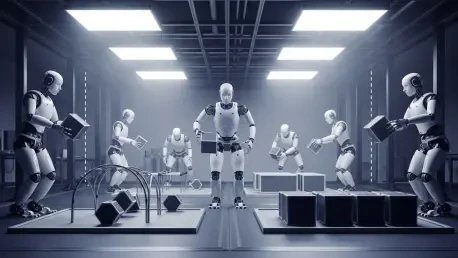
NEURA Gyms represent a fundamental shift in how we approach machine learning by moving away from purely digital simulations and into large-scale, real-world training environments. These facilities allow cognitive robots to interact with physical objects, encounter unexpected obstacles, and refine their motor skills in a controlled but realistic setting. It’s similar to how a professional athlete trains; the robots repeat movements and solve spatial puzzles until their responses become fluid and natural. By scaling this training infrastructure, we can significantly decrease the time it takes for a humanoid robot to become “job-ready” for global deployment.
David Reger has stated that the future of AI will move beyond screens to interact and work beside us. What does this “Physical AI” look like in a practical, day-to-day setting?
Physical AI is the transition from a tool that gives us information to a partner that performs physical labor alongside us. In a healthcare or household setting, this might look like a robot that senses the subtle weight of a glass of water or the fragile nature of a human hand, adjusting its grip and movement in real-time. In logistics, it translates to machines that can collaborate with human workers to reorganize a shipping floor without needing a person to program every single coordinate. With an existing orderbook and strategic pipeline exceeding $1 billion, it is clear that the market is hungry for machines that can finally “do” rather than just “say.”
How does the integration of decentralized architectures and edge-first intelligence affect the way these machines operate in sensitive environments?
The move toward decentralized AI architectures, supported by partners like Tether, is critical for creating machines that can operate independently of a central server. By processing information locally through systems like QVAC, these robots can make split-second decisions at the “edge,” which is essential for safety and efficiency in high-speed environments. Furthermore, adding a secure financial layer like WDK allows machines to actually account for outcomes and transact within a machine-native economic system. This level of autonomy means that a robot can manage its own tasks and resources, operating as a truly independent agent within a factory or logistics hub.
What is your forecast for the integration of humanoid robots in global logistics?
I forecast that within the next decade, the presence of cognitive humanoid robots will become a standard benchmark for efficiency in global logistics centers. We are currently seeing the foundation being laid with over $1 billion in planned deployments, which suggests that the transition from pilot programs to full-scale integration is already underway. As physical AI continues to merge with edge computing and advanced sensing, these robots will not just replace repetitive tasks but will actively optimize the flow of goods in ways that were previously impossible. The industry will move from a model of human-led automation to a truly collaborative environment where machines and people share the physical workspace with seamless, intuitive interaction.