
Spain’s leading supermarket chain, Mercadona, has officially launched its debut semi-automated distribution center located in Madrid to revolutionize how perishable and dry goods reach millions of consumers daily across the metropolitan area. This massive infrastructure project represents a pivotal shift in the company’s strategy, moving away from traditional manual labor towards a hybrid model that maximizes speed without sacrificing quality. As urban populations continue to grow and delivery expectations tighten, the pressure on retail supply chains has reached an all-time high, requiring bold investments in robotics and data analytics. By integrating sophisticated software with physical hardware, the facility aims to eliminate bottlenecks that have historically plagued large-scale distribution centers during peak demand periods. This move is not merely about keeping up with competitors but about setting a new standard for grocery logistics in Southern Europe, ensuring that shelves remain stocked with fresh items.
Modernizing Logistics
Precision Engineering: The Role of Automated Shuttles
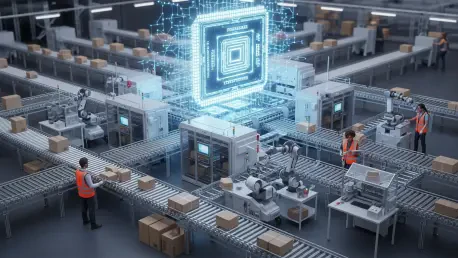
The heart of the new Madrid facility lies in its high-speed shuttle systems and automated picking arms that navigate thousands of storage racks with surgical precision. These robots are designed to handle repetitive tasks that often lead to physical strain for human workers, such as lifting heavy crates or retrieving items from high shelves. By utilizing a grid-based storage architecture, the system can retrieve specific stock units in a fraction of the time required by a manual forklift operator. This technological leap allows Mercadona to process thousands of orders per hour, drastically reducing the lead time between a store’s request and the actual delivery. Furthermore, the integration of real-time tracking sensors ensures that every item is accounted for from the moment it enters the loading dock until it leaves for its final destination. Such granular visibility into inventory levels prevents overstocking and reduces waste, which is crucial for maintaining the high integrity of products.
Workforce Dynamics: Balancing Human Skill and Robotics
While the introduction of robotics often sparks concerns regarding employment, the semi-automated nature of this warehouse emphasizes a collaborative relationship between machines and staff. Human employees are transitioning into roles that require higher levels of oversight, such as system maintenance, quality control, and exception handling. These specialized positions demand a deeper understanding of software interfaces and mechanical troubleshooting, prompting the company to invest heavily in comprehensive training programs for its workforce. By shifting the most arduous physical labor to machines, the facility has created a safer and more ergonomic environment for its team. This synergy between human intuition and machine speed allows for a more flexible operation that can adapt to sudden changes in market trends or consumer behavior. The transition proves that automation does not necessarily replace people but rather evolves their roles to focus on cognitive tasks that robots cannot yet master, thereby strengthening the organizational structure.
Strategic Regional Impact
Operational Efficiency: Streamlining the Supply Chain
Centralizing logistics through a semi-automated hub in Madrid provides a strategic advantage by optimizing the routes of the company’s extensive delivery fleet across the central region of Spain. This approach reduces the distance traveled by heavy goods vehicles, which in turn lowers fuel consumption and decreases the overall carbon footprint of the retail operation. The facility serves as a nerve center that coordinates with smaller satellite warehouses and individual store locations to ensure a seamless flow of goods. Advanced algorithms analyze traffic patterns and store demand in real-time to determine the most efficient delivery schedules, preventing delays even during the city’s notorious rush hours. This level of optimization is essential for a business model that prides itself on low prices and high availability, as even minor delays can ripple through the entire supply chain. By streamlining these processes, the company can maintain its competitive edge in a market where efficiency is the primary driver of its success from 2026 to 2028.
Path Toward Future Retail Resilience
The successful launch of the semi-automated warehouse in Madrid established a clear roadmap for the digital transformation of the European retail sector. It demonstrated that integrating advanced robotics into traditional supply chains provided a scalable solution to the complexities of modern consumer demand. Moving forward, the industry prioritized the reskilling of its workforce to ensure that employees remained equipped for an increasingly technical landscape. Stakeholders encouraged a broader adoption of modular automation systems that could be customized to fit various urban environments, rather than relying on one-size-fits-all solutions. Continuous investment in cybersecurity became a necessity as logistics hubs became more reliant on interconnected data networks to function. Ultimately, the focus shifted toward creating resilient supply chains that could withstand external shocks while maintaining environmental responsibility. Retailers who observed this transition recognized that the path to sustainable profitability required bravery and a commitment to iterative updates.