
Karli Sage, the Senior Director of Emerging Technology at Southern Glazer’s Wine & Spirits, represents a new breed of logistics leadership that blends athletic discipline with a deep-seated passion for digital transformation. Growing up in Washington State as the daughter of two civil engineers, she initially viewed her world through the lens of sports and literature, eventually becoming a Division I swimmer at the University of Nevada, Reno. Her journey into the supply chain was not a calculated move but a fortunate accident at a college career fair, which set her on a path through industry giants like DHL, Niagara Bottling, and Bimbo Bakeries. Today, she stands at the forefront of technological innovation in the beverage industry, steering complex projects that range from automated guided vehicles to the pragmatic application of artificial intelligence in network visibility.
This conversation explores the fundamental principles of elite performance and how they translate into the high-stakes environment of warehouse management and corporate strategy. We delve into the nuances of navigating a male-dominated field, the emotional and professional evolution required to lead large teams through massive transformations, and the reality of implementing emerging tech in a legacy industry. The discussion highlights the critical importance of self-advocacy on the warehouse floor, the shift from tactical problem-solving to broad-scale business strategy, and a grounded perspective on the current hype surrounding AI. By examining the intersection of data visibility, human empowerment, and the relentless pace of logistics, we gain a comprehensive view of what it takes to modernize one of the world’s most essential economic sectors.
High-level athletics require intense time management and discipline. How did the transition from a rigorous Division I swimming schedule to the demanding world of supply chain technology shape your professional identity?
Swimming became my entire identity for a long time, and that level of commitment doesn’t just disappear when you hang up the goggles. I spent years waking up at 5:30 in the morning for practices, followed by grueling 7:00 AM workouts on Saturdays when everyone else was still asleep. That lifestyle taught me that you can be good at many things, but as my dad used to say, you can only be great at a few. In the supply chain, where everything is 24/7 and nonstop, that mentality of prioritization and time management is the only reason I’ve been able to survive and eventually thrive. You learn very quickly that if you don’t manage your schedule with the same precision you used for a sprint butterfly or freestyle race, the operation will manage you instead. That athletic discipline provided the foundation for how I approach complex technical deployments today—it’s all about the preparation you put in when nobody is watching that determines the results when the pressure is on.
You’ve mentioned that your entry into the logistics industry was something of an accident involving a perceived typo at a career fair. Could you walk us through that moment and how your background in information systems suddenly felt like the right fit for warehousing?
It’s actually a funny story because I originally thought I was headed for a career as a high school English teacher because of my love for reading and writing. Math was never my strong suit, which was a bit of a point of contention in a house full of engineers, but I eventually realized that programming languages are structured a lot like English grammar—they have rules, exceptions, and a specific flow that clicked with my brain. After I graduated and realized Google wasn’t going to hire me just because I was a college athlete, I walked past a booth for a company called Exel Logistics. I genuinely thought they had misspelled “Excel,” the software, and I walked up to the booth almost out of a sense of curiosity or correction. That one random conversation changed everything; they explained the massive scale of their operations with DHL, and I suddenly saw a world where my technical skills could solve real-world physical problems. It was a complete pivot from my original plan, but it felt right because it combined the logic of systems with the high-energy environment I was used to in sports.
Starting your career in a warehouse environment can be a culture shock for many. What were the sensory and professional challenges of those early days at DHL, especially while working out of a cubicle right in the middle of the operation?
Terrifying is honestly the best word for those first few weeks because the environment was just so overwhelming and foreign to anything I had experienced in a classroom. I was sitting in this little cubicle right in the heart of the warehouse, surrounded by the constant hum of machinery, the beep of forklifts, and a 24/7 pace that never seemed to let up. A significant portion of our workforce spoke Spanish, a language I didn’t know, so I had to put in the effort to learn enough to actually communicate and show that I was part of the team. I quickly realized that in a warehouse, you can’t just rely on a title; you have to know your stuff and be prepared to defend what you’re doing with total confidence. That job was my “trial by fire” where I learned that if you can’t explain the “why” behind a process change to the people on the floor, you’ll never get their buy-in. It forced me to grow a thick skin and taught me how to stand up for myself in a tough, high-pressure environment where every second of downtime costs money.
As you moved into roles at Niagara Bottling and Bimbo Bakeries, your focus shifted toward automation and large-scale transformation. What was it about the technical side of process flow and warehouse design that captured your interest?
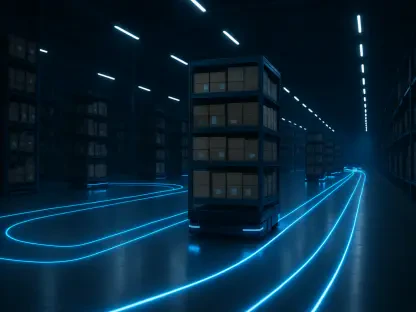
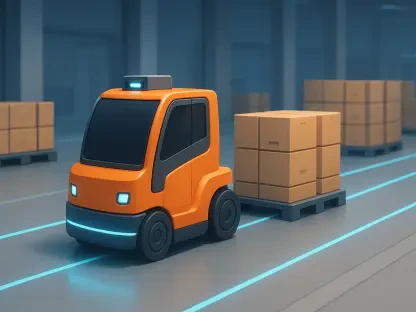
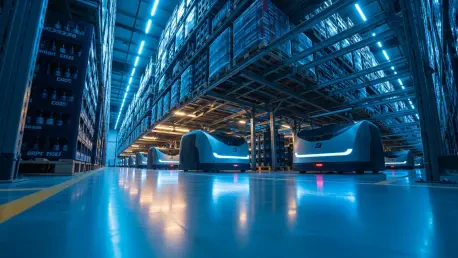
At DHL, I had reached a point where I knew the systems inside and out, but I felt a pull toward the more technical aspects of how a building actually breathes and moves. When I moved to Niagara Bottling, I was fascinated by the sheer efficiency of their automated guided vehicles, which moved product from the production lines all the way through to trailer loading without constant human intervention. It was like watching a giant, synchronized dance, and I knew right then that I wanted to be the one designing those movements and technical strategies. By the time I reached Bimbo Bakeries, the challenges became even larger and more complex, moving away from single-site issues to broad, corporate-level transformations. I started digging into business cases for new delivery models and network-wide technology strategies, which felt like solving a massive puzzle where the stakes were national in scale. I loved that shift because it allowed me to use my background to influence how an entire company thinks about its future rather than just solving a local throughput issue.
Being a woman in a leadership role within a traditionally male-dominated industry often brings unique challenges. Can you share a moment where you felt underestimated and how you navigated the “only woman at the table” dynamic?
It is a reality that I still face even now, and sometimes it hits you in the most unexpected ways, like being at a professional dinner in 2025 and realizing I am the only woman in the entire room. There have been plenty of meetings where I’ll suggest a strategy or a solution, only to have a man repeat the exact same thing five minutes later with a louder voice and receive all the credit for the “new” idea. I remember one specific dinner where someone made a dismissive comment about the “fruity drink” I had ordered, and I had to calmly clarify that it was actually a straight whiskey. Those moments are small, but they are indicative of a larger culture where you constantly have to prove you belong. My approach has always been to lead with expertise and confidence, showing younger women that you don’t have to change who you are to succeed in this industry; you just have to be twice as prepared and refuse to be sidelined.
Your leadership style has clearly evolved from being more directive to being more of a listener and mentor. How did you learn to step back and empower your team to solve problems on their own?
In the early part of my career, I was very much a “corrector”—I wanted to jump in and fix everything the second I saw a mistake because I was so focused on the immediate result. Over time, I realized that approach actually stunts a team’s growth and prevents them from developing their own critical thinking skills. Now, when a problem arises, I make a conscious effort to stop and ask them to walk me through the situation and tell me where they think we succeeded before we even talk about the failure. It gives them the mental space to diagnose the issue themselves, which builds way more confidence than me just barking out the answer. I try to be hands-off and trust the people I’ve hired, but I also make sure our one-on-one time isn’t just about spreadsheets; I want to know what’s going on in their lives. When you understand the person behind the professional, you can support them much more effectively, especially when they are trying to balance the intense pressures of a supply chain career with their families and personal goals.
At Southern Glazer’s, you’ve been given the freedom to be the “face of technology.” What are some of the specific ways you are currently leveraging data visibility and gamification to improve your distribution network?
One of the most exciting things about Southern Glazer’s is the permission to be creative with how we approach very old-school problems, like warehouse throughput and performance. We have massive amounts of data flowing through our systems, but historically, that information was tucked away in reports that didn’t really drive real-time behavior. We are now working on ways to gamify that data so different distribution sites can see how they are performing in comparison to one another, creating a healthy sense of competition that drives efficiency. My team is focused on making that visibility so clear and accessible that decision-making becomes much faster and more decentralized. We want the folks on the ground to have the same level of insight into the network as the corporate office, which allows us to be much more agile when we hit a bottleneck or a surge in demand. It’s about taking that “emerging technology” and making it a practical tool that someone on a loading dock can actually use to make their day better and more productive.
Artificial Intelligence is a polarizing topic, and you’ve expressed some fatigue with the buzzwords like “agentic AI.” How are you cutting through the hype to find the actual, tangible value for your operations?
If I heard the term “agentic AI” one more time at the Gartner conference last year, I think I would have lost my mind because the hype cycle is just so exhausted right now. However, beneath all that marketing noise, there is genuine value that we are already putting to work at Southern Glazer’s in very specific, practical ways. We are using AI agents to automate the repetitive, mind-numbing decision points in our forecasting, purchasing, and shipping workflows that used to require a “human-in-the-loop” for every single step. By letting the technology handle the standard, predictable tasks, we are freeing up our talented people to focus on the high-value exceptions and the complex strategy work that machines still can’t touch. It’s not about replacing people with robots; it’s about removing the drudgery so our team can actually use their brains for the things they were hired to do. That’s where the real ROI is—not in a flashy presentation, but in the hours of manual work we can strip out of the daily routine.
What is your forecast for the future of supply chain technology?
I believe we are entering an era where the “black box” of the warehouse will finally become transparent, and the most successful companies will be those that prioritize data democratization over just buying more hardware. While everyone is chasing the next shiny robot, the real winners will be the organizations that figure out how to make their existing data actionable for the person on the floor, using AI not as a replacement for judgment, but as a filter for noise. We will see a shift where technology is no longer viewed as an “add-on” to the supply chain but as the actual nervous system that allows the physical operation to respond to market shifts in minutes rather than weeks. My focus remains on ensuring that as we get faster and more automated, we don’t lose the human element that makes these complex networks function. The future isn’t just about smarter machines; it’s about building a technical ecosystem that empowers humans to be more creative and decisive in an increasingly volatile world.