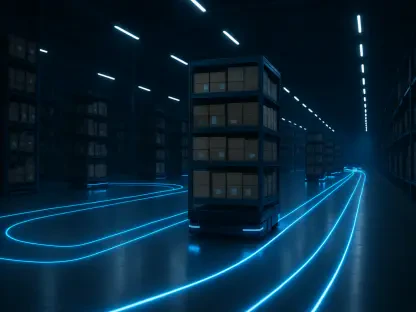

Modern logistics facilities are currently pouring millions of dollars into state-of-the-art robotic systems while simultaneously neglecting the very technical infrastructure required to keep those assets operational. This structural imbalance threatens the return on investment for companies that have historically prioritized rapid technological adoption over long-term mechanical reliability. While automation promises unparalleled efficiency, the absence of a synchronized maintenance strategy often transforms these expensive assets into liabilities.
The High-Stakes Gamble of Unchecked Automation
The current industrial landscape presents a striking paradox where $100 million investments in sophisticated machinery are undermined by primitive upkeep strategies. Data from the “Uptime Economy: 2026 Report” reveals that 91% of facilities currently deploy automation without the foundational infrastructure to support it. This oversight creates a precarious environment where the drive for efficiency inadvertently builds systemic vulnerability into the heart of global supply chains.
The prioritization of rapid deployment over operational sustainability often leaves organizations exposed to catastrophic failures. While the promise of automated throughput is enticing, the lack of a robust support network means that even minor malfunctions can cascade into facility-wide shutdowns. The current trend suggests that many firms are gambling with their future resilience by treating advanced robotics as static solutions rather than complex systems requiring meticulous stewardship.
The Growing Divide Between Acquisition and Reliability
The e-commerce and logistics boom has triggered a frantic rush toward technological acquisition, leaving a significant “planning gap” in its wake. Decision-makers often prioritize rapid deployment to meet rising consumer demand, treating maintenance as a secondary concern rather than a core requirement for success. Consequently, million-dollar robots are frequently managed like disposable assets, leading to a cycle of premature degradation that threatens long-term operational sustainability.
Moreover, the disconnect between procurement and operations means that maintenance teams are often the last to be consulted during the design phase. This lack of collaboration results in facilities that are theoretically efficient but practically unmaintainable due to poor access or inadequate diagnostic tools. As a result, the initial business case for automation frequently overlooks the escalating costs of keeping these high-tech systems running smoothly over a multi-year horizon.
The Disconnect: Overconfidence Versus Operational Reality
A dangerous “99% confidence trap” currently exists among industrial practitioners who believe they are prepared for disruptions despite glaring evidence to the contrary. Statistical breakdowns indicate that 83% of facilities missed critical warning signs, while 82% of staff dismissed sensor alerts that preceded major breakdowns. This overconfidence stems from a reliance on periodic inspections, which essentially leave critical equipment unmonitored for 90% of its operating life.
Moving beyond the flawed logic of schedule-based maintenance is essential for modern automation. Because technical degradation often occurs between scheduled checks, misses are effectively “built into the schedule” rather than being simple human errors. The 10% problem—where critical assets are only checked a fraction of the time—means that many facilities are operating in a state of constant, undetected decay, waiting for a moment of catastrophic failure.
The Economic Impact of the Maintenance Blind Spot
The financial consequences of this maintenance blind spot are severe, as a single downtime event can wipe out an entire annual automation budget in a matter of hours. Despite these high stakes, two-thirds of leadership teams fail to track uptime at the board level, and only 30% understand the precise hourly cost of operational halts. This lack of executive oversight prevents the necessary allocation of resources toward proactive reliability engineering.
The shortage of skilled technicians and a lean workforce represent major barriers to improving system reliability across the sector. This labor shortage often leads to inefficient maintenance cycles where equipment is either replaced after a failure or, in 86% of cases, removed for repair while it still has significant usable life remaining. Such waste highlights the “hidden” costs of a lean workforce, where the absence of expert intervention leads to premature equipment replacement and ballooning capital expenditures.
Strategies for Bridging the Planning Gap
Bridging the planning gap required a fundamental shift in how organizations approached the lifecycle of automated systems. Successful leaders integrated maintenance and reliability directly into their initial business cases, ensuring that upkeep was never treated as an optional expense. By transitioning away from static schedules toward continuous, 24/7 monitoring protocols, companies finally addressed the monitoring gap that previously allowed failures to propagate undetected.
Organizations also developed comprehensive workforce roadmaps to mitigate the technician shortage while improving system longevity. Establishing the exact hourly cost of downtime allowed executives to view uptime as a critical financial metric rather than a mere operational detail. Ultimately, these strategies transformed automation from a high-stakes gamble into a sustainable engine of growth, proving that the most advanced machinery was only as effective as the plan designed to keep it moving.