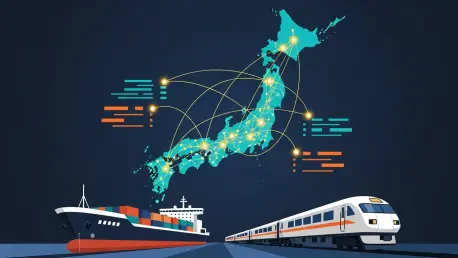

The sprawling network of warehouses and transit routes that constitutes Japan’s logistics sector is currently undergoing a profound transformation as the nation grapples with systemic labor shortages and rising operational costs. For decades, the industry operated under a low-cost model that prioritized extreme efficiency and cheap labor, but the current economic climate is forcing a total recalibration of this approach. This shift is not merely a reaction to internal pressures but a fundamental evolution of how goods move within one of the world’s most complex economies.
The logistics landscape is a vast matrix consisting of fifteen distinct segments, ranging from traditional warehousing and trucking to sophisticated international forwarding. Logistics serves as the indispensable backbone of the Japanese economy, yet its valuation is frequently at the mercy of global maritime freight rates and currency volatility. As the yen fluctuates, the cost of moving goods across borders impacts every level of the domestic supply chain, prompting a move toward more resilient, technology-driven service models.
Navigating Japan’s Multi-Trillion Yen Logistics Ecosystem
The diverse nature of the market means that while some sectors face stagnation, others are thriving through innovation. International forwarding and shipping have historically been the heavyweights of the industry, but their dominance is increasingly challenged by domestic needs. Market players are now transitioning from simple transport providers to integrated service partners, using digital tools to map out more efficient routes and storage solutions.
Moreover, the influence of the weak yen and shifting maritime routes created a volatile environment for international trade values. This volatility forced a realization that domestic infrastructure must be strengthened to withstand global shocks. Consequently, the industry is witnessing a strategic pivot where technology is no longer an optional upgrade but a core requirement for any firm hoping to maintain a competitive edge in a tightening market.
Shifting Dynamics and Economic Drivers Shaping the Market
The Pivot From Global Volatility to Domestic Consolidation
High maritime freight rates and a weak yen artificially inflated the value of international logistics in recent periods. However, as these global factors stabilize, the focus is shifting toward domestic sectors like Third-Party Logistics and specialized warehousing. These segments are becoming the new engines of growth, driven by the need for more localized and responsive supply chains that can serve a demanding consumer base.
Evolving consumer behaviors, particularly the expectation for instant delivery, have necessitated more sophisticated last-mile solutions. This demand is pushing the industry away from volume-based growth, where success was measured by the number of parcels moved, toward a value-driven expansion. In this new era, the ability to provide precise, high-quality delivery services is more profitable than simply moving large quantities of low-margin goods.
Quantifying the Growth: Projections Toward a 25-Trillion Yen Industry
Financial projections indicate that the market recently reached a valuation of approximately 24.79 trillion yen, marking a significant growth rate of over five percent. Current forecasts suggest that the industry will break the 25.36 trillion yen threshold in the immediate future. While these record-high values suggest a booming sector, they actually reflect the rising costs of doing business rather than a significant surge in physical cargo volumes.
Reconciling these high market values with stagnant throughput is the primary challenge for analysts. While ocean shipping values may fluctuate with global trends, domestic parcel delivery remains a steady contributor to the industry’s bottom line. The divergence between financial value and physical volume highlights a market that is successfully passing on increased operational costs to clients, even if the total amount of goods moved remains relatively flat.
The Strains of Modernization: Labor Shortages and Rising Overheads
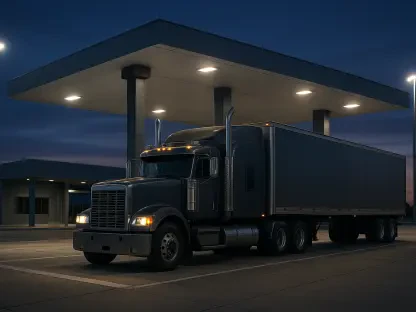
The logistics sector is currently navigating the aftermath of the 2024 Problem, which introduced strict overtime caps for truck drivers. This regulatory change severely limited trucking capacity and forced a long-overdue normalization of freight rates. For too long, freight prices remained artificially low, failing to reflect the true cost of the labor and safety standards required to maintain a reliable transport network.
Logistics providers are now caught between rising expenses for fuel and labor and the traditional expectations of their clients. Managing this disconnect requires a delicate balancing act to maintain margins without alienating long-term partners. As operational overheads continue to climb, the industry is seeing a consolidation of smaller players who lack the capital to invest in the efficiency measures needed to survive this high-cost environment.
Legislative Reform: Mandating Fairness and Efficiency in Transport
Recent regulatory changes have targeted the complex layers of subcontracting that previously characterized the Japanese trucking industry. By cracking down on unlicensed services and mandating better working conditions, the government is forcing the industry to become more transparent and professional. These laws are designed to ensure that the burden of efficiency does not fall solely on the drivers but is shared across the entire supply chain.
Compliance with these new safety and labor standards is rapidly becoming a key competitive differentiator for major logistics firms. Shippers are now legally required to collaborate with providers to reduce driver waiting times and improve the efficiency of loading docks. This transition toward mandatory fairness is effectively ending the era of exploitative labor practices, ensuring that the supply chain remains sustainable in the face of an aging workforce.
Beyond Low-Cost Delivery: The Future of Collaborative Logistics
The integration of automation and artificial intelligence is no longer a futuristic concept but a daily reality for optimizing vehicle utilization. AI-driven route planning is helping companies reduce empty miles and maximize the capacity of every truck on the road. These technological advancements are essential for maintaining service levels in rural areas where the cost of traditional delivery is becoming prohibitively expensive.
Furthermore, the industry is moving toward a shipper-pays model, where the true cost of transportation is fully absorbed by the entities sending the goods. This shift is encouraging the rise of shared delivery networks and cross-industry partnerships, where competing companies pool their resources to improve delivery density. Such collaborative models are expected to be the primary drivers of infrastructure investment and growth from 2026 to 2028.
Reimagining Japan’s Supply Chain for a Sustainable Future
The industry successfully transitioned from a period of inefficient, low-cost operations toward a model that prioritized high-value, streamlined services. Stakeholders recognized that absorbing higher transportation costs was a necessary step to ensure the long-term continuity of the supply chain. This shift required a fundamental change in mindset, as companies moved away from predatory pricing in favor of sustainable, collaborative logistics networks.
The primary takeaway for the market involved the realization that efficiency was the only viable path forward in a labor-constrained economy. Shippers and providers learned to work in tandem to eliminate waste and optimize every segment of the transit process. By embracing technological integration and regulatory compliance, the sector built a more resilient foundation that moved beyond simple delivery toward a sophisticated, data-driven ecosystem.