
From Auxiliary Tool to Central Nervous System
The logistics and transport industry is in the midst of a watershed moment, as artificial intelligence completes its evolution from a helpful ancillary tool to the core, systematically integrated nervous system of daily operations. This year, 2026, represents the definitive tipping point where AI is no longer a bolt-on feature but the foundational architecture upon which modern supply chains are built. This transformation is not sudden but the culmination of several interconnected trends. This analysis explores these drivers, illustrating how AI’s role has become essential for survival and competitive advantage in a dynamic global market.
The Journey from AI-Enhanced to AI-Driven Logistics
For years, artificial intelligence in logistics existed largely in pilot projects or as features designed to augment existing software. Early applications focused on isolated tasks like route optimization or demand forecasting, providing valuable but limited improvements within legacy systems. This incremental approach laid crucial groundwork, demonstrating AI’s potential and familiarizing the industry with data-driven decision-making. However, this “AI-enhanced” era has now given way to an “AI-driven” paradigm. The shift is significant, representing the move from using AI to improve old processes to building entirely new, more resilient, and intelligent processes around a native AI core. Understanding this evolution is key to grasping why 2026 marks a true inflection point.
The Five Pillars of the 2026 AI Revolution
Inside the New Operational Playbook Autonomous Agents and AI-Native Architecture
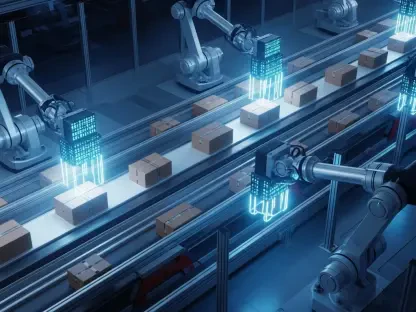
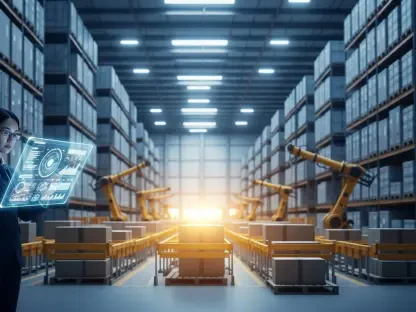
The first major shift is the deployment of specialized, autonomous AI agents that function as active players within the supply chain. These agents are designed to perform specific tasks, such as monitoring material flows in real time. When a deviation like a transport delay is detected, an agent can independently initiate countermeasures, such as evaluating and selecting an alternative route. This creates a powerful “swarm intelligence” where multiple agents collaborate across planning, warehousing, and shipping, enabling a far more agile and integrated supply chain. This operational change is supported by a fundamental evolution in software design. Logistics platforms are now being built as AI-native systems, where machine learning and decision-making logic are embedded into the software’s core from the ground up. This not only transforms the final product but also revolutionizes the development process itself, with AI-assisted programming and automated testing becoming standard.
The Strategic Shift to Specialized and Modular Intelligence
The era of generic, one-size-fits-all AI models is coming to an end. Logistics companies increasingly recognize that the complexities of their industry demand highly specialized AI. The trend is toward systems trained on industry-specific data to deliver more accurate forecasts and decisions for nuanced tasks, such as dynamic capacity planning or identifying subtle bottlenecks at transhipment hubs. These specialized models vastly outperform their generalist counterparts in mission-critical scenarios. Furthermore, these systems are becoming more modular. This allows companies to combine different AI components like building blocks to intelligently link various subprocesses. For instance, a modular system can seamlessly connect route planning algorithms with real-time vehicle availability data and warehouse time-slot management. This creates a cohesive, optimized whole that is far more powerful than the sum of its parts, offering unprecedented flexibility to adapt to market volatility.
Navigating the Human and Regulatory Landscape
As AI becomes more powerful and autonomous, its governance has moved into the spotlight. Spurred by new regulations like the EU AI Act, transparency and compliance are no longer optional. Companies are now legally required to demonstrate that their AI systems operate safely, ethically, and in accordance with all relevant laws. This has given rise to a new field of “AI observability”—tools that enable the real-time monitoring and auditing of AI decision-making processes. For logistics providers, this means being able to explain how an AI reached a conclusion is just as important as the conclusion itself. This push for transparency directly impacts the workforce. Rather than replacing humans, AI is augmenting their capabilities and reshaping job descriptions. Planners, dispatchers, and managers increasingly collaborate with AI, which serves as a powerful analytical partner. This synergy is creating hybrid job profiles that blend deep operational expertise with data analysis and system management skills.
Beyond the Tipping Point What to Expect After 2026
As these five trends converge and mature, they set the stage for the next wave of innovation. With AI now fully integrated as the operational core, the industry is moving from optimization to reinvention. The market can expect the rise of hyper-automated logistics networks where AI not only manages daily tasks but also dynamically reconfigures entire supply chains in response to geopolitical events, climate disruptions, or sudden market shifts. This will lead to more resilient, decentralized, and predictive logistics ecosystems that are far less vulnerable to the shocks that have plagued the industry in recent years. The focus is shifting from reacting faster to proactively shaping outcomes.
Preparing for the AI-Powered Future A Roadmap for Leaders
The transition to an AI-driven logistics landscape requires a proactive and strategic approach. To secure a competitive advantage, businesses must act now. First, it is essential to invest in specialized, modular AI systems tailored to specific operational needs rather than settling for generic solutions. Second, companies must prioritize the development of transparent and compliant AI frameworks by adopting “AI observability” tools to ensure regulatory readiness and build trust. Finally, and most critically, the focus must be on people. Implementing targeted training and upskilling programs is necessary to equip the workforce with the skills needed to collaborate effectively with AI, transforming them from system operators into strategic decision-makers.
The Inevitable Integration Why AI is Now Core to Logistics
The journey of AI in logistics reached its inflection point. The convergence of autonomous agents, AI-native software, specialized models, regulatory demands, and evolving job roles marked a definitive shift toward a smarter, more resilient, and more efficient future. The core finding was clear: companies that strategically embraced this transformation, balancing technological investment with human capital development, were the ones that would not only navigate the challenges ahead but define the very future of the industry. It became clear that the time to build that future had arrived.