
The logistics industry has reached a critical tipping point where the heavy reliance on manual spreadsheets and human intuition has evolved from a traditional badge of honor into a significant operational liability. In an environment defined by tightening margins and increasing complexity, the transition from seeing artificial intelligence as a speculative novelty to an essential daily tool is nearly complete. Modern freight brokerages are no longer searching for broad, all-encompassing solutions that promise to solve every problem at once; instead, they are deploying narrow AI to dismantle specific bottlenecks that have historically drained profitability. This strategic pivot involves replacing labor-intensive manual workflows with automated, data-driven systems that empower employees to execute decisions with unprecedented speed and precision. As the global supply chain faces persistent pressures, the shift toward these technologies is no longer about staying ahead of the curve but about maintaining the fundamental ability to compete in a marketplace that moves faster than human processing power can manage.
The necessity of this technological overhaul is underscored by deep-seated challenges that have plagued the transportation sector for years, including a chronic driver shortage and the professionalization of cargo theft operations. Traditional transport management systems often lack the agility required to respond to real-time market fluctuations, which frequently leads to inconsistent pricing and the accumulation of massive amounts of underutilized shipment data. Because these operational hurdles show no signs of dissipating, the integration of AI has become a financial imperative for firms looking to stabilize their operations. By utilizing predictive analytics and machine learning, brokerages are finding ways to turn historical data into a predictive asset, allowing them to anticipate disruptions before they manifest. This proactive stance is essential for navigating the volatility of modern trade routes, where a single delay can cascade into a significant financial loss. The goal is to move away from reactive crisis management toward a streamlined, proactive model of logistics.
Delivering Efficiency: The Rise of Agentic Systems
Leading firms in the logistics space are currently providing a definitive roadmap for utilizing high-level automation to manage high-volume tasks that once required thousands of hours of manual labor. Recent implementations of agentic AI have allowed major players like RXO and Echo Global Logistics to revolutionize their communication frameworks, particularly regarding the endless stream of phone calls and emails required to book loads. These systems are capable of handling hundreds of thousands of broker calls in a single quarter, managing everything from basic status updates to complex negotiations without human intervention. This shift does not simply aim to reduce headcount; rather, it exponentially increases the volume of digital quotes a brokerage can generate, allowing them to capture a larger share of the market with a leaner staff. By removing the repetitive nature of carrier communication, brokers are freed to focus on high-value exceptions and relationship building, which are areas where human judgment remains irreplaceable.
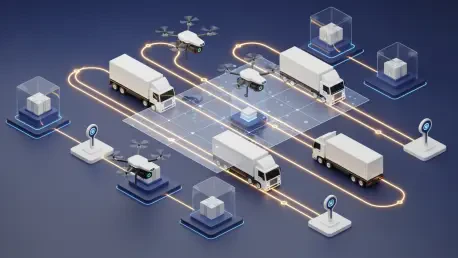
Beyond communication, companies such as Uber Freight are leveraging artificial intelligence to maximize physical efficiency across the entire transportation network through advanced route bundling. By analyzing millions of historical data points, these AI-driven systems can identify patterns that allow them to link disparate shipments into continuous loops, significantly reducing the occurrence of empty miles. Known as “deadhead” travel, these unladen miles have long been a source of waste and unnecessary environmental impact within the trucking industry. The precision offered by current network optimization tools allows for the synchronization of load schedules that were previously invisible to human planners. This level of coordination results in a dual benefit of lowering the overall cost of operations while helping the industry make measurable progress toward sustainability goals. As the network becomes more interconnected, the ability to predict capacity needs across different regions allows brokerages to secure better rates and ensure that their carrier partners remain profitable and productive.
Precision Logistics: Data as the New Brokerage Standard
One of the most transformative shifts in the industry is the replacement of human guesswork in pricing strategies with the mathematical certainty provided by machine learning models. Modern rate optimization now relies on sophisticated algorithms that ingest years of internal data, carrier performance metrics, and fluctuating seasonal trends to produce highly accurate price quotes in seconds. Many established firms have adopted a “human-in-the-loop” strategy, which ensures that while the AI handles the vast majority of standard, high-frequency routes, more complex or non-standard shipments are automatically flagged for manual review. This collaborative approach minimizes the risk of underpricing a difficult load while ensuring that the brokerage remains competitive on the bulk of its business. The result is a more stable pricing environment that provides shippers with the consistency they demand and protects the brokerage’s bottom line from the volatility of the spot market.
The process of matching the right carrier to the right load is undergoing a similar evolution through the use of multi-variable ranking systems that eliminate the need for speculative phone calls. Instead of a broker calling every carrier in their database, AI systems can now rank available trucks based on a complex matrix of proximity, historical route performance, and current available capacity. This ensures that carriers are presented with loads that align with their specific business needs and preferred lanes, which increases the likelihood of a successful booking on the first interaction. By using these precision matching tools, brokerages can secure capacity much faster than their traditional counterparts, a vital advantage in a market where the best trucks are often booked within minutes. This data-driven matching also fosters stronger long-term relationships with carriers, as they are no longer inundated with irrelevant offers that do not fit their operational profile, leading to higher retention and more reliable service levels.
Supply Chain Security: Mitigating Risk through Advanced Identity
As cargo theft evolves into a highly organized and technologically sophisticated enterprise, modern brokerages are deploying AI as their primary line of defense to protect their assets and their reputations. New security protocols now utilize advanced identity verification systems that incorporate facial recognition and real-time biometric checks to ensure that the individual picking up a shipment is the authorized driver. These tools are built directly into the mobile apps and workflow management systems used by carriers, closing the security gaps that manual paper-based checks often leave open. By verifying a driver’s credentials against multiple government and industry databases in real-time, the system can flag potential fraud before the truck even reaches the loading dock. This level of automated scrutiny has become necessary as criminals have learned to exploit the traditional, trust-based interactions that previously defined the brokerage business.
To maintain a competitive edge, successful industry leaders have focused on a strategy of narrow AI deployments that offer immediate and measurable returns on investment. These firms treat artificial intelligence as a way to augment their workforce rather than replace it, specifically targeting the repetitive tasks that lead to employee burnout and clerical errors. This creates an operational “flywheel effect” where every successful transaction feeds more data back into the system, making the algorithms smarter and more predictive over time. This compounding advantage means that the more a company uses these tools, the more efficient they become, creating a widening gap between technologically advanced firms and those still relying on legacy processes. By focusing on the incremental improvement of core functions like scheduling, tracking, and security, brokerages are building a more resilient foundation that can withstand the unpredictable nature of the global supply chain.
Strategic Evolution: Preparing for a Data-First Market
The division between modern, technology-forward brokerages and those clinging to traditional methods expanded significantly as data became the industry’s most valuable capital asset. Companies that leveraged machine learning to manage the heavy lifting of pricing and load matching observed accelerated growth while simultaneously recording a dramatic reduction in insurance claims and operational errors. The shift toward a data-first culture was not merely a technological upgrade but a fundamental change in how logistics professionals approached the market. As the industry moved toward 2028, the ability to turn historical patterns into actionable insights became the defining characteristic of a successful operation. Firms that successfully integrated these tools found that they could scale their business without a linear increase in overhead costs, allowing them to remain profitable even during periods of low freight demand or high fuel prices.
To capitalize on these shifts, the most successful firms prioritized a bottom-up approach to technology adoption rather than waiting for a single miracle software to solve every problem. They addressed the fragmented nature of their databases by integrating disparate software into a unified platform, which allowed their AI models to learn from every completed load and every missed opportunity. These organizations invested heavily in training their staff to act as strategic analysts who could interpret AI-generated insights, rather than simple data entry clerks. By focusing on data cleanliness and high-frequency automation, they established a roadmap that turned logistics from a game of chance into a disciplined science of efficiency. The companies that moved early to secure their digital infrastructure were the ones that eventually dictated the terms of the market, proving that the future of freight depended on the strength of a company’s algorithms as much as the strength of its relationships.