
The contemporary industrial landscape is currently grappling with a relentless combination of volatility, uncertainty, complexity, and ambiguity that has fundamentally altered how goods move across the globe. For supply chain managers and logistics directors, this reality has necessitated a dramatic shift from traditional expansion strategies toward a philosophy often described as “Beyond the Build,” where intelligence and integration take precedence over raw square footage. Instead of merely pouring concrete for larger facilities, leaders are now forced to navigate persistent labor shortages and geopolitical instabilities by investing in the intelligent synthesis of advanced robotics and human-centric operational frameworks. This evolution is transforming the warehouse from a static storage box into a dynamic, high-performance asset capable of meeting the hyper-accelerated speed-to-market demands of the modern e-commerce economy. By prioritizing resilience over sheer size, organizations are finding that the integration of artificial intelligence and automated systems allows them to remain agile in a market where consumer expectations and trade regulations can change overnight. The goal is no longer just to store products but to create a responsive ecosystem that can predict fluctuations and adjust internal workflows without the friction typical of manual operations. Transitioning to this model requires a deep understanding of how digital and physical assets interact, ensuring that every square foot of a facility is optimized for maximum throughput and minimum waste.
Integrated Flows: Bridging Production and Storage
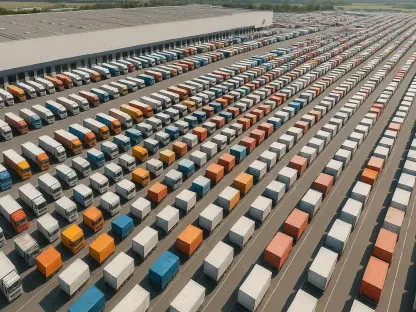
A significant trend in modern warehouse architecture is the intentional blurring of lines between manufacturing, storage, and distribution to create a circular product flow. Historically, these functions existed as separate silos, often requiring extensive transportation and handling to move a finished good from a production line to a shipping dock. Today, companies are integrating automated production lines directly into their storage facilities, utilizing high-speed conveyor systems and autonomous mobile robots to eliminate unnecessary legs of the supply chain. This seamless movement of goods represents a shift toward a more holistic view of the product lifecycle, where the warehouse acts as a continuous extension of the manufacturing process. By removing the need for manual vehicle loading and unloading between stages, facilities can significantly reduce damage rates and labor costs while simultaneously increasing the velocity of their inventory. This integrated approach also allows for better quality control, as sensors and vision systems can monitor products from the moment they are assembled until they are packed for final delivery. The result is a more compact, efficient operation that maximizes the utility of existing space and reduces the environmental impact of industrial activities.
Achieving this level of integration requires flawless communication between hardware and software, specifically between Enterprise Resource Planning systems and Warehouse Management Systems. These digital platforms serve as the central nervous system of the facility, coordinating the movement of thousands of items in real time across complex networks of automated machinery. However, these transitions often involve a significant learning curve and a dedicated period for debugging to ensure that all subsystems are synchronized. Automation is not an instant fix for operational inefficiencies; rather, it is a long-term strategic investment that requires careful planning and phased implementation to be successful. Organizations must be prepared to invest in robust middleware that can bridge the gap between legacy software and modern robotic controllers, ensuring that data flows freely without bottlenecks. During the initial rollout, many facilities experience a temporary dip in productivity as staff adapt to new workflows and technical issues are resolved. Managers who recognize this as a necessary phase of maturation are better positioned to reap the long-term benefits of a fully synchronized, integrated supply chain that can react to market shifts with surgical precision.
Strategic Flexibility: Maximizing Space Through Modular Optionality
Warehouses are increasingly prioritizing the concept of optionality, which is the ability to pivot operations quickly based on shifting market demands and seasonal inventory spikes. Utilizing goods-to-person systems, such as automated bin-picking robots and high-density storage cubes, allows facilities to consolidate their inventory and significantly reduce the physical footprint required for thousands of unique items. This approach turns the traditional warehouse model on its head by bringing the goods directly to the picker rather than requiring employees to walk miles of aisles every day. By condensing storage areas, companies can allocate more space to value-added services or high-speed sorting, making the building far more productive per square foot. Furthermore, the use of vertical space through automated storage and retrieval systems ensures that every inch of the facility is utilized, even in urban environments where land prices are prohibitively high. This density is crucial for maintaining a wide variety of stock-keeping units without the need for massive, sprawling distribution centers that are difficult to manage and expensive to maintain.
Modular automation provides the scalability needed to handle growth between 2026 and 2028 without requiring massive structural changes to the building. By using Warehouse Execution Systems to sequence orders in real time, managers can ensure that high-priority tasks, such as expedited shipping or same-day deliveries, are completed with maximum efficiency. This flexibility is particularly vital for handling immediate customer needs, such as “will-call” orders or flash sales, where speed and accuracy are paramount to maintaining a competitive edge. The modular nature of these systems means that extra robotic units can be added or removed based on current demand, allowing for a more cost-effective “pay-as-you-grow” model of automation. This prevents the common mistake of over-investing in rigid infrastructure that might become obsolete if consumer buying habits shift. In a world where the only constant is change, the ability to reconfigure a warehouse floor in a matter of days rather than months is a significant strategic advantage. Facilities that embrace this modularity can scale their operations up or down with minimal disruption, ensuring that they remain profitable regardless of broader economic fluctuations.
Operational Intelligence: Enhancing Performance via Drones and AI
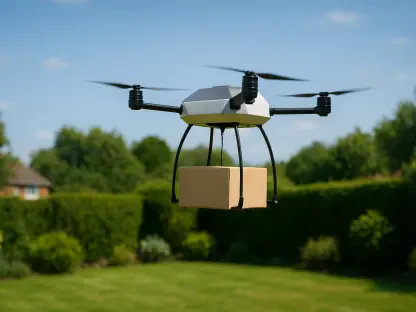
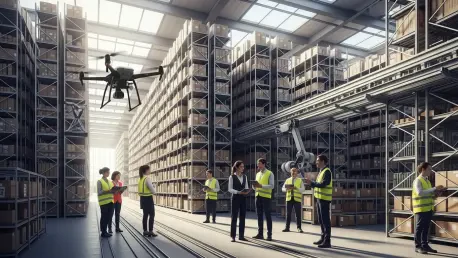
The integration of autonomous drones marks a significant shift toward proactive inventory management, replacing slow and error-prone manual cycle counts with frequent, automated occupancy reports. These aerial units can navigate high-rack locations that are often difficult or dangerous for human workers to reach, providing high-resolution imagery and barcode scans in a fraction of the time. This technology allows for significant labor reallocation, moving staff away from repetitive and monotonous counting tasks and toward higher-value roles like inventory analysis and problem-solving. Furthermore, using drones to check the structural integrity of racks and the placement of pallets improves workplace safety by reducing the need for employees to operate heavy material-handling equipment in tight or elevated positions. The data collected by these drones is fed directly into the warehouse management system, providing a real-time digital twin of the facility’s current stock levels. This level of visibility prevents the costly issue of “ghost inventory,” where items are listed in the system but cannot be found on the floor, leading to missed shipments and frustrated customers.
Similarly, Artificial Intelligence assistants are democratizing data access by providing natural language interfaces for warehouse floor workers and supervisors. These sophisticated tools allow employees to resolve technical issues, query the location of specific items, or check equipment status directly through voice commands or handheld devices without waiting for IT intervention. This immediate access to information is essential for maintaining productivity in high-velocity environments where every minute of downtime translates into lost revenue. Moreover, this technology facilitates multilingual training and real-time translation, which is a critical advantage in a globalized workforce characterized by diverse backgrounds and high turnover rates. New hires can be onboarded more quickly and safely as the AI assistant provides step-by-step guidance and safety warnings in their preferred language. By lowering the barrier to entry and providing constant support, these digital assistants help bridge the skills gap and ensure that the workforce remains capable of managing increasingly complex automated systems. This human-AI collaboration enhances the overall intelligence of the warehouse, making the entire operation more resilient and responsive to daily challenges.
Architectural Evolution: Preparing for Robot-Centric Models
Industry experts suggest that by the end of the current decade, warehouse designs will become increasingly robot-centric, prioritizing the specific needs of automated systems over traditional manual processes. This transition involves a move toward “dark warehouses” that are far more energy-efficient and cost-effective because they require significantly less climate control and lighting than facilities designed primarily for human occupancy. In this future-facing model, humans will no longer be the primary movers of goods; instead, their labor will focus on handling exceptions, maintaining complex machinery, and making high-level strategic decisions. The architecture of these buildings will feature narrower aisles, taller racks, and specialized flooring designed to accommodate the high-speed movements of various robotic fleets. This shift allows for a level of precision and consistency that is simply impossible to achieve with a purely manual workforce. By designing from the ground up for machines, companies can optimize every aspect of the facility for throughput, from the layout of the loading docks to the location of charging stations and maintenance bays.
As facilities adopt diverse types of robots from various vendors, the software used to orchestrate these heterogeneous fleets becomes the most critical component of the infrastructure. Multi-agent orchestration platforms ensure that different robotic systems work together harmoniously rather than operating in isolated silos that compete for space and resources. This software acts as an air traffic controller for the warehouse floor, managing the paths of autonomous mobile robots, bin-pickers, and automated forklifts to prevent collisions and bottlenecks. Digital twins and advanced simulations have also become essential tools for validating these complex layouts and workflows before a single brick is laid or a single machine is purchased. By testing different scenarios in a virtual environment, managers can identify potential points of failure and optimize the configuration for maximum efficiency. This data-driven approach to design reduces the risk associated with large-scale automation projects and ensures that the physical facility is perfectly aligned with the digital systems that govern it. The end result is a highly synchronized environment where technology and architecture work in tandem to drive operational excellence.
Human Capital: Modernizing Labor Management and Development
To combat tight labor markets and high turnover, modern warehouses must adopt flexible scheduling and empathetic management practices that move beyond rigid, traditional eight-hour shifts. Implementing shift-swapping apps and utilizing gig-worker models allow facilities to scale their workforce dynamically based on the specific labor requirements of current orders and incoming shipments. This shift acknowledges that complex e-commerce fulfillment, which often involves picking individual items rather than full pallets, requires a different labor strategy than bulk replenishment operations. By offering employees more control over their schedules, companies can improve morale and attract a wider range of talent, including those who may need non-traditional hours. This flexibility also allows the warehouse to respond to sudden peaks in demand without overburdening the core staff, reducing burnout and improving long-term retention. In this model, the workforce is treated as a dynamic resource that can be scaled up or down with the same ease as the automated systems they support, creating a more balanced and sustainable operational environment.
Long-term retention is achieved by turning warehouse jobs into viable, long-term career paths through the establishment of dedicated internal training academies. By offering clear pathways for advancement from entry-level roles to technical management and system supervision, companies can foster a more dedicated and versatile workforce. These academies provide employees with the skills needed to operate and maintain the advanced technology found in the next generation of warehouses, ensuring that the human element remains a valuable part of the equation. Centralizing the hiring process and providing robust, on-site support across multiple locations ensures that the quality and training of the workforce remain consistent, even as the organization expands. Providing certifications in robotics maintenance, data analysis, and logistics management not only benefits the company but also empowers workers with transferable skills in an increasingly digital economy. When employees see a future for themselves within the organization, they are more likely to contribute to process improvements and maintain a high standard of work, which is essential for the success of any high-tech facility.
Functional Excellence: Refining Workflows and Data Integrity
Detailed process mapping is a vital tool for exposing hidden complexities and redundant steps within a warehouse’s workflow that technology alone cannot fix. By visually documenting every standard operating procedure, managers can eliminate the reliance on “tribal knowledge,” which often leads to inconsistencies when experienced workers leave the organization. This systematic approach ensures that the most popular items are stored in the most accessible “golden zone” locations, a practice known as slotting optimization, which minimizes the distance workers and robots must travel. Constant review of the facility layout is necessary to adapt to changing inventory profiles and seasonal trends, ensuring that the warehouse remains as efficient as possible. Without a clear understanding of the underlying processes, even the most advanced AI and robotics will fail to deliver their full potential, as they will simply be automating inefficient behaviors. Refined workflows provide the necessary foundation for digital transformation, creating a clear structure that can be easily translated into software logic and robotic commands.
Operational excellence is also heavily dependent on the “last 10 feet” of the process at the loading dock, where the product finally leaves the facility and enters the transportation network. Maintaining basic infrastructure, such as reliable and ubiquitous WiFi, is an absolute prerequisite for data integrity, as poor connectivity leads to manual workarounds, delayed updates, and inventory errors. Involving frontline workers in the design phase of new processes ensures that the systems are practical and that staff buy-in is high from the moment a new technology is introduced. When employees understand the “why” behind a change and see how it makes their jobs easier or safer, they are much more likely to embrace the transition and provide valuable feedback for further optimization. Ensuring that the loading dock is equipped with sensors and automated verification systems helps prevent mis-ships and ensures that the digital record matches the physical reality of every shipment. In the end, the success of a next-generation warehouse depends on the seamless coordination between high-level AI strategy and the practical, day-to-day realities of the warehouse floor, where data integrity is the currency of efficiency.
The Final Transformation: Realizing the Resilient Warehouse Ecosystem
The transition toward a fully integrated smart warehouse was ultimately defined by the seamless blend of advanced machine learning and strategic human oversight. Logistics leaders recognized that the value of these facilities resided not in their physical dimensions but in their capacity to interpret and act upon massive streams of operational data in real time. By prioritizing data hygiene and infrastructure reliability, organizations moved away from reactive troubleshooting and toward a proactive model of supply chain management. This transformation ensured that the warehouse no longer served as a simple bottleneck in the flow of goods but rather functioned as a high-speed hub of industrial intelligence. The implementation of modular robotics and AI-driven orchestration allowed centers to scale with unprecedented speed, effectively insulating them from the labor shortages and trade disruptions that once plagued the sector. As these systems matured, the industry witnessed a significant shift in how labor was perceived, with employees transitioning from manual handlers to system supervisors who managed the digital-physical interface.
The overarching goal of achieving resilience through technological synthesis was finally realized, providing a blueprint for the next phase of global trade infrastructure. Companies that successfully navigated this transition focused on creating a unified ecosystem where every component, from the autonomous drone to the loading dock sensor, contributed to a single source of truth. This holistic approach eliminated the inefficiencies of siloed departments and allowed for a circular flow of products and information that boosted both profitability and sustainability. By investing in internal training academies, these organizations secured their human capital, ensuring that their staff possessed the expertise to troubleshoot and optimize the very machines they worked alongside. The shift toward robot-centric designs and “dark” operational models allowed for significant reductions in overhead, while modularity provided the insurance needed against market volatility. Ultimately, the warehouses that thrived were those that viewed technology not as a replacement for strategy, but as the essential medium through which modern logistics was executed, ensuring a robust and adaptable presence in the global market.