
The beverage distribution sector is currently navigating an unprecedented technological shift where the lines between traditional algorithmic logic and genuine artificial intelligence have become dangerously blurred for most industry leaders. This evolution represents a significant advancement in the logistics and supply chain sector, marking a departure from the manual, human-centric processes that defined the previous decades. As 2026 becomes a pivotal year for infrastructure modernization, this review explores the trajectory of the technology, its underlying features, and the profound impact it has on global distribution networks.
The purpose of this review is to provide a thorough understanding of the technology, its current capabilities, and its potential development in a market that is increasingly dependent on speed and precision. While the industry has long utilized basic automation, the arrival of data-driven intelligence has introduced a new level of complexity. Understanding these changes requires a deep dive into the architectural shifts and the marketing trends that frequently obscure the actual technical reality of the current logistics landscape.
Evolution of Automation in the Beverage Sector
The beverage distribution landscape is currently transitioning from legacy frameworks toward sophisticated digital architectures that prioritize real-time responsiveness. For decades, the industry operated on the backbone of Route Accounting Systems driven by deterministic logic—rigid, pre-defined rules that dictated how stops were sequenced and how loads were built. These systems were reliable but lacked the flexibility to account for the chaotic nature of modern urban delivery environments, leading to inefficiencies that human operators had to manually correct.
In the current technological landscape, the sector is grappling with a distinct identity crisis as it attempts to distinguish between these traditional heuristic systems and modern, data-driven artificial intelligence. This shift is primarily fueled by the urgent need for higher throughput and the elimination of manual bottlenecks in a market where labor costs continue to rise. Consequently, the industry has seen a rapid move toward platforms that promise to reduce human intervention, though the distinction between genuine learning systems and standard automation remains a point of intense debate among supply chain professionals.
Core Architectural Components and Features
Modern distribution automation is built on a tiered architectural structure that combines legacy stability with emerging intelligence. This hybrid approach allows distributors to maintain their core operations while selectively introducing advanced tools to handle specific logistical challenges. The integration of these components determines the overall efficiency of the supply chain, as each layer serves a unique function in the movement of goods from the production line to the retail shelf.
Heuristic Optimization Engines
The backbone of most current distribution systems remains the heuristic optimization engine. These software tools function based on pre-defined human parameters to manage inventory and delivery windows with high degrees of predictability. While these engines are indispensable for maintaining order, their performance is inherently static; they execute specific commands without altering their underlying logic based on external results or unexpected environmental changes.
The significance of heuristic engines lies in their ability to provide a stable operational foundation for large-scale logistics. However, they lack the adaptability required to handle the volatile nature of 2026 market demands. Because they rely on fixed “if-then” rules, these systems cannot innovate on their own, meaning that any improvement in efficiency must be manually programmed by a developer rather than learned by the machine through observation and data analysis.
Machine Learning and Agentic Tools
In contrast to rule-based systems, genuine artificial intelligence components utilize machine learning to identify complex patterns within vast delivery datasets. These tools are characterized by their ability to learn from historical data, such as “failed” routes or missed time windows, and automatically adjust future parameters to prevent recurring errors. This represents a fundamental shift from static execution to dynamic intelligence, where the software improves its own predictive accuracy over time without human interference.
Furthermore, the introduction of agentic tools has enabled systems to act as independent agents capable of solving multi-variable problems in real-time. Instead of simply following a route, an agentic system might recalibrate an entire fleet’s schedule based on a sudden change in local traffic patterns or a sudden spike in a specific retailer’s demand. This level of autonomy is what truly separates modern AI from the optimization engines of the past, providing a competitive edge to those who can successfully integrate it.
Warehouse Robotics and Automated Case-Picking
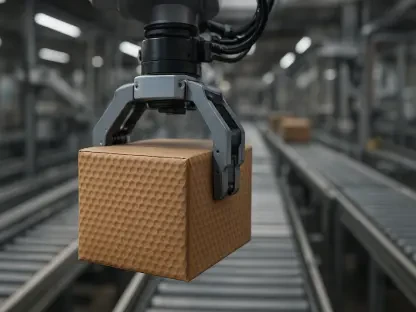
Physical automation has achieved its most significant implementation within the controlled environment of the warehouse. Technologies such as automated sorting systems and micro-fulfillment robotics have transformed internal operations by allowing for high-speed case-picking and precise inventory management. These hardware components are designed to minimize the number of “touchpoints” required to move a product from a storage pallet to a delivery vehicle, which directly correlates to a reduction in operational errors.
The deployment of these robotics systems has allowed beverage companies to handle a higher volume of stock-keeping units (SKUs) without a corresponding increase in warehouse floor space. By utilizing vertical storage and high-speed robotic shuttles, distributors can maximize their existing infrastructure. Moreover, these systems integrate directly with the management software, ensuring that physical movement and digital data remain perfectly synchronized, which is essential for accurate real-time inventory tracking.
Industry Shifts and the AI Rebranding Trend
One of the most prominent trends in the field today is the widespread rebranding of legacy automation as “Artificial Intelligence.” Market data indicates that over half of supply chain professionals now classify traditional rules-based logic as AI, a shift largely driven by the pressure to adopt innovative labels during public earnings seasons. This phenomenon has led to a market where process redesign is often mistaken for algorithmic intelligence, making it difficult for stakeholders to evaluate the actual technical value of their software investments.
This rebranding trend has fostered the emergence of “Lean AI” frameworks, which often prioritize the elimination of manual steps through conventional coding rather than through neural networks or machine learning. While these improvements are objectively beneficial, they do not always represent the technological leap that the marketing suggests. As a result, the industry is seeing a growing demand for transparency, as distributors seek to understand if they are paying for genuine innovation or simply a more polished version of the optimization engines they have used for years.
Real-World Applications and Sector Deployment
The practical application of automation is most visible in how products reach the consumer, particularly in high-density urban areas. Companies are increasingly deploying a combination of sophisticated software and localized hardware to bridge the gap between large-scale manufacturing and localized retail. This deployment is not just about speed but about creating a resilient network that can withstand the fluctuations of consumer demand and logistical disruptions.
Last-Mile Delivery Optimization
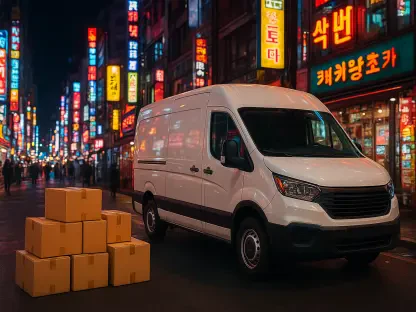
Last-mile delivery represents the most expensive and complex segment of the supply chain, and it is here that automation is having a transformative effect. Native AI platforms are being deployed to analyze real-world variables, such as traffic congestion and seasonal demand spikes, to create resilient delivery schedules. These systems provide a level of coordination that was previously impossible, such as automating communication between drivers and retailers while providing instant, dynamic freight quotes.
By utilizing these tools, beverage distributors can ensure that their delivery fleets are operating at peak efficiency. The software does not just provide a map; it provides a comprehensive strategy that accounts for the specific constraints of each delivery location. This application of technology reduces fuel consumption and wear on vehicles while simultaneously improving customer satisfaction through more accurate and reliable delivery windows.
Automated Micro-Fulfillment Centers
In urban environments, distributors are increasingly utilizing automated micro-fulfillment centers to decentralize their operations. These localized hubs use robotics to manage high-volume, low-complexity picking tasks, allowing for faster response times to nearby retailers. By deploying these systems, beverage companies can maintain smaller inventories closer to the end consumer, which significantly reduces the fuel costs and logistical strain associated with long-haul distribution from a centralized warehouse.
These centers function as high-efficiency nodes within a larger network, providing the flexibility to handle small, frequent orders that would otherwise be inefficient for a massive distribution center to process. The integration of robotics in these small-scale environments demonstrates how automation can be scaled to fit different geographical needs. Consequently, the move toward micro-fulfillment is redefining urban logistics, making the supply chain more agile and less dependent on massive, remote storage facilities.
Technical Hurdles and Market Obstacles
Despite the clear benefits of automation, the industry faces significant hurdles that prevent universal adoption and maximum efficiency. These obstacles are both strategic and physical, representing a gap between the idealized version of an autonomous supply chain and the reality of day-to-day operations. Addressing these challenges is essential for any organization that hopes to see a genuine return on their technological investments over the coming years.
Governance and Strategy Deficit
A primary challenge facing the beverage industry is the widespread lack of formal strategy regarding technology adoption. A vast majority of organizations pursue automation without consistent evaluation processes or clearly defined success criteria, leading to “faith-based” investments. In these scenarios, companies may overpay for repackaged legacy software because they lack the technical governance required to distinguish between marketing hype and genuine algorithmic advancement.
This deficit in strategy often results in a failure to measure the long-term impact of new tools. Without rigorous, data-driven governance, distributors struggle to identify which parts of their productivity gains are due to new technology and which are merely the result of basic process improvements. For the industry to move forward, it is critical that organizations develop a more analytical approach to software procurement, prioritizing measurable outcomes over the prestige of adopting a specific label.
Physical Limitations in Autonomous Transport
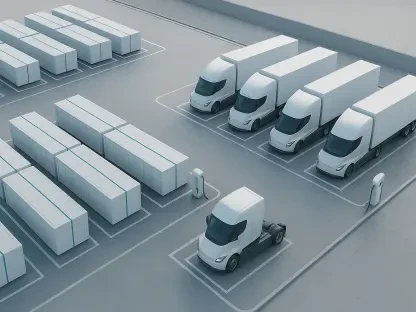
While software has advanced rapidly, the physical reality of autonomous road delivery remains a significant hurdle for the average distributor. Current pilots of autonomous vehicles are restricted to favorable climates and low-complexity environments, making them impractical for many rural or dense urban routes. The logistical and geographical obstacles to full vehicle autonomy remain high, creating a disconnect between the optimistic promises of autonomous fleets and the operational reality of 2026.
Distributors must also contend with the high cost of maintaining specialized robotic equipment and the lack of a standardized infrastructure for autonomous transport. Unlike the controlled environment of a warehouse, the open road presents an infinite number of variables that current sensors and algorithms struggle to navigate perfectly. As a result, the transition to fully autonomous delivery vehicles is likely to be a slow, incremental process rather than a sudden revolution, requiring continued reliance on human drivers for the foreseeable future.
Future Outlook and Technological Trajectory
The trajectory of beverage distribution is moving toward agentic intelligence, where systems act as independent problem-solvers rather than just followers of rules. Future developments will likely focus on the deep integration between warehouse robotics and predictive software, creating a seamless flow of data and physical goods. As breakthroughs in sensor technology and data processing continue between 2026 and 2029, the industry will move from “reactive” automation to “proactive” systems that forecast market shifts before they occur.
This shift toward proactive logistics will enable a more autonomous global supply chain that can adjust to everything from climate events to sudden shifts in consumer preference. We are seeing the beginning of an era where the supply chain is no longer a static line of movement but a living, breathing network that optimizes itself in real-time. This technological maturity will eventually allow even smaller distributors to compete with industry giants by leveraging the same high-level intelligence tools to maximize their localized efficiency.
Summary of Findings: A Critical Assessment
The review of beverage distribution automation established that while the industry achieved significant gains in operational speed, the persistent confusion between legacy heuristics and genuine artificial intelligence remained a major obstacle. This analysis found that a substantial portion of the productivity increases reported by distributors resulted from rigorous process redesign rather than the implementation of new, self-learning algorithms. Organizations that failed to maintain a clear distinction between these two categories often overpaid for software that offered only incremental improvements over existing systems.
The investigation revealed that physical automation within the warehouse environment provided the most tangible return on investment, whereas autonomous last-mile transport remained limited by geographical and regulatory constraints. Those who successfully navigated this landscape did so by focusing on the removal of manual touchpoints and the integration of localized micro-fulfillment hubs. This strategic focus allowed for a reduction in fuel costs and a more resilient urban presence, proving that the value of automation lay in its practical application rather than its technological novelty.
Moving forward, the industry was advised to adopt a more disciplined approach to technological governance to ensure that future capital was directed toward agentic tools capable of proactive market forecasting. Distributors were encouraged to demand transparency from vendors and to prioritize systems that demonstrated an actual capacity for independent learning. Ultimately, the review concluded that the leaders of the next era would be those who treated technology as a precise tool for problem-solving rather than a generic solution to be bought and implemented without oversight.