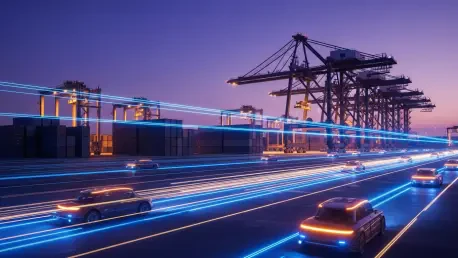

The transition of global logistics from a legacy system of manual ledgers to an interconnected digital powerhouse represents the most significant industrial pivot of the twenty-first century. As of 2026, the global digital logistics market stands at a valuation of approximately $59.27 billion, serving as the critical infrastructure for a world that demands instantaneous fulfillment and absolute transparency. This sector is not merely experiencing incremental change; it is accelerating toward a projected valuation of $396.18 billion by 2035, driven by an aggressive compound annual growth rate of 23.45%. This expansion reflects a deeper shift in how commerce operates, where data replaces traditional intuition and real-time visibility becomes the baseline for competitive survival in a globalized economy.
The primary objective of this digital migration is to move away from siloed information and toward a unified, transparent network that offers end-to-end visibility. By leveraging advanced technologies such as Artificial Intelligence and the Internet of Things, organizations are seeking to mitigate the complexities of modern global trade. This transformation represents a necessary evolution to meet the demands of a modern, interconnected world, where the speed of information must finally match the speed of physical goods. This analysis explores the economic drivers, technological backbones, and strategic shifts that are propelling the digital logistics market toward this multi-billion-dollar milestone, highlighting why the current momentum is unlikely to slow.
From Manual Coordination: The History of Digital Networks
To understand the future of logistics, one must first recognize the profound inefficiencies that characterized its past. Traditionally, the industry relied on fragmented communication—phone calls, paper ledgers, and manual data entry—which often led to significant delays and a pervasive lack of transparency. The current shift toward digital logistics is a direct response to the technical debt accumulated over decades of siloed operations. As globalization accelerated and supply chains became more geographically dispersed, the limitations of legacy systems became impossible to ignore, leading to the birth of a more integrated approach to movement and storage.
The early foundations of this change began with the introduction of RFID and basic warehouse management systems, which paved the way for more sophisticated tracking. However, it was the meteoric rise of e-commerce that served as the ultimate catalyst for the current digital boom. The transition from bulk shipping to high-volume, individual-package delivery forced logistics providers to adopt automated workflows and predictive analytics to manage the sheer complexity of last-mile delivery. These historical shifts redefined logistics from a back-end utility into a strategic differentiator that determines a company’s competitiveness in a digital-first economy, making software as vital as the trucks and ships that carry the cargo.
Decoding the Mechanisms of Modern Supply Chain Optimization
Intelligent Automation: Artificial Intelligence and Predictive Modeling
Artificial Intelligence serves as the brain of the digital logistics market, enabling firms to transition from reactive to proactive operations. AI-driven predictive analytics allow companies to anticipate demand spikes, optimize inventory levels, and significantly reduce operational waste by analyzing vast quantities of data that human planners simply cannot process in real time. Machine learning algorithms analyze historical data and external variables, such as weather patterns and traffic congestion, to calculate the most efficient delivery routes. This level of optimization is crucial for maintaining the precision required in modern just-in-time manufacturing and high-speed retail fulfillment.
Moreover, the integration of AI extends into the warehouse environment, where computer vision and robotic systems manage sorting and picking with unprecedented speed. These systems do not merely follow static instructions; they learn from every movement, identifying bottlenecks and suggesting structural improvements to the workflow. The benefit of this intelligent automation is a drastic reduction in human error and a significant increase in throughput. For many logistics providers, the ability to predict a delay before it happens and reroute a shipment automatically has become the primary metric of success in a market where time is the most valuable commodity.
Building Trust and Transparency: Blockchain and IoT
While AI handles decision-making, the Internet of Things and blockchain provide the sensory input and security required for a reliable network. IoT devices, including sensors and smart tags, act as the eyes and ears of the supply chain, providing real-time data on the location and condition of goods. This is particularly vital for the healthcare and food industries, where maintaining a strict cold chain is essential for product integrity. These sensors can alert managers if a temperature threshold is crossed, allowing for immediate intervention before the cargo is compromised, thus saving millions in potential losses.
Simultaneously, blockchain technology addresses the perennial issue of trust by creating an immutable ledger of transactions. This decentralized approach reduces fraud, ensures regulatory compliance, and streamlines the documentation process for international trade. In a traditional setting, a single shipment could involve dozens of different parties and hundreds of paper documents; blockchain collapses this complexity into a single, verifiable digital record. By making global logistics more secure and efficient, blockchain serves as the glue that holds disparate international networks together, ensuring that every participant has access to the same version of the truth.
Navigating Regional Growth Patterns: The Digital Divide
The adoption of digital logistics is not uniform across the globe, revealing significant regional differences and market-specific considerations. Currently, North America holds the largest market share due to its sophisticated technological infrastructure and high rate of automation. The region benefits from a mature e-commerce landscape and a large concentration of technology firms that specialize in logistics software. However, the Asia-Pacific region is projected to experience the fastest growth through 2035. This rapid industrialization, combined with massive investments in smart city infrastructure, creates a unique environment where disruptive innovations can scale quickly.
Nations like China and India are skipping legacy frameworks and moving straight to mobile-first, cloud-based logistics systems. This leapfrogging effect allows these markets to implement the most advanced solutions without being bogged down by the need to integrate with ancient hardware. In contrast, emerging markets in Africa and South America face different challenges, primarily related to physical infrastructure and connectivity. Despite these hurdles, the global trend is toward a more balanced digital landscape, where cloud-based platforms bridge the gap between developed and developing nations, allowing for a more seamless exchange of goods across all borders.
Future Horizons: Green Logistics and the Rise of Autonomous Freight
Looking toward 2035, the evolution of digital logistics will be increasingly defined by sustainability and autonomy. The green logistics movement is gaining significant momentum as companies use digital tools to track carbon footprints and optimize routes to reduce emissions. The integration of electric delivery vehicles and hydrogen-powered freight is no longer a niche project but a core component of global ESG strategies. Regulatory pressures and consumer demand for clean delivery are pushing logistics providers to find innovative ways to decouple business growth from environmental impact, using data to prove their commitment to the planet.
Furthermore, the transition from pilot programs to broad implementation of autonomous delivery systems is expected to reshape the industry. Drones, self-driving trucks, and smart warehouse robots, supported by the low-latency communication of 5G networks, promise to further reduce operational costs and mitigate the labor shortages currently affecting the sector. These technological shifts will likely lead to a truly synchronized logistics environment where goods move seamlessly from production to the end consumer with minimal manual intervention. The goal is a self-healing supply chain that can adapt to disruptions autonomously, ensuring that the global flow of trade remains uninterrupted regardless of external shocks.
Key Success Factors: Strategies for an Increasingly Connected Industry
For businesses and professionals to thrive in this $396 billion market, several actionable strategies must be prioritized. First, embracing cloud-based logistics platforms is essential for scalability and flexibility. Unlike on-premise systems, cloud deployment allows companies to integrate new tools without massive upfront infrastructure investments, making it possible for smaller firms to compete with industry giants. Additionally, organizations must address the talent gap by fostering a workforce that is proficient in both traditional logistics management and advanced data analytics. The ability to interpret digital insights is becoming just as important as the ability to manage a physical fleet.
Security must also remain a top priority as the industry moves deeper into the digital realm. As supply chains become more connected, they become more vulnerable to cyberattacks, making robust cybersecurity frameworks a prerequisite for any digital initiative. Finally, companies should prioritize intermodal connectivity—using digital platforms to bridge the gap between roadway, maritime, rail, and air logistics. By creating a unified view of the entire journey, firms can identify inefficiencies at transfer points and ensure a smoother transition of goods through complex global networks, ultimately improving the customer experience and lowering costs.
Sustaining Momentum: Actionable Steps for the Age of Logistics 4.0
The analysis of the digital logistics market revealed that the sector reached a critical tipping point where technological integration became the only viable path for growth. It was determined that the successful organizations of this era were those that transitioned away from reactive problem-solving toward a model of predictive resilience. The findings indicated that the most significant gains in efficiency resulted from the synchronization of AI and IoT, which allowed for a transparent flow of information across the entire supply chain. These companies realized that data was not just a byproduct of shipping, but a primary asset that could be leveraged for financial and operational advantages.
To navigate the path toward the $396 billion milestone, businesses were advised to prioritize modular digital architectures that could evolve with emerging technologies. The research showed that the implementation of intermodal digital platforms reduced transit times and documentation errors significantly. Furthermore, a clear focus on cybersecurity was identified as a non-negotiable requirement for protecting global trade routes. Moving forward, the industry must look toward the integration of cross-border data standards to ensure that digital logistics systems remain interoperable. By investing in these foundational digital strategies, stakeholders ensured that the global logistics network remained robust, sustainable, and capable of meeting the demands of a rapidly changing world.