
American shipping corridors are currently facing an unprecedented level of complexity as the intersection of rising fuel prices and labor shortages forces carriers to re-evaluate their traditional operational strategies. Despite the availability of modern tracking tools, the lack of a unified digital framework has led to significant inefficiencies that cost the domestic economy billions of dollars annually in wasted capacity. When disparate systems within the supply chain fail to communicate effectively, the result is a cascade of delays that ripple from coastal ports to inland distribution centers. Bridging these informational gaps is no longer just a luxury for the largest multinational corporations; it has become a necessary evolution for any mid-sized freight enterprise aiming to remain competitive in an increasingly tight market. By consolidating data streams from multiple sources, stakeholders gain a clearer perspective.
Solving Fragmentation
Part 1: IoT Tools
Modern logistics providers are increasingly turning to the Internet of Things to provide a granular level of visibility that was previously impossible to achieve with manual reporting. By equipping trailers with advanced telematics and environmental sensors, companies can monitor not only the physical location of goods but also the internal conditions that might impact the integrity of sensitive cargo. This real-time data flow allows fleet managers to make informed decisions about maintenance schedules, thereby reducing the incidence of roadside breakdowns that derail delivery timelines. Furthermore, the integration of these sensors into a centralized dashboard ensures that all parties, including shippers and third-party logistics providers, are working from the same set of facts. This reduction in informational asymmetry eliminates much of the administrative friction associated with auditing.
Part 2: Port Flow
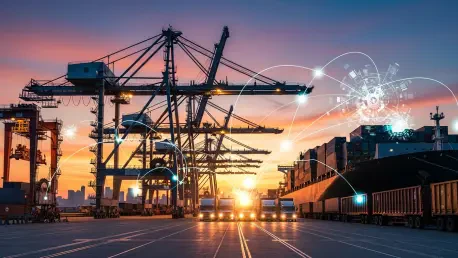
The bottleneck at maritime ports often serves as a primary driver of increased costs, making the integration of port authority data with rail and drayage systems a top priority. When terminal operating systems share live gate activity and vessel berthing schedules with inland carriers, it prevents the congestion that typically occurs when hundreds of trucks arrive simultaneously. This level of coordination relies on standardized communication protocols that allow different software platforms to exchange information without manual intervention. By automating the hand-off between ship and shore, and subsequently between shore and rail, the industry can significantly reduce the dwell time that cargo spends sitting idle in stacks. Reduced dwell time translates directly to lower storage fees and a faster velocity of capital for the retailers. Implementing these shared digital environments remains a priority.
Strategic Resilience
Part 3: AI Models
Artificial intelligence is transforming the way logistics firms approach the problem of empty miles, which historically accounted for a significant portion of non-revenue-generating expenses. By analyzing historical traffic patterns, weather forecasts, and real-time road conditions, machine learning algorithms can suggest alternative routing that avoids congestion before a driver even starts their engine. These systems do more than just navigate; they dynamically re-route entire fleets based on shifting demand and unexpected disruptions in the supply chain. This proactive stance ensures that fuel consumption is minimized and that drivers are able to maximize their hours of service without unnecessary fatigue. Additionally, predictive modeling helps carriers anticipate seasonal spikes in demand, allowing them to reposition equipment effectively. This ensures service levels that consumers now expect.
Part 4: Success Steps
Organizations that successfully navigated the shift toward deep data integration recognized that the true value of these systems lay in their ability to foster collaborative ecosystems. These leaders prioritized the adoption of open-source standards and invested heavily in cybersecurity to protect the integrity of shared data streams across the logistics landscape. They moved beyond simple tracking and focused on creating actionable insights that empowered warehouse managers and dispatchers to solve problems before they escalated into systemic failures. By the time regional partnerships matured, the cost per ton-mile dropped significantly, proving that digital transformation was the primary driver of fiscal health in the transportation sector. Decision-makers implemented comprehensive training programs to ensure that the human element could utilize new tools. These strategic steps ensured the infrastructure.