
The silent hum of a fully autonomous fulfillment center provides a stark contrast to the frantic shouting that once defined the morning shift in global logistics hubs. By mid-2026, the industry has transitioned into an era where artificial intelligence does not just suggest a path forward but actively walks it. This integration of agentic systems has moved from a peripheral experimental advantage to the central nervous system of global commerce. Supply chain management now relies on these digital agents to synthesize massive datasets for demand forecasting and inventory optimization while simultaneously managing the physical flow of labor and assets. This transformation marks the definitive end of manual decision support, ushering in a period where execution is as autonomous as the data analysis that precedes it.
This evolution is driven by the realization that visibility alone is insufficient for the speed of modern markets. While previous iterations of software focused on showing managers where a shipment was delayed, current agentic platforms possess the authority to re-route that shipment and notify stakeholders before a human is even aware of the bottleneck. This shift represents more than just technical progress; it is a fundamental change in organizational philosophy. Companies are no longer asking how AI can help people work faster; they are asking how people can best manage a system that works on its own.
The End of the Spreadsheet ErFrom Passive Monitoring to Autonomous Action
The days of supply chain managers spending forty hours a week buried in static spreadsheets and manual data aggregation have rapidly come to a close. For decades, the spreadsheet was the primary tool for reconciling reality with planning, but its static nature made it a liability in an environment characterized by constant volatility. Traditional AI was limited to descriptive or predictive functions, essentially telling a human what might happen and waiting for a manual response. In contrast, agentic AI has crossed the threshold into making things happen on its own, operating at a frequency and scale that manual intervention simply cannot match.
The fundamental shift in modern logistics is no longer about having better visibility—it is about the system’s newfound ability to act on that visibility without waiting for a manual click. When a disruption occurs, the delay between detection and response has shrunk from hours or days to mere milliseconds. By removing the manual bottleneck, organizations have transformed their supply chains from reactive networks into proactive, self-healing systems. This transition marks the end of the “passive monitoring” phase of management, where the human was the primary engine of action, and signals the start of a truly autonomous operational era.
The Great 2026 Divide: Navigating the Gap Between Incrementalism and AI-Native Design
As the industry matures, a significant strategic split has emerged between organizations merely patching existing systems and those rebuilding from the ground up. Research indicates that while the vast majority of firms are taking a cautious, incremental approach to AI integration, nearly one-fifth of the market is aggressively redesigning their entire workflow to be AI-native. This divergence highlights a critical reality: the true value of modern supply chain technology lies not in minor efficiency gains, but in a radical departure from manual decision support toward autonomous execution. The “incrementalists” often find themselves trapped in a cycle of diminishing returns, trying to fit high-speed intelligence into legacy processes designed for manual oversight.
The organizations leading the market have realized that AI-native design requires a complete rethink of how data flows through the enterprise. Instead of building tools that report to people, these firms are building environments where agents communicate with other agents to solve problems in real-time. This 17% of the market that has committed to a radical redesign is currently setting the pace for the rest of the industry, achieving levels of agility that were previously unthinkable. This divide is not just about technology; it is about the willingness to dismantle outdated organizational structures in favor of a model that prioritizes autonomous decision-making.
Defining the Agentic Frontier: Planning, Execution, and Procurement Agents
Agentic AI represents a step-change from conventional machine learning by operating within pre-defined guardrails to perform complex tasks independently. Planning agents now possess the authority to rebalance inventory across global distribution centers the moment demand signals shift, ensuring that stock is always positioned closest to the anticipated need. These agents do not merely flag a stockout; they analyze the cost of transfer versus the cost of a lost sale and execute the shipment automatically. This level of autonomy ensures that the planning cycle is continuous rather than being tethered to weekly or monthly review meetings.
In the realm of execution and procurement, these autonomous systems are monitoring supplier performance in real-time, initiating sourcing events or flagging protocol deviations without human intervention. Execution agents can automatically re-tender freight and update customer ETAs during transit disruptions, handling the thousands of micro-decisions that occur every day in a global network. Even in procurement, agents are now capable of identifying price anomalies or delivery delays and immediately triggering alternative sourcing protocols. By defining these specific roles for AI agents, companies have created a layered defense against volatility that operates 24/7.
Where Intelligence Meets the Floor: The Integration of Physical AI and Computer Vision
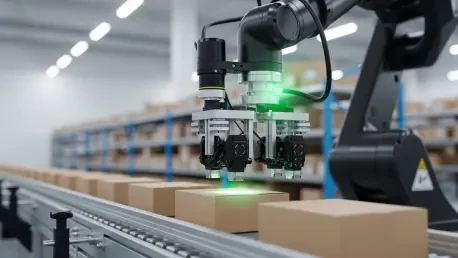
The evolution of supply chain management is not confined to software; it is physically manifesting on the warehouse floor through the rise of Physical AI. By replacing manual barcode scanning with advanced computer vision and sensors, systems can now perceive and interpret their environment in real-time to verify quantities and identify package characteristics. This shift has turned inventory management into a continuous, autonomous auditing process, rendering the traditional, disruptive cycle-count calendar obsolete and ensuring the digital record perfectly matches physical reality. Robots equipped with these visual sensors navigate aisles, identifying misplaced items and correcting the warehouse management system without stopping for human assistance.
This integration of vision and intelligence has also revolutionized the labor-intensive picking and packing process. Computer vision systems can now verify the contents of a container as it is being packed, catching errors that would otherwise lead to costly returns or customer dissatisfaction. Furthermore, Physical AI allows for a more dynamic use of space, as the system can track the movement of every pallet and piece of equipment with precision. This real-time spatial awareness enables warehouses to operate at higher densities and throughput rates, bridging the gap between digital planning and physical execution.
Quantifying the Impact: Improving P&L Through Data-Dense Decision Making
The most successful implementations of agentic AI are found in high-frequency decision environments where data signals are most dense. Organizations are seeing a 20% to 40% reduction in forecast errors compared to traditional statistical models, allowing for a significant reduction in safety stock without sacrificing service levels. This precision has a direct impact on working capital, freeing up millions of dollars that were previously tied up in excess inventory. By narrowing the gap between what is predicted and what is actually sold, companies are achieving a level of lean operation that was once considered a theoretical ideal.
Furthermore, the application of AI in transportation execution—specifically regarding dynamic routing and carrier-rate optimization—is delivering landed-cost reductions between 5% and 12%. These gains are particularly evident in the optimization of backhauls and the consolidation of shipments, where the AI can process millions of possible combinations to find the most cost-effective path. When multiplied across thousands of shipments, these single-digit percentage improvements translate into massive bottom-line growth. This data-dense approach ensures that every logistical decision is grounded in a rigorous, quantitative analysis of the current market state.
The Vendor Revolution and the Human Element: Perspectives on Scalable Governance
The rapid re-platforming of the SCM software sector has seen vendors rebuild their entire stacks around machine learning and generative AI. Experts like Nathanael Powrie note that while marketing can sometimes outpace reality, the gap is closing as AI begins to deliver tangible P&L results. This overhaul has forced a change in how software is purchased and deployed; organizations are no longer looking for features, but for the quality of the underlying intelligence and its ability to integrate with existing data lakes. The software is no longer a tool for recording transactions but an engine for generating outcomes.
However, the transition to agentic systems requires a robust framework of decision governance; the human element remains vital not for routine monitoring, but for exercising high-level judgment. As agents take over the “busy work,” the role of the supply chain professional has shifted toward managing the complex exceptions that sit outside of an agent’s defined parameters. Governance structures must ensure that agents operate within ethical and corporate bounds, requiring a new set of skills focused on oversight and strategic calibration. The human-in-the-loop model has evolved into a human-on-the-loop model, where people set the strategy and the agents execute the tactics.
A Strategic Framework for Implementing Agentic Systems in Modern Logistics
The transition to an agentic supply chain required a move away from isolated pilots toward enterprise-wide scaling built on a foundation of clean data. Successful organizations prioritized the automation of administrative tasks and document validation to free up personnel for high-value strategic initiatives. Leaders established rigorous guardrails that allowed autonomous agents to function without constant oversight, while simultaneously maintaining clear protocols for human intervention. This era was defined by the realization that AI success depended less on the algorithm itself and more on the quality of the data fed into the system.
The path forward for the industry was paved by tying every AI investment directly to operational outcomes and P&L results. Firms that focused on high-frequency decision areas, such as dynamic routing and inventory rebalancing, realized the fastest returns on their investment. Insights gained during this period suggested that the most resilient supply chains were those that integrated physical AI with digital agents to create a seamless feedback loop. Ultimately, the industry moved toward a model where technology served as a force multiplier for human judgment, ensuring that global networks could finally operate with the speed and precision required by the modern world.