
Beyond Efficiency: Reimagining the Warehouse as a Strategic Asset
The modern warehouse has shed its skin as a mere storage space to emerge as the central nervous system of contemporary commerce, a dynamic engine that directly dictates growth, customer loyalty, and market leadership. It is no longer a simple line item on a balance sheet but a critical hub for creating competitive advantage. Unlocking this potential depends on warehouse automation, but not as a piecemeal technological fix. True transformation demands a holistic, strategic approach that seamlessly integrates people, processes, and technology. This analysis explores how businesses can pivot from a narrow, tactical mindset toward a comprehensive strategy, moving beyond simple cost-cutting to build resilient, scalable, and intelligent operations. The core pillars of this approach—a business-centric case for automation, flexible systems, and intelligent orchestration—are creating a truly unified and future-proof logistics ecosystem.
The Evolution from Manual Labor to Modern Automation
The journey of the warehouse is a story of continuous evolution, shaped by market demands and technological innovation. For decades, operations were dependent on manual labor, where efficiency was measured by physical endurance and process discipline. The first wave of automation introduced fixed, large-scale systems like conveyors and sorters, which delivered significant gains in throughput at the cost of operational rigidity. These systems were engineered for a predictable world of mass production and stable consumer demand. However, the rise of e-commerce shattered that stability, introducing unprecedented complexity through its demand for high-mix, low-volume orders, rapid fulfillment, and frictionless returns. This industry shift exposed the critical limitations of legacy automation, proving it ill-equipped to handle the volatility of the modern market. This historical context is vital, as it explains why the strategic imperative is no longer just to automate, but to automate for adaptability.
Pillars of a Modern Warehouse Automation Strategy
Starting with ‘Why’: Building a Business-Centric Automation Case
The most successful automation initiatives begin not with a specific operational problem but with a clear, high-level business objective. A tactical approach that asks, “How can we reduce labor costs in the picking process?” is inherently limited in its scope and impact. In contrast, a strategic approach asks, “How can we leverage technology to improve the end-to-end customer experience while building capacity for future growth?” This fundamental shift in perspective transforms the goal from isolated efficiency gains to finding the optimal blend of people, technology, and software to solve broader challenges. For instance, rather than merely replacing a manual task, a strategic deployment might focus on enhancing order accuracy to reduce costly returns or increasing fulfillment speed to meet premium delivery promises. This holistic view prevents the common pitfall of investing in piecemeal solutions or legacy hardware that fails to align with wider business goals, ensuring automation serves as a catalyst for comprehensive value creation.
Embracing Adaptability: The Move Toward Flexible and Scalable Systems
In an era defined by market volatility, the concept of a static, five-year plan for warehouse operations has become obsolete. Consumer demand, product lines, and delivery expectations can shift dramatically in a matter of months, rendering rigid, single-purpose automation a significant liability. Consequently, a definitive market trend has emerged toward flexible and scalable systems that can adapt to business fluctuations. Robotics, particularly autonomous mobile robots (AMRs), stand as a prime example of this shift, offering the ability to expand, reconfigure, or be redeployed as needs evolve. Unlike massive fixed infrastructure, these solutions enable a “test-and-learn” adoption model. Businesses can initiate a small-scale pilot, validate the technology’s impact on a specific process, and then incrementally scale the deployment across the facility. This approach minimizes upfront risk, accelerates the return on investment, and ensures the operation remains agile enough to pivot in response to future market dynamics.
The Unifying Force: Why Intelligent Orchestration is Non-Negotiable
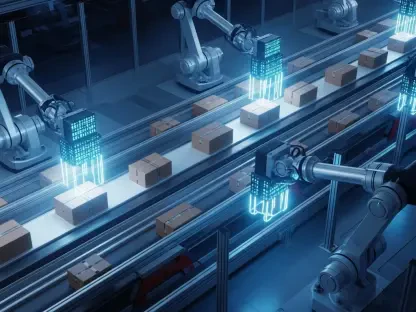
As warehouses increasingly incorporate a diverse mix of technologies—from various robotic systems to automated storage and retrieval systems (AS/RS) and traditional conveyors—the risk of creating a fragmented, fragile operation grows. Without a unifying control layer, these isolated or “bolted-on” systems become a logistical “Frankenstein’s monster,” where each component works independently, creating bottlenecks and deep inefficiencies. The key to unlocking the full value of these investments lies in integration through an intelligent orchestration platform. This robust software layer acts as the central brain of the warehouse, coordinating all components, including human workers, into a single, cohesive ecosystem. It ensures that significant investments perform optimally by making real-time decisions to balance workloads and streamline flows. Moreover, this approach incorporates critical lifecycle considerations like maintenance and system health monitoring from the outset, preventing costly downtime and ensuring the long-term viability of the automated environment.
Peering into the Future: What’s Next for Warehouse Automation?
Looking forward, the strategic trends of today will mature into even more sophisticated operational models. The role of intelligent orchestration is deepening, powered by artificial intelligence and machine learning that enable predictive and prescriptive analytics. Instead of just reacting to current conditions, warehouse software will anticipate bottlenecks, forecast labor needs, and self-optimize workflows for maximum efficiency. Robotics will continue to evolve toward greater collaboration, with cobots working seamlessly alongside human employees on complex tasks. Furthermore, the immense volume of data generated by these connected systems is becoming a strategic asset, providing unprecedented visibility into inventory, equipment health, and process performance. This is paving the way for the “digital twin” of the warehouse—a virtual model that allows operators to simulate changes and test optimization strategies before implementing them in the real world, further de-risking innovation and accelerating improvement cycles.
From Theory to Practice: Actionable Steps for Implementation
Translating these strategic concepts into real-world success requires a clear, actionable framework. First, businesses must define their strategic North Star, moving beyond isolated metrics to align automation goals directly with overarching business objectives like market expansion or customer retention. Second, they must prioritize flexibility in every investment, favoring adaptable technologies like robotics and adopting a phased, pilot-and-scale approach to implementation. This allows for learning and adjustment without committing to massive, irreversible capital expenditures. Finally, and most critically, organizations must invest in the brains of the operation by selecting a robust software platform capable of orchestrating a diverse ecosystem of technologies. This central control layer is the linchpin that ensures all other investments work in concert to deliver their maximum potential value.
The Strategic Imperative: Transforming Warehouses into Engines of Growth
Ultimately, unlocking a warehouse’s full potential is not a technological challenge but a strategic one. The days of implementing automation for simple task replacement are over. The future belongs to businesses that view their warehouses as integrated, intelligent, and adaptable hubs of value creation. By building a clear business case, embracing flexible and scalable systems, and unifying operations through an intelligent orchestration platform, companies transform their logistics from a cost center into a powerful competitive differentiator. The imperative is clear: shift from a tactical, siloed mindset to a holistic, strategic vision. Only then can a warehouse truly become an engine for sustainable, long-term growth.