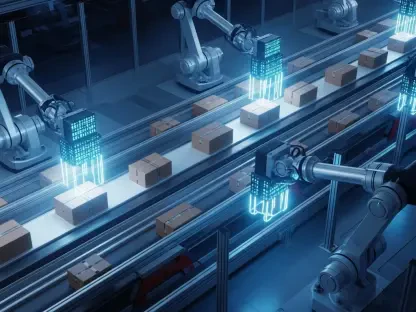

The American manufacturing sector presents a landscape of profound contradictions, where immense economic pressures clash directly with a technological revolution that promises unprecedented growth and efficiency. To make sense of this pivotal moment, we have synthesized the perspectives of leading industry analysts, economic strategists, and policy experts. Their collective insights reveal five critical forces—trade policy, strategic investment, workforce evolution, artificial intelligence, and regulatory divergence—that are defining the challenges and opportunities on America’s factory floors. This roundup delves into their analysis, offering a comprehensive view of a sector navigating an era of high-stakes transformation.
Divergent Views on Todays Key Economic and Technological Drivers
The Tariff Tightrope A Consensus on Economic Strain
Economic analysts are nearly unanimous in their assessment of the current trade policy’s impact, pointing to the pervasive instability it has created across the sector. They highlight recent data indicating a significant manufacturing downturn, which reached its lowest point late last year, as a direct consequence of tariff ambiguity and a corresponding drop in consumer demand. This environment, experts agree, has forced manufacturers into a defensive crouch, compelling them to make difficult choices between raising prices, overhauling operations, or reducing their workforce to protect margins.
The source of this strain, as identified by policy watchers, is the broad application of tariffs on imported goods under the Trump administration, with the legal justification resting on the International Emergency Economic Powers Act (IEEPA). Legal experts are now focused on the pending Supreme Court decision reviewing this use of executive power. While oral arguments in November suggested judicial skepticism, the consensus among legal commentators is that the outcome remains uncertain. They suggest that manufacturers are caught in a high-stakes waiting game, as a verdict could either unwind the tariffs, potentially allowing for duty refunds, or solidify a new, more complex trade reality.
Beyond the Headwinds Unpacking the Strategic Investment Boom
In stark contrast to the tariff-induced pressures, investment strategists point to a powerful counter-narrative of sustained capital expenditure. They emphasize a potent combination of stable corporate tax rates and permanent incentives, such as full expensing for new equipment, as a primary driver. This fiscal environment, according to financial analysts, is encouraging companies to double down on domestic expansion and modernization, creating a solid foundation for long-term growth.
This investment boom is most pronounced in high-tech sectors, a trend that technology forecasters expect to accelerate. The relentless demand for data centers and semiconductors, fueled by legislation like the AI Action Plan and significant private sector commitments exceeding $500 billion, is creating an unprecedented construction and production surge. Corporate strategists also observe a notable rebound in merger and acquisition activity. After a period of caution, business leaders have adapted to market volatility and are now pursuing strategic acquisitions to strengthen their market position, a trend that includes growing interest from foreign firms aiming to secure a manufacturing presence in the United States.
The Talent Chasm Reskilling the Workforce for the Automated Age
Labor economists and human resource experts consistently identify the widening skills gap as one of the most significant long-term threats to the industry’s health. The consensus view is that the shift toward smart factories and automation has fundamentally altered workforce needs, creating soaring demand for employees with advanced digital and technical competencies. This challenge has prompted a coordinated response, with policy advisors highlighting millions in federal funding from the Department of Labor directed at state-level training programs for advanced manufacturing.
Corporate leaders, meanwhile, are not waiting for policy solutions alone. Industry observers point to major investments in private upskilling initiatives as evidence of a proactive approach. Programs from entities like the GE Aerospace Foundation and corporate partnerships with academic institutions such as MIT are frequently cited as models for building a future-ready talent pipeline. However, the scale of the problem remains daunting. Analysts reference a stark projection that nearly two million high-tech manufacturing jobs could go unfilled by 2033, creating what many believe will be a critical bottleneck that could stifle the sector’s potential if not addressed more aggressively.
The Regulatory Divide Navigating a Fractured Chemical Compliance Landscape
Regulatory analysts describe the current environment for chemical manufacturing as increasingly fragmented and challenging to navigate. They contrast the federal push for deregulation, exemplified by the EPA’s “Powering the Great American Comeback” initiative, with the industry’s own calls for reforms to the Toxic Substances Control Act (TSCA). This creates a complex dynamic where federal agencies are easing certain rules while industry groups argue that the underlying chemical review process remains inefficient and impractical.
This federal landscape is further complicated by a divergent trend at the state level. Legal experts note that state legislatures are aggressively passing stricter rules, particularly targeting “forever chemicals” like PFAS. With a new wave of state laws taking effect this year, and more proposed in states from Florida to Massachusetts, manufacturers face a patchwork of compliance obligations that often go far beyond federal requirements. The prevailing view among compliance consultants is that this growing split between federal and state oversight creates significant operational and financial burdens for companies operating nationally, demanding a far more sophisticated and localized approach to regulatory management.
Forging a Path Forward Strategic Imperatives from the Experts
The collected insights painted a clear picture of an industry navigating a period of intense and often contradictory pressures. A central theme that emerged from economic and operational experts was the critical need for supply chain resilience as a buffer against ongoing trade policy volatility. Simultaneously, technology analysts championed the strategic deployment of AI, not only for production efficiency but also as a powerful tool for proactive risk mitigation and supply chain optimization. The guidance from workforce specialists consistently circled back to the necessity of targeted investment in talent development, framing it as a non-negotiable prerequisite for capitalizing on technological advancements.
Furthermore, legal and regulatory advisors stressed that navigating the fragmented compliance landscape required a proactive and flexible strategy. Their recommendations centered on developing robust systems to monitor and adapt to the diverging paths of federal and state chemical oversight. Finally, financial strategists underscored the importance of aligning corporate planning with available federal investment incentives to capitalize on the ongoing boom in high-tech and defense-related manufacturing. The consensus was that a holistic approach, integrating these distinct strategies, was essential for any manufacturer seeking to thrive.
The 2026 Inflection Point A Confluence of Resilience and Reinvention
Ultimately, the analysis from across these different fields converged on a powerful conclusion: U.S. manufacturing had reached a pivotal moment where adaptation was no longer simply an advantage but a fundamental requirement for survival. The expert perspectives revealed that the industry’s future trajectory was being forged in the crucible of profound economic risks and transformative technological opportunities. It became clear that success would not be defined by weathering the storm, but by fundamentally reinventing operations to harness the very forces creating disruption. The overarching takeaway from this roundup was that proactive reinvention, driven by strategic foresight and technological integration, was the definitive strategy for building a competitive and resilient future in American manufacturing.