
With decades of experience navigating the intricate web of global supply chains, Rohit Laila has become a prominent voice in maritime logistics and technological innovation. His career has spanned periods of immense industry transformation, from the rise of ultra-large container vessels to the digital revolution in freight tracking. As geopolitical tensions reshape traditional shipping lanes, Laila offers a seasoned perspective on how major carriers balance the cold logic of operational efficiency against the volatile risks of conflict zones. Today, we explore the strategic calculations behind the recent return of major vessels to the Red Sea, a move that is currently sending ripples through the global shipping market.
While most global carriers continue to bypass the Bab al-Mandeb, some major players have recently resumed Suez transits with massive vessels like the 23,872 TEU Grand Pal. What specific risk-assessment metrics allow one carrier to move forward while others wait, and how does this impact their current service reliability?
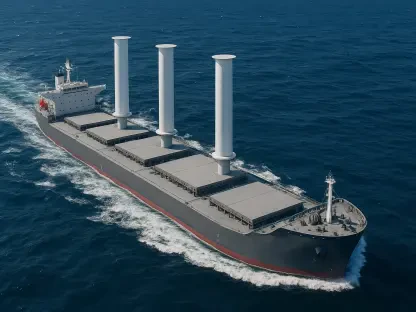
The decision to return to the Red Sea is never made lightly, especially after more than 834 days of persistent crisis in the region. Carriers analyze a complex matrix of intelligence that includes the specific nature of threats from the Houthi movement and the protective umbrella provided by international naval task forces. When a carrier like CMA CGM decides to send a behemoth like the 23,872 TEU Grand Pal through these waters, they are betting on their ability to maintain service reliability in a way that competitors routing around the Cape of Good Hope simply cannot. While those going around Africa add thousands of miles to their journey, the Suez route offers a stabilization of schedules that can be a game-changer for just-in-time supply chains. This “testing of the water” is a calculated move to reclaim the predictability that has been lost since the conflict escalated in late 2023.
The return to the Red Sea route involves diverse ship sizes, ranging from 8,500 TEU vessels to ultra-large container ships on their maiden voyages. How do operational costs and fuel savings change when switching back to this shorter path, and what logistical hurdles arise during this transition?
The financial incentive to return to the Suez Canal is staggering, primarily due to the massive reduction in fuel consumption compared to the long detour around the Cape. For an 8,500 TEU vessel like the CMA CGM Tosca, cutting out several thousand miles of transit directly translates to millions of dollars in savings and a significantly lower carbon footprint per voyage. However, the logistical hurdles are intense because schedules have been calibrated for the longer route for months; reverting requires a total reconfiguration of port windows and feeder connections. You also have to consider the psychological toll on the crew and the increased insurance premiums that come with entering a zone where ships have recently come under fire. It is a high-stakes transition that requires seamless coordination between vessel operators and shore-based logistics teams to ensure the maiden voyages of ships like the Grand Pal go off without a hitch.
Some suggest that specific regional diplomatic ties or corporate backgrounds might influence a carrier’s safety profile in conflict zones. In your experience, how do geopolitical connections shape maritime security strategies, and what practical steps must a crew take when entering these high-tension corridors?
Geopolitics is often the invisible shield of the shipping world, and a carrier’s national or regional identity can sometimes offer a layer of perceived safety. For instance, the Lebanese connection of certain European operators is often cited as a reason they might feel more confident navigating waters where others fear to tread. On the bridge, the reality is much more tactile; crews must maintain strict “dark ship” protocols, silencing AIS transponders or broadcasting specific messages to signal their neutrality. There is a palpable sense of tension as they approach the Bab al-Mandeb, with lookouts doubled and emergency drills conducted more frequently to prepare for any potential aggression. Security strategies are no longer just about pirates; they are about understanding the nuances of regional conflicts and ensuring that the vessel is not perceived as a high-value political target.
By utilizing the Suez Canal for specialized services, a carrier can gain a notable head start over competitors routing around the Cape of Good Hope. What are the long-term market implications of this strategy, and how might rival alliances react to this widening gap in transit times?
When a carrier successfully normalizes Suez transits through services like the Ocean Rise Express, they create a two-tiered market where they can offer significantly faster transit times than their rivals. This “head start” puts immense pressure on other members of major alliances, such as the Ocean Alliance, to either follow suit or risk losing market share to the carrier that can deliver goods ten to fourteen days faster. Long-term, if this strategy proves successful and safe, we will likely see a fragmented recovery where the boldest carriers capture the most time-sensitive cargo. Rivals will be forced to choose between the safety of the Cape and the economic necessity of the Canal, potentially leading to shifts in alliance structures if members cannot agree on a unified risk threshold.
Niche carriers have maintained a presence in these waters throughout the ongoing blockades in the Red Sea and the Strait of Hormuz. What can major global operators learn from these smaller players, and how do they coordinate with international maritime authorities to ensure safe passage?
Smaller, niche carriers have been the unsung survivors of this crisis, regularly crossing the Bab al-Mandeb over the past two years while the giants retreated. These operators often have more flexible decision-making processes and deep-rooted local intelligence that allows them to slip through windows of relative calm. Major global operators are now observing these smaller players to understand the patterns of safety and the effectiveness of coordination with international maritime authorities. Safe passage is not just about armor; it is about constant communication and staying updated on the 53-day-old blockade of the Strait of Hormuz and other shifting dangers. By mimicking the agility of niche players, larger carriers can begin to piece together a strategy for a broader return to these vital waterways.
What is your forecast for the Red Sea shipping route?
I expect we will see a “slow-thaw” effect where more carriers gradually reintroduce Suez transits, starting with their most modern and efficient vessels to maximize the competitive advantage. While the threat remains significant, the economic gravity of the Suez Canal is too strong to ignore indefinitely, and as more ships like the CMA CGM Jules Verne and Marco Polo complete successful transits, the industry’s collective risk tolerance will likely shift. However, until there is a definitive diplomatic resolution to the wider regional conflicts, the Red Sea will remain a volatile corridor where only those with the most robust security frameworks and strategic geopolitical positioning will dare to operate. We are entering a period of “calculated normalization” where the shortest path between East and West is no longer a given, but a hard-won tactical advantage.