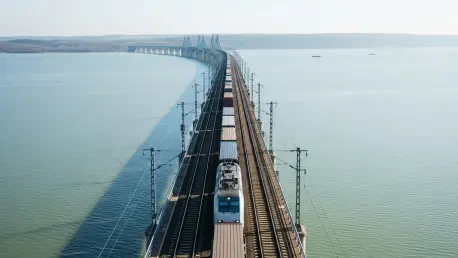

Brazil is currently undergoing a massive overhaul of its internal transport systems, shifting from a decades-old reliance on asphalt to a sophisticated network of steel rails that promises to redefine how goods reach the global market. For years, the nation’s economic potential was throttled by the ‘Brazil Cost,’ a term for the logistical difficulty of hauling commodities over thousands of miles of poorly maintained roads. Today, the landscape is shifting as the government initiates a $600 billion ‘Railway Reset’ aimed at creating a high-capacity network that links the deep interior to Atlantic and Pacific gateways. This initiative represents a fundamental reconfiguration of the national economic map, designed to turn isolated agricultural frontiers into integrated hubs of global trade. By prioritizing rail over road, Brazil is not only seeking to lower the cost of exports but also attempting to slash its carbon footprint and modernize its industrial base, signaling a new era where efficiency drives national prosperity.
Financial Strategy and National Infrastructure
Modernizing Financing: The 40-Year Capital Window
A significant barrier to large-scale railway development has traditionally been the mismatch between massive upfront capital requirements and the long lead times required for profitability. To solve this, the National Development Bank has introduced a radical 40-year financing window. This extended maturity period allows private operators and infrastructure funds to synchronize their debt service obligations with the gradual growth of freight revenue, reducing short-term liquidity pressure and making long-term concessions more attractive to global pension and sovereign wealth funds. By providing such a lengthy horizon, the government is effectively de-risking the entry for institutional investors who seek stable, inflation-linked returns over decades rather than years. This financial innovation is crucial for attracting the “patient money” necessary to fund the laying of thousands of miles of track across diverse and often challenging geographical terrains throughout the South American continent.
Beyond just extending loan terms, the current strategy involves creating a “plug-and-play” logistics environment that simplifies the entry for international institutional capital. This approach focuses on reducing the bureaucratic hurdles that once plagued major infrastructure projects, offering a more streamlined regulatory framework that provides clear rules of engagement for foreign entities. By establishing a predictable and stable investment climate, the nation is successfully competing for global capital against other emerging markets. This modernization of the financial landscape is expected to transform the nation’s economic profile, making it a more formidable player in the global trade arena while fostering internal development in previously isolated regions. The integration of high-level financial engineering with physical infrastructure development ensures that the projects are not only technically feasible but also economically sustainable for the private sector.
The Central Spine: Operationalizing the North-South Corridor
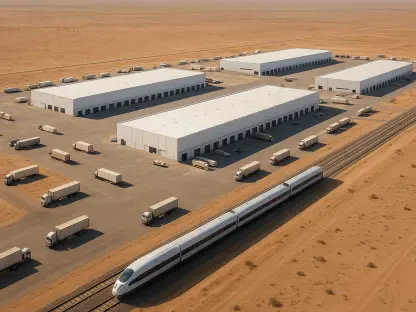
At the heart of this physical transformation is the Ferrovia Norte-Sul, or North-South Railway, which serves as the continental spine of the entire network. The current strategy focuses on operationalizing this corridor through the auction of 17 strategic cargo terminals. These terminals are envisioned as multimodal hubs where rail intersects with road, river, and port infrastructure. By creating these nodes, a shipment of grain from the interior can be seamlessly transferred from truck to rail and then to a maritime port, creating a streamlined supply chain that was previously non-existent. These hubs are designed to be high-tech logistics centers, utilizing advanced tracking and sorting systems to maximize the throughput of commodities like soy, corn, and iron ore. This backbone connects the northern production zones to the industrial south, effectively knitting the country together into a single, efficient economic unit that can respond rapidly to global trade shifts.
The operational success of the North-South corridor depends on the seamless integration of various transport modes, which requires significant coordination between public authorities and private concessionaires. These strategic cargo terminals are not merely transit points but are becoming centers of economic activity in their own right, attracting warehouses, processing plants, and service providers. This development model ensures that the benefits of the railway are felt locally as much as they are at the export terminals. Furthermore, the shift toward rail significantly reduces the wear and tear on the national highway system, which has been overwhelmed by heavy truck traffic for decades. By diverting bulk cargo to the rails, the government is also improving road safety and reducing maintenance costs for the public sector. This integrated approach to logistics is a cornerstone of the national strategy to enhance the competitiveness of Brazilian goods in diverse international markets.
Expanding the Network and Technical Efficiency
Targeted Export Routes: Driving Industrial and Agricultural Integration
The government has structured its pipeline around several high-priority corridors, such as the Ferrogrão and the Malha Oeste, to address specific bottlenecks in the export chain. The Ferrogrão project is particularly critical for the “Arco Norte” export route, connecting grain-rich regions to northern ports and allowing exporters to bypass the heavily congested southern gateways like Santos. This northern route provides a much shorter and more cost-effective path for goods destined for European and Chinese markets. Meanwhile, the Malha Oeste corridor represents a move toward continental integration, running from the industrial heart of São Paulo toward the Bolivian border. This route is intended to facilitate bioceanic trade between the Atlantic and Pacific coasts, potentially opening up new markets in Asia via western ports. These projects are essential for diversifying the nation’s exit points and ensuring that the logistical system is resilient enough to handle global demand.
In the nation’s industrial heartland and mining sectors, initiatives like the Anel Ferroviário do Sudeste and the Corredor Minas-Rio are designed to alleviate the cargo burden on major highways. These projects aim to improve rail access to the ports of Rio de Janeiro and Espírito Santo, ensuring that the mining sector remains competitive even as global prices fluctuate. By decentralizing cargo flow and optimizing various coastal outlets, these corridors enhance the resilience of the agricultural and industrial supply chains across the country. The integration of these industrial lines with the national trunk lines creates a synergistic effect, where regional manufacturers can access a broader network of suppliers and consumers. This strategic expansion is not just about building new tracks but about creating a web of connectivity that supports the diverse needs of both the agribusiness giants and the specialized manufacturing firms that form the core of the national economy.
Leveraging Existing Assets: The Smart Railway Evolution
In addition to new construction, the “Smart Railways” strategy targets underutilized or idle corridors to maximize the value of the existing national footprint. Rather than building every line from scratch, the government seeks to attract operators who specialize in “brownfield” turnarounds by implementing modern signaling, scheduling technology, and updated rolling stock. This approach creates a network effect where the value of each individual line increases as the overall connectivity of the system grows, allowing revived lines to serve as essential feeders into the larger trunk lines. By using Internet of Things sensors and real-time data analytics, operators can monitor track conditions and optimize locomotive performance, significantly reducing operational costs. This technological layer transforms older infrastructure into high-performance assets that can handle modern cargo volumes with high reliability and safety standards, attracting more private sector interest.
The revitalization of idle corridors also involves a focus on multimodal connectivity at the local level, ensuring that small-scale producers can also benefit from the railway boom. By establishing regional collection points and automated loading facilities, the “Smart Railways” initiative is democratizing access to low-cost transport. This strategy is particularly effective in regions where historical rail lines had fallen into disrepair but the right-of-way remains intact. Reclaiming these corridors is often more environmentally friendly and faster than building entirely new routes through pristine land. As these lines are integrated into the modern digital signaling network, they provide a reliable alternative to road transport for a wider variety of goods, including processed foods and light industrial products. The result is a more balanced and efficient national logistics system that leverages both the legacy of the past and the technological innovations of the present.
Socioeconomic Impact and International Partnerships
Strengthening Regional Development: The Corporate Mobility Boom
The railway boom is generating sustained waves of corporate mobility that benefit secondary cities like Goiânia, Cuiabá, and Palmas, which are quickly becoming regional logistics powerhouses. During the planning and construction phases, international teams of financiers, engineers, and consultants frequently visit project sites, driving long-term demand for hospitality and professional services. This influx of activity is expected to boost regional airports and real estate markets, as these logistics hubs become essential nodes for ongoing coordination between shippers, customs brokers, and port authorities. The presence of high-level international professionals is also fostering a knowledge transfer that benefits local universities and technical schools, which are adapting their curricula to meet the needs of the burgeoning transport sector. This trend is creating a new class of specialized labor in the interior of the country, reducing the brain drain to coastal cities.
As these secondary cities grow, they are attracting further investment in retail, healthcare, and education, creating a virtuous cycle of development that extends far beyond the railway tracks. The arrival of large-scale logistics companies often brings with it improved telecommunications and utility infrastructure, which benefits the entire local population. This regional transformation is a key objective of the national infrastructure plan, which seeks to reduce regional inequalities and promote balanced economic growth across the vast territory. By anchoring these regions to the global supply chain via the rail network, the government is ensuring their long-term economic viability. The social impact of these projects is significant, as they provide stable employment opportunities and encourage the development of local businesses that can support the logistics industry. This comprehensive approach to regional development ensures that the investment delivers broad benefits.
Global Confidence: Navigating the Regulatory Landscape
To ensure the success of these multi-decade projects, the transport ministry is emphasizing regulatory transparency and clear performance metrics to maintain the confidence of global investors. By providing explicit risk-mitigation tools and a structured pipeline, the nation is positioning itself as a premier destination for long-term international capital. International law firms and consultancy groups are already expanding their local practices to navigate the complex legal frameworks and contractual obligations inherent in these 40-year concession agreements. This focus on legal certainty is essential for attracting conservative investors who require a stable environment to commit billions of dollars to infrastructure projects. The establishment of independent regulatory agencies with the power to enforce contracts and mediate disputes has been a critical step in building this trust, ensuring that the rules of the game do not change with every election cycle and providing a secure framework.
The national transport strategy successfully pivoted from a fragmented road-based system to a unified railway network, which established the foundation for decades of sustained economic growth. Stakeholders identified that the next phase of development required a focus on maintaining this momentum through rigorous data-driven maintenance and continued technological upgrades. It was determined that future policy should focus on expanding the network’s digital layer to include fully autonomous cargo monitoring and blockchain-integrated customs clearing. The collaboration between the public sector and private concessionaires proved to be a necessary component to address emerging bottlenecks and ensure infrastructure responsiveness. By fostering an environment of innovation and regulatory stability, the nation secured its position as an emerging global logistics leader. The prioritization of green locomotive technology and the completion of bioceanic links were identified as essential next steps.