
A catastrophic in-flight failure and the subsequent tragic loss of life have forced a profound strategic reckoning at United Parcel Service, setting in motion a series of transformative changes that extend far beyond its aircraft fleet. The logistics behemoth has embarked on an accelerated overhaul, grounding and permanently retiring its entire fleet of McDonnell Douglas MD-11 freighters in a move that signals a definitive break with the past. This decisive action is not an isolated decision but the linchpin of a much broader corporate recalibration designed to reshape the company’s operational backbone and financial trajectory. Intertwined with this fleet modernization is a deliberate strategic pivot away from high-volume, low-margin business with e-commerce giant Amazon, substantial adjustments to its global workforce, and targeted investments in international growth markets. These interconnected initiatives represent a comprehensive effort to build a more resilient, efficient, and profitable network capable of navigating the complex demands of modern global commerce.
A Crisis Forged in Metal Fatigue
The pivotal moment that irrevocably altered the course for UPS arrived on November 4, 2024, with the fatal crash of domestic cargo flight 2976, which resulted in 14 fatalities. The incident occurred moments after takeoff from Louisville’s Muhammad Ali International Airport when the aircraft’s left-hand engine and its entire pylon assembly violently separated from the wing. The National Transportation Safety Board’s (NTSB) subsequent preliminary investigation quickly pointed to a catastrophic structural failure, revealing evidence of fatigue cracks in the wreckage. The findings were especially alarming because the potential for such a failure was not entirely unknown; a 2011 report from Boeing had previously alerted airlines to monitor a specific pylon bearing assembly for potential faults, a component directly implicated in the crash. The NTSB report noted the aircraft experienced an abnormal climb rate before it began losing altitude, providing a grim timeline of the final moments before the disaster. The severity of the incident and the specter of a systemic fleet-wide issue demanded immediate and decisive action from both the company and federal regulators.
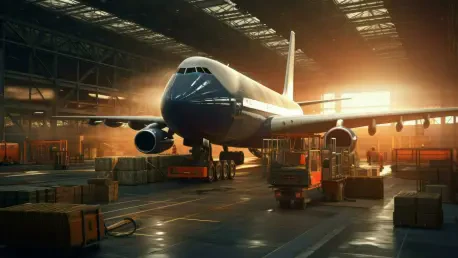
In response to the NTSB’s alarming preliminary findings, the Federal Aviation Administration (FAA) acted swiftly, issuing an Emergency Airworthiness Directive that mandated immediate inspections of all MD-11 freighters for similar structural vulnerabilities. This directive effectively grounded UPS’s entire 26-aircraft MD-11F fleet, creating an immense operational challenge precisely as the company was entering its critical peak holiday shipping season. To navigate the sudden and significant loss of capacity, UPS implemented a multi-pronged strategy. As detailed by Chief Financial Officer Brian Dykes, the company leveraged the inherent flexibility of its integrated network by repositioning aircraft from its global operations to cover essential U.S. routes. Simultaneously, a higher volume of packages was diverted to its extensive ground network, and additional aircraft were leased to bridge the capacity gap. The successful execution of this complex logistical maneuver not only ensured service continuity during a period of immense pressure but also provided the company with invaluable operational insights, or “learnings,” that ultimately solidified the strategic decision to permanently retire the entire aging MD-11F fleet ahead of its original schedule.
A Modern Fleet for a New Strategy
With the decision made to permanently sideline the MD-11F, UPS moved decisively to modernize its fleet and replace the lost capacity by placing a substantial order for 18 new, more efficient Boeing 767F aircraft. The urgency of this transition is reflected in an aggressive delivery schedule, with fifteen of the new freighters slated to arrive within 2026—five in the first half of the year and ten in the second half—and the remaining three scheduled for delivery in 2027. This investment is central to what CEO Carol Tomé described as a “systematic programmatic approach to modernizing our global air fleet,” with the ultimate goal of creating a more agile and profitable global network. As these new, company-owned 767Fs are integrated into operations, UPS plans to systematically phase out the aircraft it leased during the grounding period, thereby reducing operational expenses and its reliance on third-party capacity. This transition is not expected to cause major disruptions to international cargo operations, as the retired MD-11Fs were predominantly operated on domestic routes, a fact that simplifies the network adjustment process.
The fleet overhaul is occurring within the context of a much wider strategic recalibration aimed at enhancing long-term profitability. A cornerstone of this new direction is the “glide-down” of business with e-commerce giant Amazon, a deliberate strategy to reduce reliance on lower-margin volume. By the end of 2025, UPS had successfully cut Amazon’s daily package volume by approximately 1 million, a move that was the primary driver of a significant 11.9% year-over-year decline in total air average daily volume during the fourth quarter. This business realignment was accompanied by major adjustments to the company’s workforce to improve efficiency and profitability. After initially announcing 20,000 job cuts, UPS ultimately reduced its operational headcount by 34,000 and its management positions by 14,000 throughout 2025. This comprehensive restructuring underscores a fundamental shift in corporate priorities, prioritizing margin quality over sheer volume as the company reshapes itself for future growth and stability.
Financial Realities and Future Horizons
Despite these decisive strategic measures, the financial results for 2025 reflected a period of significant transition and pressure for UPS. The company’s consolidated revenue for the year fell by 2.6% to $88.7 billion, while its operating profit experienced a more pronounced decline of 7.1%, settling at $7.9 billion. A closer look at the divisional performance revealed a mixed picture. The U.S. Domestic Package division saw its revenue decrease by 1.4% to $59.4 billion, with operating profit falling 9.6%. The International Package segment, while posting revenue growth of 3.4% to $18.6 billion, suffered a significant 10% drop in operating profit, attributed partly to shifting global trade lane dynamics. In contrast, the Supply Chain Solutions division emerged as a notable bright spot. Although its revenue was down 17% to $10.6 billion, this division delivered a robust 14.6% increase in operating profit, reaching $1.1 billion, demonstrating underlying strength in specialized logistics services.
With the major restructuring efforts and the Amazon volume reduction largely in the past, UPS executives framed 2026 as a pivotal “inflection point” that positioned the company for a new phase of growth and margin expansion. The company projected its consolidated revenue for 2026 would reach approximately $89.7 billion, anticipating low single-digit growth in the U.S. small package market, excluding Amazon’s impact. To fuel this future growth, particularly in Asia, UPS had committed to significant infrastructure investments. A new air hub in the Philippines was scheduled to open towards the end of 2026, and a major expansion of its hub at Hong Kong International Airport was on track for completion by 2028. These gateways were designed to provide broader market access and faster transit times across the continent’s dynamic trade lanes. The company also enhanced its specialized service offerings through strategic acquisitions, such as Frigo-Trans and Andlauer Healthcare Group, which expanded its high-value healthcare and cold chain logistics capabilities.