
The sight of a brown delivery truck navigating a crowded city street has long symbolized the physical reality of global commerce, but beneath that familiar exterior lies a sophisticated digital engine that is fundamentally rewriting the rules of logistics. As global trade routes face unprecedented volatility and regulatory shifts, the ability to move information has become just as critical as the ability to move heavy freight. This transformation marks a departure from the traditional labor-heavy model, steering the industry toward a future where algorithms dictate the flow of goods across oceans and continents. By synthesizing insights from across the logistics sector, it becomes clear that data is no longer just a supporting tool but the central nervous system of modern delivery networks.
The Logistics Renaissance: From Brown Trucks to Digital Architectures
The Evolution of a Global Powerhouse
The journey from a local messenger service to a global technology leader represents a massive shift in corporate identity. Industry analysts note that the company has moved beyond simple parcel tracking to creating an integrated ecosystem where every vehicle and hub acts as a data point. This transition has required a massive overhaul of legacy systems, replacing rigid operational structures with flexible, software-driven architectures that can react to market changes in milliseconds.
Why Data is the New Fuel
In the current climate of unpredictable trade policies, the reliance on high-quality data has shifted from a competitive advantage to a basic survival requirement. Experts highlight that “clean data” acts as the foundation for every automated decision, allowing the enterprise to maintain high reliability despite external shocks. This digital maturity enables a level of agility that was previously impossible, ensuring that the network remains functional even when traditional logistics pathways are obstructed.
A Glimpse into the Autonomous Future
The convergence of AI agents and predictive simulations is creating a new operational DNA for the century-old carrier. Instead of reacting to disruptions as they happen, the system now anticipates them, using digital models to test outcomes before a single truck leaves the warehouse. This proactive stance suggests a future where the distinction between a logistics provider and a software company becomes increasingly blurred, setting a new standard for how goods are moved globally.
Re-Engineering the Global Network through Intelligence and Automation
The Digital Twin Revolution: Simulating Resilience in Real-Time
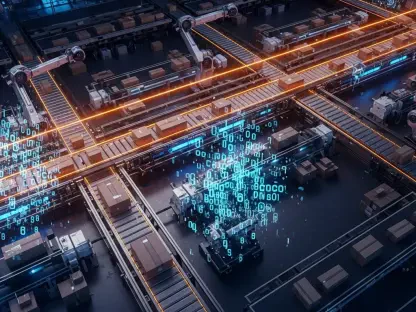
Virtualizing the supply chain has allowed for the creation of high-fidelity “digital twins,” which serve as risk-free environments for testing complex routing logic. By running millions of permutations within these virtual replicas, operators can identify potential bottlenecks and solve them before they manifest in the physical world. This capability is particularly vital during peak seasons when the volume of packages could easily overwhelm a traditional, static network.
Data integrity remains the cornerstone of this simulation strategy. Without accurate, real-time inputs, even the most advanced digital twin would fail to provide meaningful guidance. Consequently, the focus has shifted toward ensuring that every piece of information, from weather patterns to fuel costs, is scrubbed and verified. This meticulous attention to detail allows the company to pivot during extreme events, maintaining a steady flow of commerce when competitors might be forced to halt operations.
Agentic AI and the End of Border Friction
Navigating the regulatory labyrinth of international trade has historically been a labor-intensive process fraught with the risk of human error. However, the deployment of autonomous AI agents is now managing complex Harmonized System codes and shifting tariff policies with remarkable precision. These agents operate within defined parameters to make real-time decisions, significantly reducing the time packages spend sitting at customs checkpoints.
The breakthrough in automated clearance serves as a primary case study for this technological leap. Data from the past year shows a dramatic increase in autonomous processing for specific imports, moving from a minority of packages to nearly all volume in a matter of months. This surge in efficiency proves that AI can absorb the heavy demands of new trade regulations without the need to continuously increase headcount, effectively decoupling business growth from labor costs.
From Tribal Knowledge to Algorithmic Precision in Sales
The sales process is undergoing its own revolution, moving away from “tribal knowledge” and toward data-driven certainty. The introduction of generative AI tools has replaced subjective, experience-based negotiations with scored contract health assessments. These tools provide sales teams with real-time feedback on the viability of a deal, ensuring that every agreement aligns with the company’s broader financial goals.
By maximizing margins and win rates through these insights, the organization protects its bottom line while remaining competitive. This shift disrupts the traditional assumption that logistics pricing must be a slow, rigid process. Instead, real-time data allows for dynamic adjustments that reflect current market conditions, providing a level of transparency and speed that benefits both the carrier and the customer.
The Synergy of Robotics and Human Capital
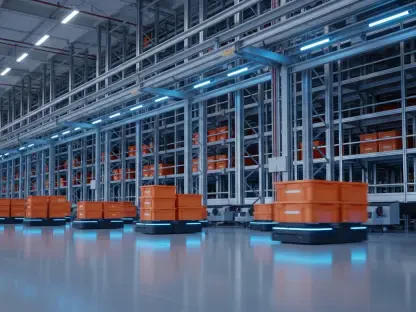
Upskilling the workforce is a central component of this automated era, as human workers transition from manual tasks to supervisory roles over robotic systems. The strategy involves moving people away from repetitive actions, such as sorting and labeling, and toward managing the sophisticated machinery that now handles those duties. This evolution ensures that the human element remains vital, even as the physical workload is lightened by technology.
The change management hurdle is perhaps the most significant risk in this transition. Industry observers warn against “tech-heavy, training-light” investments that leave employees behind. To counter this, the focus has been on “AI fluency,” a concept that mirrors strategies seen at other major carriers like FedEx. By prioritizing education alongside automation, the company aims to avoid the pitfalls of technical debt and employee pushback, creating a cohesive narrative of progress.
Strategic Frameworks for a Tech-First Logistics Landscape
Building a cohesive data narrative requires a perfect alignment between executive vision and ground-level implementation. It is not enough to simply purchase the latest software; the entire organization must understand how data flows and why it matters. This top-down commitment ensures that technological investments are not wasted on siloed projects but are instead integrated into a unified strategy that drives the company toward its long-term objectives.
Tactical implementation begins with a strict focus on data cleanliness before any machine learning models are deployed. Logistics firms looking to replicate this success must prioritize the quality of their inputs, as flawed data will inevitably lead to flawed autonomous decisions. Furthermore, the use of agentic automation and simulation provides a necessary buffer against global economic shifts, allowing businesses to remain resilient in an era of constant change.
The Future of Delivery in a Data-Defined World
The transformation of the logistics landscape reached a turning point where the ability to act as a software entity became the primary driver of success. By integrating digital twins and autonomous agents into the core of the business, the organization effectively insulated itself from the traditional vulnerabilities of global shipping. The move toward nearly total automated customs clearance and AI-driven sales health scoring demonstrated that complexity could be managed through intelligence rather than just physical scale. These advancements served as a blueprint for an industry that had to adapt or risk obsolescence in an increasingly digital world.
Looking ahead, the long-term implications for global trade suggest that AI-driven efficiency will continue to lower the barriers to entry for international commerce. As predictive models become more accurate and autonomous systems more reliable, the cost and difficulty of moving goods across borders will likely decrease. This evolution will require businesses to maintain a constant state of technological readiness, focusing on the synergy between human oversight and machine execution. Future considerations should center on how these autonomous frameworks can be scaled further to include sustainable energy integration and last-mile delivery innovations that further refine the global supply chain.