
When a nearly completed, half-billion-dollar vessel faces an abrupt contract termination, the typical path leads directly to a prolonged and costly courtroom confrontation between corporate titans. This dispute, however, defied convention, sidestepping years of litigation through a creative financial maneuver that not only saved the deal but also offered a powerful new model for resolving high-stakes commercial conflicts. The resolution between shipbuilder Seatrium and maritime giant Maersk Offshore Wind demonstrates how strategic financing can transform a potential corporate crisis into a renewed partnership, underscoring a shift from adversarial tactics toward collaborative, value-preserving solutions.
A Green Energy Gamble on the High Seas
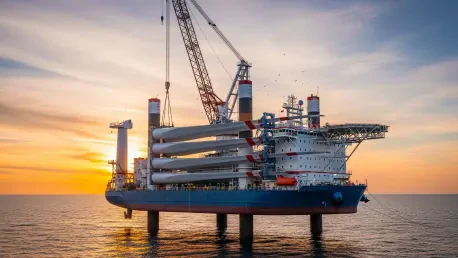
At the heart of this conflict was a highly specialized asset: a Wind Turbine Installation Vessel (WTIV). These ships are not ordinary cargo haulers; they are sophisticated, purpose-built platforms essential for constructing offshore wind farms. Equipped with powerful cranes and advanced positioning systems, a WTIV can cost hundreds of millions of dollars, representing a massive capital investment critical to the green energy transition. The vessel in question was contracted for the Empire Wind 1 project off the coast of New York, making its completion vital for the expansion of American renewable energy infrastructure.
The original agreement, signed in March 2022, brought together two industry leaders. Seatrium, a premier global shipbuilder, was tasked with constructing the state-of-the-art vessel for Maersk Offshore Wind, a key division of the Danish shipping conglomerate. The $475 million contract was seen as a landmark deal, signifying strong confidence in the burgeoning U.S. offshore wind market and cementing a partnership between two pillars of the maritime industry. With a 20% down payment secured, construction proceeded on schedule toward a planned delivery.
From Landmark Contract to Legal Conflict
The partnership hit a catastrophic snag in October when Maersk issued a sudden notice to terminate the contract. This move was particularly jarring because the vessel was an astonishing 98.9% complete, with its delivery date of January 2026 still well in the future. The cancellation sent shockwaves through the industry, raising questions about the stability of major green energy projects and the reliability of high-value contracts. For Seatrium, the termination represented not just a financial loss but a significant operational disruption involving a nearly finished, highly specialized asset.
Seatrium responded decisively, issuing a firm rejection of Maersk’s termination notice. Standing its ground, the shipbuilder asserted that the cancellation was without merit and maintained its commitment to completing the vessel as per the original terms. This immediate and strong refusal set the stage for a direct confrontation, as neither party showed any sign of backing down from its position. The impasse quickly escalated from a commercial disagreement to a full-blown legal standoff. With no middle ground in sight, both companies took the inevitable next step: filing for arbitration in London, bracing for a complex and expensive legal battle that could take years to resolve.
The Financial Pivot That Averted a Courtroom War
Instead of digging in for a protracted legal fight, Seatrium’s leadership chose a different path. In a public statement, the company explained that pursuing a settlement was the “most optimal path forward,” a strategic decision designed to sidestep the inherent risks, delays, and substantial costs associated with international arbitration. This pragmatic approach prioritized financial certainty and the preservation of a valuable business relationship over the unpredictable outcome of litigation, signaling a clear focus on long-term shareholder value.
The breakthrough came in the form of an elegant financial solution: Seatrium effectively financed its own sale. To enable Maersk to complete the purchase, Seatrium provided a $250 million interest-bearing credit facility to its client. This 10-year loan gave Maersk the necessary capital to cover the outstanding $360 million balance on the vessel. In a single stroke, this creative arrangement transformed a contentious dispute into a manageable financial transaction, aligning both parties toward the successful deployment of the ship. To safeguard its investment, Seatrium secured the loan with a mortgage on the WTIV, ensuring that repayments would be made from the vessel’s future earnings, thereby tying its own financial recovery directly to the ship’s operational success.
A Blueprint for Averting Corporate Crises
This resolution serves as a powerful case study in de-risking high-value transactions. By opting for creative financing over litigation, Seatrium and Maersk effectively mitigated the enormous financial and operational uncertainties of a legal battle. Vendor financing, a strategy where a seller provides a loan to the buyer, proved to be the key that unlocked a seemingly intractable situation. This approach allowed both companies to salvage a critical project and avoid the value destruction that often accompanies prolonged corporate disputes.
More importantly, the financial restructuring transformed the dynamic from adversarial to collaborative. By providing a loan tied to the vessel’s future success, Seatrium’s interests became directly aligned with Maersk’s. This maneuver did more than just settle a claim; it rebuilt the foundation of their partnership, ensuring both parties were invested in the vessel’s profitable operation. This model of turning adversaries into partners offers a compelling blueprint for other industries, demonstrating that shared financial incentives can be a more powerful tool for resolution than legal arguments.
Resolution and a Look Toward the Future
With the comprehensive settlement in place, the conflict officially concluded. Maersk committed to taking delivery of the vessel by a revised date of February 28, 2026, and both parties formally withdrew their respective arbitration claims, bringing the dispute to a definitive and amicable close. The vessel, once a symbol of a broken deal, was now poised to fulfill its intended purpose in the renewable energy sector.
Ultimately, the resolution of the Seatrium-Maersk dispute provided a vital precedent for navigating complex commercial disagreements in capital-intensive industries. It highlighted that when faced with a potential crisis, innovative financial engineering and a forward-looking focus on mutual benefit could achieve what a courtroom battle often cannot: a swift, cost-effective, and relationship-preserving outcome. This case left a lasting lesson on the power of turning a financial impasse into a foundation for future collaboration.