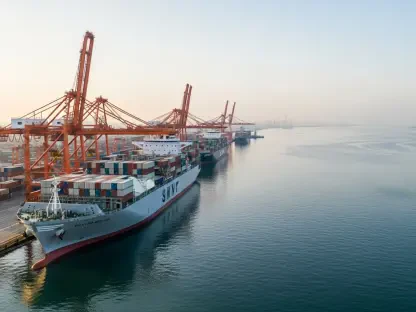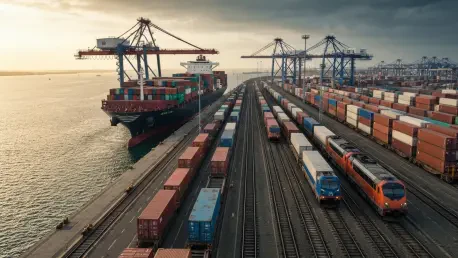

What does it take to breathe life back into a long-forgotten lifeline for a nation’s agricultural heartland, especially when global markets are hungrier than ever for reliable supply chains? The arrival of the fertilizer vessel Federal Montreal at the Port of Johnstown in Eastern Ontario on December 2 marks a historic turning point. This isn’t just a ship docking after nearly three decades of silence at this crucial hub—it’s the rebirth of a gateway poised to reconnect Canadian farmers with the world. The event sparks hope and curiosity about how this revival could reshape the landscape of agricultural trade across the country.
A Milestone Moment for Canadian Agriculture
The significance of this docking goes beyond a single vessel. It represents the reopening of a vital artery for Canadian agriculture, establishing a modern Prairie-Seaway corridor that links Western producers to Eastern and international markets. For years, the Port of Johnstown lay dormant, a relic of past trade ambitions. Now, its reactivation signals a renewed commitment to bolstering the nation’s supply chain, offering farmers a direct path to essential resources and export opportunities.
This moment also underscores a broader narrative of resilience. With global food security concerns mounting and supply chain disruptions becoming commonplace, the timing couldn’t be more critical. The return of activity to this Eastern Ontario port promises to alleviate some of these pressures, positioning Canada as a stronger player in the international agricultural arena.
Why the Port of Johnstown Matters Now
Situated strategically on the St. Lawrence Seaway, the Port of Johnstown emerges as a linchpin in addressing modern trade challenges. Its proximity to major highways like 401 and 416, coupled with rail connectivity to CN’s main line and interchange agreements with Canadian Pacific Kansas City, transforms it into a multimodal powerhouse. This isn’t just about location—it’s about solving real problems like logistical bottlenecks that have long plagued Canadian exporters.
Beyond infrastructure, the port’s revival tackles pressing economic and environmental demands. As the need for sustainable transport grows, this hub offers a pathway to reduce emissions through optimized marine and rail operations. For farmers grappling with access to crop nutrients, it provides a reliable conduit, ensuring that the agricultural sector can meet both domestic and global demands without the delays seen in other overtaxed routes.
Breaking Down the Prairie-Seaway Corridor’s Impact
The reawakening of this corridor isn’t merely symbolic—it’s a practical game-changer for Canadian agriculture. After years of inactivity, the port’s role as a conduit for fertilizers and outbound grains reestablishes a seamless link for Prairie growers. This integration of marine and rail transport cuts through the inefficiencies of fragmented logistics, paving the way for smoother trade flows.
Moreover, the corridor’s benefits extend to scalability and sustainability. The V6 Odyssey Terminal, operating within the marine and rail footprint, ensures minimal disruption to local communities while maintaining year-round access without vessel congestion. This efficiency not only boosts export capacity for products like pulses but also opens doors to diverse markets in Europe and beyond, enhancing Canada’s global competitiveness.
Voices of Leadership and Innovation
Key figures behind this initiative paint a vivid picture of its transformative potential. Ryan Brophy, CEO of V6 Agronomy, champions the corridor as a “globally competitive route” that empowers farmers nationwide with reliability and efficiency. His vision highlights a unified effort to prioritize agricultural advancement through strategic infrastructure.
Adding to this perspective, Leslie Drynan, General Manager of the Port of Johnstown, points to the strengthened national supply chains as a direct benefit for Prairie growers. Meanwhile, Fertinagro Biotech International, a Spanish fertilizer producer, hails the project as a cornerstone for a resilient Canada-wide nutrient network, fostering sustainable innovation. These voices collectively affirm the initiative’s alignment with national priorities like supply chain sovereignty and emissions reduction outlined in current federal budgets.
Actionable Insights for a Stronger Agricultural Future
For stakeholders, leveraging this revival means embracing multimodal logistics as a cornerstone of future planning. Farmers and exporters can optimize shipments by tapping into the port’s rail and marine capabilities, sidestepping the congestion of traditional pathways. This approach demands a shift in strategy, focusing on integrated systems to maximize efficiency.
Additionally, aligning with federal goals offers a pathway to secure support and funding for similar projects. Businesses and policymakers should advocate for investments in other dormant gateways, driving rural economic growth. Such alignment ensures that initiatives resonate with broader national objectives, amplifying their impact.
Sustainability remains a critical focus as well. By adopting practices that mirror the terminal’s low-emission transport model, the sector can set a precedent for green growth. Simultaneously, targeting new markets in emerging economies through this corridor positions Canadian agriculture as a leader on the world stage, ready to meet evolving demands.
Reflecting on a Historic Revival
Looking back, the docking of the Federal Montreal at the Port of Johnstown stood as a defining moment, a symbol of renewal for Canadian agriculture. It marked the end of a long hiatus and the beginning of a connected, competitive era. The Prairie-Seaway corridor, through strategic partnerships and innovative logistics, redefined how the nation approached trade and sustainability.
As the dust settled on this achievement, the path forward became clear: stakeholders needed to build on this momentum. Expanding similar initiatives across other underutilized hubs could further strengthen rural economies. Embracing technology and sustainable practices in these endeavors promised to keep Canada at the forefront of global agricultural innovation, ensuring that the lessons from Johnstown’s revival echoed far beyond its shores.