
With decades of experience navigating the complexities of logistics and supply chain innovation, Rohit Laila offers a seasoned perspective on the evolving landscape of public transportation. As cities grapple with the dual pressures of aging infrastructure and the demand for modern, high-capacity transit, the strategic decisions made today will echo for generations. Our conversation explores the delicate balance between fiscal solvency and community expansion, specifically examining how major metropolitan areas like Seattle and Chicago are recalibrating their approach to regional rail. We delve into the difficult trade-offs required to bridge massive funding gaps, the technical precision of groundbreaking engineering projects, and the vital role of labor stability in maintaining the backbone of urban mobility.
When multi-billion dollar funding gaps emerge in regional transit expansions, what specific criteria should agencies prioritize to keep projects viable without compromising the long-term vision?
The reality of a $34.5 billion gap over a twenty-year horizon forces a radical shift from aspirational planning to cold, pragmatic execution. In the case of the ST3 System Plan, the priority must be on establishing a sustainable path forward that aligns available funding with project delivery efficiencies. This means agencies have to look beyond just cutting costs; they must aggressively pursue additional funding opportunities and streamline their operational practices to ensure that the voter-approved program remains achievable. It is a matter of maintaining momentum by identifying specific, high-impact measures that can be implemented at the project level to stabilize the agency’s overall financial health. By focusing on programmatic and financial workplans, leadership can ensure that even as the financial landscape shifts, the core mission of providing reliable regional transit remains the primary driver of every decision.
The decision to remove Avalon Station from the West Seattle Link Extension to save over $2 billion is a significant pivot. How does an agency weigh the loss of a specific transit node against the benefits of increased tunneling and reduced property impacts?
Deciding to eliminate a station like Avalon is never easy because it directly affects local access, but the trade-offs in this instance were compelling enough to reshape the project’s future. By removing that single point of access, the team was able to refine the alignment to allow more of the route to exist in a tunnel, which is a massive win for reducing the long-term community footprint and noise. This strategic move alone contributed significantly to identifying over $2 billion in cost savings, bringing the revised estimate for the West Seattle Link Extension to between $4.9 billion and $5.3 billion in 2025 dollars. While riders in that specific area might feel the loss, the overall project benefits from a more efficient route that requires fewer property acquisitions and maintains a high-quality experience for the broader Link line. Ultimately, the goal is to deliver a project that is both financially responsible and functionally superior, even if it means making tough calls on station density.
Looking at the technical milestones, what does the drilling of a ten-foot-wide test shaft on Harbor Island tell us about the momentum and the underlying challenges of building a light rail bridge over the Duwamish River?
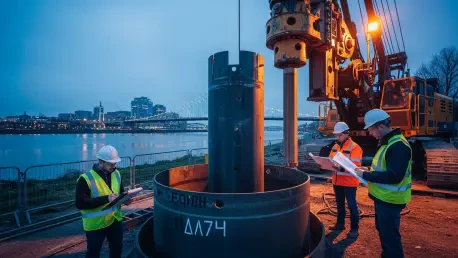
The commencement of early work on Harbor Island, specifically the drilling of a test bridge shaft that reaches 250 feet deep, is a critical sensory experience for engineers who need to understand the literal foundation of the project. This isn’t just a symbolic milestone; it is a vital data-gathering mission to analyze ground conditions that will dictate the final design of the future light rail bridge over the Duwamish River. When you are dealing with a shaft ten feet wide, you are looking for absolute certainty in the soil’s stability to support the massive loads of modern rail. This technical momentum is essential as the project transitions from the planning phase into final design following the FTA’s April 2025 Record of Decision. It provides the concrete information needed to finalize engineering specifications, ensuring that when construction begins in the 2027 to 2032 window, there are no geological surprises that could derail the budget or timeline.
With service not anticipated to start until 2032, how should agencies manage the phased property acquisition process to ensure that residents and businesses remain supported during the decade-long lead-up?
Managing property acquisition is as much about human empathy as it is about real estate law, especially when the timeline stretches out over several years. Sound Transit has indicated that these acquisitions will happen in phases based on specific construction needs, which allows for a more tailored approach to each affected party. The commitment to providing individualized support, relocation assistance, and benefits is crucial for maintaining public trust while the project moves through its design and construction phases. By reaching out directly to affected owners, tenants, and businesses, the agency can mitigate the anxiety that naturally arises from a massive infrastructure project. This proactive engagement ensures that by the time service begins in 2032, the community feels like a partner in the transit evolution rather than a casualty of it, which is essential for the long-term success of any urban rail extension.
Shifting to the workforce, Metra recently ratified a contract with a 35.42% compounded wage increase for its engineers. In your view, how crucial is this level of modernization and compensation for the long-term stability of a system serving 243 stations?
A 35.42% compounded wage increase over the life of a contract ending in 2032 is a powerful statement about the value of the 250 locomotive engineers who operate the Metra system. For a network that covers nearly 500 route miles and serves 243 stations across six counties, operational stability is entirely dependent on a satisfied and well-compensated workforce. This agreement does more than just raise pay; it modernizes the entire framework governing work rules, seniority, and assignment procedures, which had become outdated in a rapidly changing industry. The fact that the contract was ratified by an 84% majority reflects a deep alignment between the union and management on the need for a unified operating agreement. By including modern benefits like the recognition of Juneteenth and updating discipline standards, Metra is positioning itself as a stable, forward-thinking employer that can attract the talent necessary to run a complex, high-frequency commuter rail operation.
What is your forecast for the future of regional transit infrastructure?
I anticipate a decade defined by “pragmatic modernization,” where agencies move away from the unbridled expansion seen in the early 2000s toward highly efficient, fiscally disciplined projects. We will see a greater emphasis on “design-to-budget” philosophies, similar to the West Seattle refinements, where tunneling and technology are used to bypass the escalating costs of surface-level property acquisition. At the same time, the labor market for skilled transit operators will become increasingly competitive, forcing more agencies to follow the Chicago model of long-term, high-value contracts to ensure service reliability. As we see with the selection of Jacobs for the West Seattle design and the ongoing work at Metra, the focus is shifting toward creating a “unified” and “sustainable” framework that can withstand economic volatility while still delivering the high-capacity transit that growing metropolitan regions desperately need to remain functional.