
Overview of a Shifting Landscape
In the heart of North America’s industrial engine, the automotive logistics sector grapples with a critical challenge: how to move millions of vehicles and parts efficiently across vast distances while balancing cost and speed. This industry, a cornerstone of economic vitality, supports carmakers by ensuring seamless supply chains that deliver everything from finished sedans to intricate engine components. With billions of dollars in goods at stake, the competition between rail and trucking has never been more intense, and now, a potential merger between two rail giants, Union Pacific (UP) and Norfolk Southern (NS), raises a pivotal question about the future of freight transport.
The automotive logistics landscape currently stands at a crossroads, shaped by evolving market demands and infrastructure constraints. Rail transport, long a backbone for long-haul, high-volume shipments, competes with trucking’s unmatched flexibility and speed. Major players like UP and NS dominate rail movements, handling a significant share of finished vehicles and parts across the continent, particularly on predictable, high-density routes. Yet, as supply chains grow more complex, the pressure mounts for rail to adapt and innovate amid stiff competition.
This report delves into the dynamics of rail consolidation and its potential to reshape automotive logistics. By examining current trends, market data, regulatory challenges, and technological opportunities, the analysis aims to uncover whether a consolidated rail network can address longstanding inefficiencies and carve out a larger role in an industry hungry for cost-effective, reliable solutions.
Understanding Automotive Logistics and the Role of Rail Transport
The automotive logistics industry serves as a lifeline for carmakers, orchestrating the movement of vehicles and components across North America to keep assembly lines running and dealerships stocked. This sector underpins not just the profitability of manufacturers but also the broader economy, facilitating trade and supporting thousands of jobs. Efficient logistics are critical to minimizing delays and costs, especially in a market where just-in-time delivery is often the norm for parts and inventory management.
Freight transport within this space is a battleground between rail and trucking, each mode offering distinct advantages. Rail excels in moving large volumes over long distances, often at a lower cost per unit, making it ideal for transporting finished vehicles from manufacturing hubs to distribution centers. Trucking, however, dominates when speed and adaptability are paramount, particularly for urgent shipments or shorter routes. This ongoing rivalry shapes how logistics providers strategize to meet the diverse needs of automotive clients.
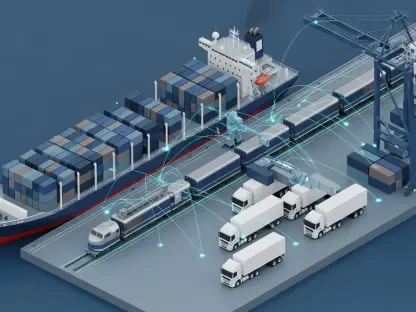
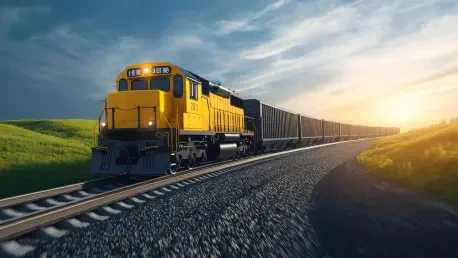
Key rail operators like Union Pacific and Norfolk Southern play an essential role in this ecosystem, managing extensive networks that span the continent. Their infrastructure supports high-volume, long-haul movements, such as shipping cars from Midwest plants to coastal ports. As consolidation looms on the horizon, the significance of rail’s capacity to handle bulk freight could grow, provided it can overcome inherent limitations and align with the industry’s evolving demands.
Trends and Market Dynamics in Rail and Automotive Freight
Key Shifts in Rail Transport Modes
Rail transport has undergone a notable transformation over recent decades, marked by a decline in traditional carload volumes. Once the dominant method for moving goods, carloads have seen a steady drop since their peak, reflecting broader economic shifts and changing shipper preferences. This decline has pushed rail operators to pivot toward intermodal transport, which combines rail and truck movements to offer a hybrid solution that leverages the strengths of both modes.
Intermodal transport has emerged as a growth area, particularly for automotive freight, due to its ability to adapt to fluctuating market conditions. This approach relies heavily on trucking market dynamics—when truck capacity tightens and rates climb, intermodal becomes a cost-competitive alternative. However, this dependency means rail’s growth in this segment is often at the mercy of external factors, limiting its control over pricing and market expansion.
Opportunities exist for rail to capture a larger share of automotive freight by enhancing network efficiency. Reducing bottlenecks at major interchanges and improving service reliability could make rail a more attractive option for carmakers. Strategic investments in infrastructure and partnerships with trucking firms may help bridge the gap, positioning rail to handle a broader range of shipments if consolidation streamlines operations.
Market Data and Growth Projections
Recent data from the Surface Transportation Board (STB) highlights the potential impact of a UP-NS merger, which could control 46% of total rail tonnage and 47% of automotive freight in the United States. This level of market concentration underscores the transformative potential of consolidation, as a combined entity would wield significant influence over pricing and service offerings in the sector. Such dominance could reshape how automotive logistics providers allocate their freight across modes.
Looking at intermodal volume trends, significant peaks have occurred over recent years, often tied to trucking rate surges and global trade rebounds. However, dips in activity, driven by softer container imports or abundant truck capacity, reveal rail’s vulnerability to external pressures. From this year onward, through to 2027, intermodal growth is expected to fluctuate based on these same macroeconomic conditions, with rail needing to navigate a complex web of trade policies and capacity constraints.
Forecasts suggest that rail could see incremental growth in automotive logistics if it capitalizes on intermodal opportunities and addresses inefficiencies. Analysts project that enhanced connectivity through consolidation might boost rail’s share of long-haul vehicle shipments, provided service reliability improves. Yet, this growth hinges on broader economic stability and the ability to align with shippers’ evolving needs in a competitive freight landscape.
Challenges Facing Rail in Automotive Logistics
Rail’s structural limitations pose significant hurdles in its bid to dominate automotive logistics. Transit times, often stretching to four or five days for cross-country routes, lag far behind trucking’s typical two-day deliveries. This gap is particularly problematic for time-sensitive shipments, such as critical parts needed for assembly lines, where delays can disrupt production and inflate costs.
Compared to trucking, rail also struggles with flexibility and responsiveness. Trucks can adjust routes on short notice and deliver directly to specific locations, a level of service rail cannot easily replicate due to its fixed infrastructure. For urgent freight needs, carmakers often prioritize speed over cost, sidelining rail despite its economic advantages for bulk movements.
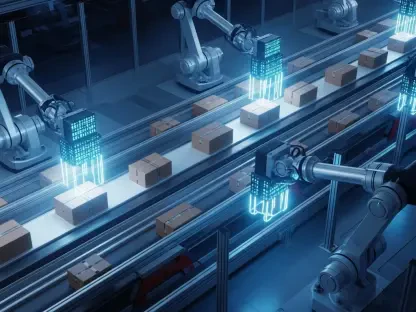
Potential solutions lie in streamlining operations through consolidation and adopting advanced technologies. A merged UP-NS network could reduce handoffs and delays at congested hubs, while innovations like real-time tracking and predictive analytics might enhance scheduling precision. These improvements, if realized, could help rail close the reliability gap with trucking and appeal to a wider range of automotive shippers.
Regulatory Landscape and Implications of Rail Consolidation
The Surface Transportation Board (STB) holds a pivotal role in shaping the future of rail consolidation, tasked with evaluating mergers like the potential UP-NS combination. Its oversight focuses on ensuring that such deals do not harm competition or disadvantage shippers, a concern amplified by the already concentrated nature of the North American rail market. The board’s decisions will likely set the tone for how consolidation unfolds.
A major worry surrounding a consolidated rail market is the risk of reduced competition, which could lead to higher pricing and diminished service quality for automotive logistics providers. With fewer rail operators to choose from, carmakers might face limited bargaining power, potentially offsetting the cost efficiencies promised by a larger network. This tension between scale and competition remains a central issue in merger discussions.
To mitigate these risks, regulatory conditions may be imposed to protect shippers’ interests. These could include mandates for fair pricing or guaranteed access to rail services in key regions. While such measures aim to balance the benefits of consolidation with market fairness, they might also dilute some of the operational advantages a merged entity hopes to achieve, creating uncertainty around the ultimate impact on automotive freight.
Future Outlook for Rail in Automotive Logistics
Rail consolidation could fundamentally alter freight transport by enhancing connectivity across North America. A combined UP-NS network might reduce inefficiencies at critical interchanges like Chicago, cutting transit times and improving service consistency for long-haul automotive shipments. Such improvements could solidify rail’s role as a preferred mode for high-volume, predictable routes.
Emerging technologies offer another avenue to address rail’s speed disadvantage compared to trucking. Innovations like automated terminals, digital scheduling platforms, and even high-speed rail corridors for freight could narrow the gap in delivery times. If adopted at scale, these advancements might make rail a viable option for a broader spectrum of automotive cargo, including time-sensitive parts.
External factors, however, will continue to shape rail’s trajectory. Global trade dynamics, such as shifts in import volumes, alongside fluctuations in trucking capacity and broader economic conditions, will influence intermodal growth. Rail operators must navigate these uncertainties while aligning with carmakers’ priorities, ensuring that consolidation delivers tangible benefits without compromising service diversity or cost competitiveness.
Final Reflections and Path Forward
Looking back, the exploration of rail consolidation’s impact on automotive logistics revealed a landscape of both promise and limitation. The potential merger of Union Pacific and Norfolk Southern stood out as a transformative possibility, offering enhanced network efficiency and cost savings for long-haul freight. Yet, rail’s persistent challenges, particularly in matching trucking’s speed for urgent shipments, remained a significant barrier to broader adoption.
Moving forward, actionable steps for rail operators include prioritizing investments in intermodal infrastructure to capitalize on market shifts when trucking rates rise. Collaborating with technology providers to deploy real-time tracking and automation can further boost reliability, addressing shipper concerns. Additionally, engaging with regulators to shape fair merger conditions will be crucial to balance scale with competition.
For carmakers and logistics providers, the path ahead involves a strategic blend of rail and trucking solutions, leveraging each mode’s strengths. Advocacy for policies that ensure competitive pricing post-consolidation can safeguard their interests. As the industry evolves, continuous dialogue between rail operators, shippers, and regulators will be essential to unlock the full potential of consolidation while mitigating its risks, paving the way for a more integrated and resilient automotive logistics framework.