
The long-standing dominance of the traditional parcel delivery giants has finally met its match as a wave of high-tech regional providers transforms the American supply chain into a fragmented and hyper-competitive landscape. For decades, the American porch has been the exclusive territory of two primary colors: FedEx purple and UPS brown. Shipping managers often viewed alternative carriers as a “break glass in case of emergency” option—useful during a strike or a global pandemic, but rarely a first choice for primary volume. However, the current logistics landscape has undergone a seismic shift. The “regional” label that once acted as a ceiling for smaller players is being dismantled. Today, these alternative providers aren’t just competing on price; they are challenging the incumbents on the one battlefield that matters most: the high-tech, high-stakes final mile of the consumer experience.
This evolution signifies more than just a change in carrier preference; it represents a fundamental restructuring of how goods move from warehouse to doorstep. Retailers have realized that over-reliance on a duopoly creates a single point of failure that can jeopardize customer loyalty during peak seasons or labor disputes. As a result, the rise of the “alt-carrier” has become the defining story of the year, moving from the fringes of the industry to the very center of strategic planning for major e-commerce brands.
The End of the Purple and Brown Stranglehold
The iron grip that FedEx and UPS once held over the domestic parcel market has loosened as shippers seek agility over tradition. In the past, the massive scale of the national integrators provided a sense of security, but that security came with a premium price tag and rigid operational constraints. Shippers now recognize that a “one-size-fits-all” approach to national distribution is often less efficient than a diversified network that utilizes local experts for high-density zones. This shift has allowed smaller players to prove that they can handle significant volumes while maintaining the white-glove service standards that modern consumers demand.
Furthermore, the psychological barrier that once prevented logistics directors from diversifying their carrier base has vanished. Where there was once a fear that using multiple carriers would complicate warehouse operations or dilute volume discounts, there is now a sophisticated understanding of multi-carrier software that handles these complexities automatically. The emergence of these alternative players has forced a democratization of delivery data, giving shippers the power to hold every carrier accountable for every single package, regardless of the logo on the side of the truck.
Why the Traditional Duopoly is Facing a Modern Identity Crisis
The dominance of FedEx and UPS was built on massive, rigid networks designed for a pre-AI world, which has left them vulnerable to more nimble competitors. While these giants offer unrivaled global scale, their sheer size can make them slow to adapt to the specialized needs of modern e-commerce. As shipping costs continue to climb, businesses are no longer willing to sacrifice service quality just to keep all their volume under one contract. The industry is witnessing a transition where the “last-mile” delivery is seen as a direct extension of a brand’s reputation. If a carrier fails, the retailer—not the delivery driver—takes the hit in the eyes of the consumer.
This reality has forced shippers to look beyond the big two for partners who offer more agility and localized expertise. The incumbents are currently struggling to balance their legacy infrastructure with the need for rapid, data-driven innovation. While they focus on protecting their margins through fuel surcharges and accessorial fees, alternative carriers are focusing on the consumer experience. This misalignment has created a vacuum that alt-carriers are eager to fill, offering a level of transparency and partnership that the larger integrators have historically struggled to provide to mid-sized and even large-scale shippers.
The Three Pillars of the Alt-Carrier Insurgency
The rise of alternative carriers is not an accident of geography; it is a calculated assault based on three specific strategic advancements. To compete with the sophisticated tracking systems of national giants, alternative carriers are deploying feature innovation that often surpasses the industry standard. Platforms like Veho’s MaestroAI now offer FlexSave options, allowing shippers to trade fixed delivery dates for lower costs while using AI to ensure packages still arrive within a tight, predictable window. Carriers like United Delivery Service are utilizing 3POD systems, providing multi-image, AI-assisted proof of delivery to eliminate disputes and ensure packages are placed exactly where the customer wants them. Logistics leaders like Maersk E-Commerce now provide shippers with live dashboards that monitor carrier performance in real-time, offering a level of transparency that was once the exclusive domain of the world’s largest integrators.
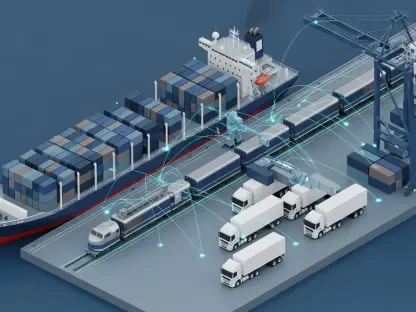
Beyond technology, these carriers are aggressively expanding their ZIP code coverage to offer near-national reach, removing the biggest barrier to widespread adoption. Providers like Gofo have scaled to cover over 80% of the U.S. population, moving into 12,000 ZIP codes to prove they can handle more than just local deliveries. By establishing hubs in locations like Ontario, California, carriers are positioning themselves at the mouth of the nation’s largest port complexes, streamlining the flow from container ship to consumer doorstep. Carriers like Better Trucks are laser-focused on the Southeastern “Sun Belt,” capturing the surge in e-commerce demand in states like Georgia and Florida where traditional infrastructure is most strained. Finally, the 2026 cohort of alt-carriers is prioritizing staying power through strict operational controls. Using proprietary monitoring tools, companies like UniUni are auditing the “last touchpoint”—ensuring that photos are clear and packages are handled with care. By automating “return-to-sender” workflows, alt-carriers are helping retailers recoup inventory faster, solving one of the most expensive headaches in the e-commerce cycle.
Expert Perspectives on the Diversified Shipping Mix
Industry veterans at recent logistics summits have noted that the goal is no longer to replace FedEx or UPS, but to optimize around them. Executives from eyewear giant EssilorLuxottica emphasize that while cost-savings are the initial hook, reliability is what keeps the contract. The consensus among supply chain leaders is that the market is moving toward a multi-carrier strategy. By using smaller, more agile providers for specific high-density regions, shippers can create a redundancy that protects them from price hikes and labor disputes, effectively turning the duopoly into a more competitive, fragmented marketplace.
Moreover, experts suggest that the “regional” carrier is becoming a misnomer. As these companies link their networks through shared technology platforms, they are essentially creating a “virtual national network” that rivals the reach of the traditional giants without the overhead of a massive, centralized fleet. This collaborative ecosystem allows for greater flexibility, as shippers can shift volumes between carriers in real-time based on performance data or regional capacity constraints. The result is a more resilient supply chain that is less susceptible to the systemic shocks that have historically plagued the parcel industry.
Strategies for Transitioning to a Multi-Carrier Model
For businesses looking to integrate alternative carriers into their logistics stack, a structured approach was essential to maintaining service levels. The first step involved analyzing volume by density to identify high-volume ZIP codes where regional players like Jitsu or SpeedX had a concentrated footprint. These were the areas where the highest savings could be achieved without losing speed. Shippers then implemented an “injection” strategy, bypassing a carrier’s mid-mile network by dropping volume directly into local hubs to eliminate traditional sorting delays and reduce the risk of damage.
Leveraging tech integrations proved to be the most critical factor in a successful transition. By using multi-carrier shipping software to automatically route packages to the best-performing carrier based on real-time data, companies ensured that the alternative option was chosen because it was the best, not just the cheapest. Finally, regular audits of the customer experience, including proof-of-delivery photos and feedback, ensured that the brand extension remained high-quality as the carrier list scaled. This strategic diversification provided the necessary leverage to negotiate better terms with national incumbents while simultaneously improving the speed and reliability of the final mile. Moving forward, the most successful retailers will be those who treat their delivery network as a living, breathing ecosystem rather than a static contract. Continuous performance monitoring and a willingness to test new entrants will remain the keys to staying ahead of consumer expectations and maintaining a competitive edge in an increasingly crowded marketplace.