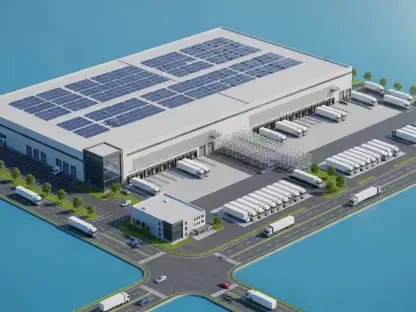

The global industrial landscape is currently navigating a high-stakes transition where the difference between a functional supply chain and a failing one depends entirely on the speed of autonomous decision-making. As Zhejiang Galaxis Technology Group Co., Ltd. makes its definitive entrance onto the Hong Kong Stock Exchange under the ticker 2729.HK, the move signals a massive shift in how capital markets value “embodied intelligence.” This initial public offering is far more than a routine financial expansion; it serves as a sophisticated litmus test for an industry that has moved from experimental automation to a foundational requirement for global trade. With a formidable 2.2 billion yuan order backlog already secured, Galaxis is positioning itself as a central pillar in a market where the demand for precision and scale has never been more urgent.
The Strategic Public Debut of a Robotics Powerhouse
The timing of this listing reflects a calculated move to capitalize on the increasing maturity of the intralogistics sector. By offering over 36 million H shares to both domestic and international investors, the company is tapping into a deep pool of institutional interest that includes logistical giants and financial heavyweights like SF Holding and CICC Capital. This public debut happens at a moment when the industry is desperate for standardized, reliable solutions that can be deployed across various high-pressure environments, from pharmaceutical distribution to automotive manufacturing.
Beyond the immediate influx of capital, the IPO provides a transparent look at the operational health of a top-tier robotics firm. The company’s ability to draw support from diverse sectors suggests that intelligent logistics is no longer viewed as a niche tech play but as a critical utility. As the Hong Kong market welcomes this new entrant, the focus remains on whether the company can leverage its public status to further consolidate its lead in a fragmented but rapidly expanding global arena.
The Convergence of Economic Demand and Policy Support
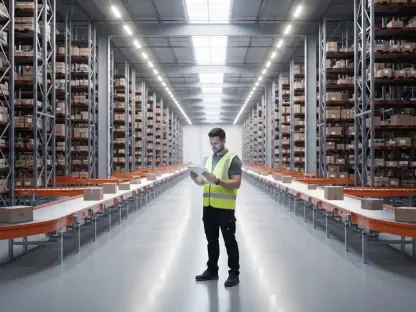
To grasp why this market entry is so pivotal, one must consider the structural pressures currently suffocating traditional warehousing. Businesses are facing a persistent “triple threat” characterized by skyrocketing urban land costs, chronic labor shortages, and an unprecedented surge in SKU complexity driven by hyper-fast e-commerce. These factors have rendered manual sorting and storage almost obsolete for any enterprise seeking to maintain a competitive edge. Intelligent robotics has consequently evolved into a “rigid demand” rather than a discretionary luxury.
Moreover, the regulatory environment has shifted to actively favor these technological leaps. Current national economic strategies have identified smart manufacturing and “Robotics+” applications as essential drivers for long-term growth. This policy alignment provides a stable, long-term runway for companies that can bridge the gap between abstract artificial intelligence and physical industrial execution. By operating within this supportive framework, Galaxis is not just fighting for market share; it is participating in a government-backed overhaul of the modern industrial infrastructure.
Market Dynamics and Competitive Positioning
Dominance in Specialized Robotics Niches
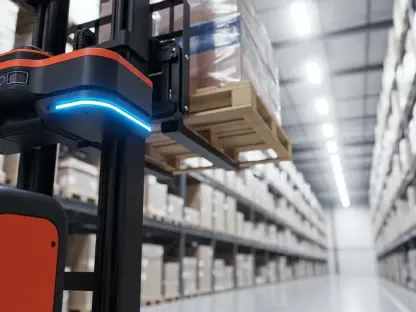
The intelligent intralogistics market is currently on a trajectory to reach nearly RMB 1 trillion by 2030, and the competitive landscape is beginning to favor specialized leaders over generalist providers. Galaxis has strategically carved out a dominant position by focusing on high-growth sub-sectors where technical barriers to entry are high. For instance, the company currently holds the top spot in China for Very Narrow Aisle (VNA) Autonomous Mobile Robots by shipment volume. This focus on maximizing vertical space and storage density directly addresses the most painful cost centers for modern warehouse operators.
By mastering the specific mechanics of storage, sorting, and handling, the firm has built a competitive moat that relies on hardware performance and reliability. In a market where downtime can cost millions per hour, being a specialized leader in these critical functions provides a level of brand equity that is difficult for newcomers to replicate. The company’s success in the multidirectional shuttle and AMR markets highlights a diversified approach that covers every major movement within a modern distribution center.
The Middle Platform Strategy: Avoiding the Commodity Trap
One of the most significant risks in the robotics industry is the “commodity trap,” where hardware becomes a race to the bottom in terms of pricing. To combat this, Galaxis has pioneered a “middle platform” strategy that prioritizes the software ecosystem over the physical machine. By independently developing its own Warehouse Management Systems (WMS) and Robot Control Systems (RCS), the company ensures that its hardware is inextricably linked to a sophisticated digital brain. This approach transforms the robot from a piece of equipment into a managed service.
This integration creates a high level of customer stickiness, as switching to a competitor would require a total overhaul of the client’s software infrastructure. Furthermore, the ability to offer end-to-end solutions allows for higher profit margins compared to firms that only manufacture chassis or basic sensors. This “software-defined” robotics model is increasingly seen as the gold standard for achieving long-term profitability in a sector that was once dominated by low-margin hardware manufacturing.
Regional Expansion and Global Market Depth
The narrative of intelligent logistics is increasingly global, and the ability to scale across borders is a key differentiator for top-tier players. With a presence already established in 19 countries and nearly 50 overseas projects in the pipeline, Galaxis is proving that its technology is not limited by regional constraints or specific labor laws. International expansion allows the firm to hedge against domestic economic shifts while tapping into markets like Europe and North America, where labor costs are even higher and the incentive for automation is even stronger.
Adapting to international operational standards and safety protocols is a rigorous process, but it also serves as a quality signal to prospective clients. By successfully deploying systems in diverse regulatory environments, the company demonstrates the flexibility of its “middle platform” architecture. This global footprint ensures that the company is not just a regional champion but a serious contender for the title of a global systems integrator in the automated supply chain space.
Emerging Trends and the Future of Intralogistics
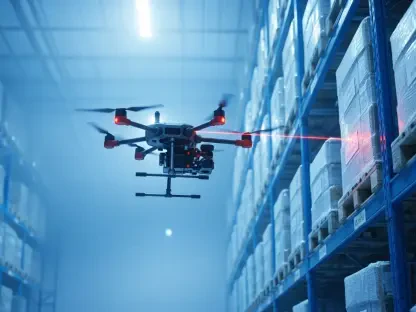
The next phase of evolution in this sector will likely be defined by the deep integration of Large Language Models and digital twin technology. These advancements will allow robots to move beyond pre-programmed paths toward true situational awareness and predictive maintenance. As R&D investments from the IPO proceeds begin to bear fruit, the industry can expect a shift toward “Robotics as a Service” (RaaS) models. This would lower the initial capital expenditure for mid-sized enterprises, significantly expanding the addressable market for intelligent logistics solutions.
Furthermore, the trend toward “plug-and-play” deployment is becoming a major focus. Historically, installing a robotic warehouse system could take months of onsite calibration. Future iterations are moving toward modular designs that can be set up in weeks, if not days. This reduction in implementation friction is expected to trigger a new wave of adoption among manufacturers who previously viewed automation as too disruptive to their existing workflows. The era of the “unmanned factory” is moving from a high-tech concept to a standardized reality.
Strategic Takeaways for the Industry
The success of this public debut offers several critical insights for the broader tech and logistics communities. First, the move toward “single-function robot deployment services” as a major revenue driver suggests that standardization is the most viable path to high-margin growth. When a company can replicate a successful deployment across hundreds of clients with minimal customization, the operational leverage becomes immense. Second, the narrowing of net losses in the face of rapid revenue growth proves that the initial heavy lifting of R&D and infrastructure development is finally yielding a scalable business model.
For professionals and investors, the lesson is that the real value in robotics lies at the intersection of hardware reliability and software intelligence. Hardware alone is a commodity, and software alone lacks physical utility; the winners are those who can seamlessly fuse the two into a single, cohesive unit. As the industry matures, the focus will likely shift from basic movement to advanced data analytics, where the robots themselves become sensors that provide real-time insights into the health of the entire global supply chain.
Defining the New Standard for Intelligent Logistics
The entry of Galaxis Technology into the public market signaled a maturation point for the entire robotics industry, moving it away from the realm of speculative venture capital and into the territory of established industrial infrastructure. With a massive backlog and a proven software-centric model, the company provided a blueprint for how to scale in a world that is increasingly reliant on automated throughput. The transition from a specialized manufacturer to a comprehensive “middle platform” provider effectively addressed the most pressing challenges of the modern warehouse.
Ultimately, the strategies employed throughout this growth phase offered a glimpse into the future of global commerce. Businesses that recognized the importance of high-density storage and software-integrated handling found themselves better equipped to handle the volatility of the modern market. The focus shifted toward sustainable, long-term value creation through technological depth rather than aggressive price cutting. The industry looked forward to a period where intelligent machines would not merely assist human labor but would serve as the central nervous system for the world’s most efficient distribution networks.