
The traditional landscape of industrial warehousing is undergoing a fundamental transformation as aging infrastructure gives way to sophisticated robotic ecosystems designed for the modern era. This shift represents a pivotal moment for the stow Group, which has successfully navigated the transition from manufacturing conventional industrial racking to pioneering advanced warehouse automation under the Movu brand. Supported by significant capital investment from Blackstone, the organization is now uniquely positioned to address the most pressing challenges of the current supply chain environment, including severe labor shortages and the urgent requirement for highly scalable operational frameworks. By integrating decades of deep-seated structural expertise with cutting-edge robotic technology, the company has established a comprehensive ecosystem that significantly enhances both warehouse throughput and the depth of available data analytics for decision-makers. Under the leadership of CEO Christophe Coulongeat, the firm is experiencing explosive financial growth, with revenue expected to climb from €200 million in 2025 to over €300 million by the end of 2026, marking it as a critical pillar of the larger organization.
Pioneers in Robotic Engineering
The Atlas System: Redefining Density and Navigation
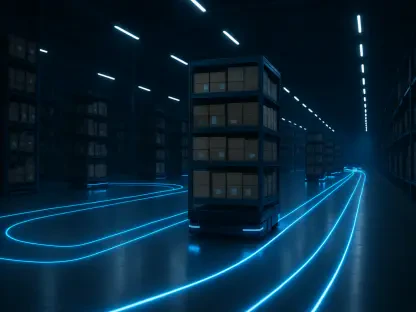
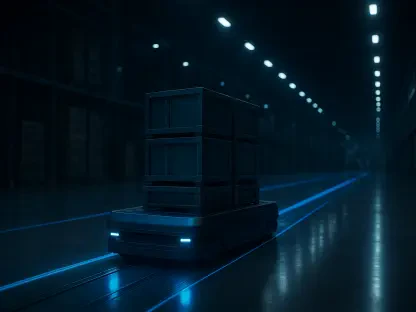
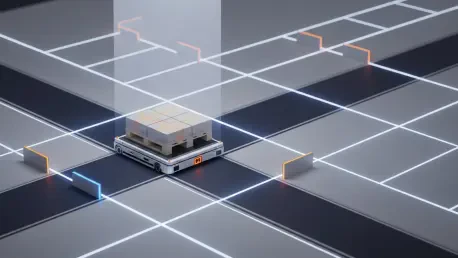
The “atlas” four-way pallet shuttle serves as the cornerstone of this technological innovation, utilizing a sophisticated chessboard-style navigation system to move inventory with surgical precision. Unlike traditional stacker cranes that require rigid, rectangular layouts and dedicated aisles, these autonomous robots move level-by-level to maximize storage density in facilities of almost any geometric shape. This logic allows for high-speed operation while ensuring that no cubic foot of space is wasted within a facility, providing a significant advantage for companies operating in high-cost urban environments. By decoupling the horizontal and vertical movements of goods, the system allows for much higher throughput than conventional methods, as multiple shuttles can operate on different levels simultaneously without causing bottlenecks. This flexibility ensures that the warehouse can adapt to changing order profiles and fluctuating inventory levels, making it an ideal solution for businesses that experience seasonal peaks or rapid shifts in consumer demand patterns.
The implementation of this modular technology provides a level of versatility that was previously unattainable in high-density storage environments. Logistics managers can now deploy a variable number of robots depending on their specific throughput requirements, effectively scaling their automation investment in line with their business growth. Because the system utilizes a standardized grid, the installation process is significantly faster than that of bespoke automation projects, allowing for a quicker return on investment. Furthermore, the intelligent path-finding algorithms used by the shuttles minimize energy consumption by calculating the most efficient route to any given pallet position. This focus on operational efficiency is complemented by the system’s ability to integrate seamlessly with existing warehouse management software, providing a bridge between physical inventory and digital oversight. As companies strive to optimize their internal logistics, the atlas system offers a compelling path toward fully autonomous operations that prioritize both speed and space utilization.
Specialized Resilience: Redundancy and Cold Storage
Operational reliability is a critical factor for modern logistics managers who cannot afford the steep costs associated with total system shutdowns. The Movu architecture addresses this concern through built-in redundancy; because the system utilizes multiple independent robots, the failure or maintenance of a single unit does not compromise the integrity of the entire operation. While one robot is serviced, others continue to navigate the grid, ensuring that order fulfillment remains uninterrupted and that service level agreements are met. This decentralized approach to automation provides a safety net that traditional, centralized systems lack, where a single mechanical failure can bring an entire distribution center to a standstill. For high-volume businesses, this reliability is not just a convenience but a fundamental requirement for maintaining a competitive edge. The ability to swap units in and out of the grid with minimal downtime further enhances the long-term viability of the automation investment.
Beyond mechanical redundancy, these robots are specifically engineered to withstand the most punishing environmental conditions, particularly in the cold storage sector. The specialized hardware is designed to perform at peak efficiency in temperatures as low as -25°C, where traditional equipment often fails due to battery degradation or mechanical brittleness. This capability is vital for the food and beverage industry, where maintaining a consistent cold chain is essential for product safety and regulatory compliance. By automating these harsh environments, companies can also mitigate the challenges of finding labor willing to work in sub-zero temperatures, which is a major pain point for the industry. The robots operate with high precision in these conditions, reducing the risk of product damage and improving overall safety within the freezer. This specialized focus on extreme environments has allowed the company to capture a significant portion of the global niche market for automated cold storage, providing a durable solution for one of the most demanding sectors in the supply chain.
Strategic Expansion and Digital Integration
The American Market: Localizing Production and Scale
A major component of the current growth strategy involves a heavy investment in the United States, where the scale of logistics projects is significantly larger than what is typically observed in European markets. While European automation projects often range between €3 million and €5 million, American fulfillment centers regularly see capital investments reaching up to €30 million for a single installation. These massive projects are particularly common in the fast-moving consumer goods and beverage sectors, where the sheer volume of pallets requires a level of automation that can only be provided by high-density shuttle systems. To better serve this expanding market, a new manufacturing facility is being opened near Atlanta, marking a strategic shift away from a simple export model. This localized presence will help the brand reach its ambitious goal of having the US market represent half of its total global business, ensuring that production capacity matches the high demand for domestic projects.
Manufacturing closer to the end-client provides several logistical advantages, including faster response times and significantly reduced shipping costs for heavy structural components. This localized approach also allows for better support for regional distributors and original equipment manufacturers who require immediate access to parts and technical expertise. By establishing a physical footprint in Georgia, the company can tailor its engineering solutions to meet specific American regulatory standards and seismic requirements more effectively. This transition from a European exporter to a domestic manufacturer demonstrates a long-term commitment to the North American supply chain ecosystem. Furthermore, the presence of a local assembly and testing facility ensures that every system is optimized for the unique power and safety requirements of the US market. This strategy not only strengthens the supply chain against global disruptions but also fosters deeper relationships with American stakeholders who prioritize local partnerships and rapid service delivery in their large-scale automation ventures.
Software Intelligence: Proprietary Control and Structural Safety
Beyond the physical robots, the development of a proprietary Warehouse Control System was essential for managing the complex flow of information in a high-speed environment. This software layer provides sophisticated traffic management, which is critical when coordinating the movements of over 100 robots within a single storage grid. By maintaining full control over the software stack, the company ensures that the hardware performs at peak efficiency regardless of the warehouse’s complexity or the number of active SKUs. The “Smart box” platform provides clients with deep analytics and data-led insights, allowing them to monitor system health and throughput in real time. This focus on digital intelligence helps warehouses adapt to changing customer demands with much higher precision than manual systems, enabling managers to make informed decisions based on live operational data. The integration of software and hardware creates a closed-loop system where performance can be continuously optimized through iterative data analysis.
The successful implementation of these technologies demonstrated that the future of logistics depended on the ability to merge physical stability with digital agility. Forward-thinking facility managers prioritized the implementation of modular robotic systems that allowed for incremental scaling as demand patterns fluctuated throughout the year. It became evident that investing in localized manufacturing and support structures was essential for maintaining high uptime in complex fulfillment environments. Companies that adopted these integrated solutions realized significant improvements in both storage density and labor efficiency, setting a new benchmark for global supply chain resilience. Moving forward, stakeholders evaluated their existing racking infrastructure to determine if it could support high-speed robotic traffic, ensuring that every square foot of the warehouse remained productive and safe for long-term operational success. This approach confirmed that the marriage of structural engineering and robotics was the only viable path for sustaining growth in the face of increasingly complex global trade demands.