
A seasoned dispatcher watching a high-value load disappear from a digital board might feel a momentary rush of success, yet without the right data, that victory often turns into a quiet drain on the company’s bottom line once the expenses are tallied. The logistics sector is currently navigating a period of profound change where artificial intelligence agents have moved from being experimental novelties to essential components of day-to-day operations. These digital dispatchers are incredibly efficient at scanning thousands of loads in seconds, but efficiency does not always equate to profitability. The launch of MapUp’s FuelGuru Model Context Protocol (MCP) server signals a critical evolution in this space, providing a technical bridge that allows AI to move beyond the surface-level mechanics of freight matching and into the deep financial analysis required for sustainable growth.
Moving Beyond Gross Rates to Real-Time Net Profitability
Digital load boards and AI dispatch agents have mastered the art of finding freight, yet a high-paying load often hides a low-margin reality that stays invisible until it is too late. In an industry where a “good load” has traditionally been defined by the gross rate per mile, many carriers are discovering that automation without deep financial context leads to busy trucks rather than profitable ones. The introduction of the FuelGuru MCP server marks a fundamental shift from simple logistical matching to a system capable of calculating the actual yield of a trip before the wheels even turn. By providing AI agents with the ability to see the net profit after every expense is accounted for, the platform ensures that freight selection is based on fiscal health rather than just volume.
The current landscape of freight management often rewards speed and proximity, but it frequently ignores the complex variables that determine the actual take-home pay for a carrier. When an AI agent lacks access to the specific toll costs or the fluctuating price of diesel along a specific corridor, it is essentially operating with a blind spot. MapUp’s new protocol provides the necessary data layers to fill this gap, transforming the decision-making process into a math-driven exercise. Instead of simply accepting the highest offer, the technology allows for a sophisticated ranking of loads based on their true contribution to the fleet’s bottom line, accounting for every bridge toll and every fuel stop discount along the way.
The Hidden Financial Risks of Context-Blind AI Dispatching
The central challenge for modern logistics is the “profitability gap,” which is the significant disconnect between a high gross rate and the actual net income remaining after tolls, fuel, and labor. Traditional AI tools can filter for equipment types and proximity to the pickup point, but they often lack the nuanced data required to navigate the volatile landscape of fuel prices and complex, multi-state toll structures. Without route-specific cost data that is tailored to the unique internal rules and negotiated discounts of a specific fleet, automated systems are essentially guessing. This lack of context often leads to automated decisions that erode margins through unexpected expenditures or inefficient routing that looks good on paper but fails in practice.
Furthermore, context-blind dispatching fails to account for the human element and the regulatory constraints of the industry, such as the rigid hours-of-service requirements. An AI that selects a load based solely on price might overlook the fact that the route requires a ten-hour mandatory break in a high-cost area, or that the fastest path involves a toll road that costs more than the time saved is worth. These hidden risks are the primary cause of margin erosion in the modern era. By providing a clear view of these expenses before a commitment is made, carriers can protect themselves from the “silent killers” of profitability that traditionally hide within a high gross rate.
Unpacking FuelGuru MCP: Route Comparisons and Universal Integration
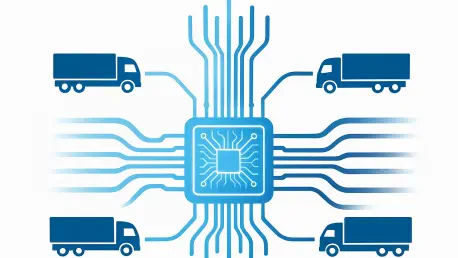
The core innovation of the FuelGuru MCP lies in its ability to perform a “Triple-Route Analysis,” which compares the practical, fastest, and cheapest paths for any given load. For instance, a detailed look at a hypothetical shipment moving from Illinois to Philadelphia reveals that the fastest route might “buy back” a mere twenty-three minutes of time at a staggering cost of over three hundred dollars in additional tolls and fuel. For most fleets, this is a terrible trade-off, yet it is a decision made thousands of times a day because the data is not visible during the planning stage. The MCP server acts as a “universal power adapter” for logistics software, allowing any AI assistant to instantly ingest vehicle-specific tolls, fuel economy data, and driver constraints to produce a precise financial forecast.
This technical standard allows for a level of integration that was previously impossible without massive custom development. Because the MCP is a standardized protocol, a fleet manager can plug their MapUp credentials into a variety of different AI platforms or transport management systems, and the “FuelGuru brain” immediately begins providing insights. It treats every truck as a unique entity, considering its specific fuel economy and current tank levels to recommend the most cost-effective fueling locations based on negotiated card pricing. This level of granular detail ensures that the routing plan is not just a general suggestion, but a mathematically optimized blueprint for a specific trip, ensuring that no money is left on the table.
Expert Insights: Overcoming Departmental Silos and Habitual Routing
According to the leadership at MapUp, the industry’s long-standing reliance on habitual policies is often a poor substitute for real-time data. CEO Katie Mahlawat emphasizes that true intelligence in the logistics space requires an understanding of the delicate trade-off between time and cost. Meanwhile, CTO Maneesh Mahlawat points out that many carriers suffer from “pricing by committee,” where decisions take far too long and rely on fragmented information from different departments that rarely speak the same language. By democratizing enterprise-level fuel and toll optimization, the FuelGuru MCP allows even small owner-operators to utilize advanced AI assistants to compete on a level playing field with the largest carriers in the country.
The move away from “habitual routing”—the tendency to always take the same highway or avoid all tolls regardless of the current cost—is a primary goal of this new technology. Experts in the field argue that these habits were formed in an era where data was scarce, but in the modern market, they are a liability. The FuelGuru MCP provides the evidence needed to break these habits, showing exactly when a toll road is worth the investment and when it is a waste of capital. By centralizing this intelligence, MapUp is helping fleets move toward a more agile operational model where every route is evaluated on its current merits rather than past traditions.
Practical Frameworks: Synchronizing Planning and Driver Execution
To turn high-level strategic planning into actual profit, carriers must bridge the “value leak” that frequently occurs between the dispatcher’s desk and the driver’s cab. This requires a synchronized approach that begins with the integration of API skills into the existing AI configurations to enable real-time “freight math” during the load-selection process. Once the load is selected, the system must account for fleet-specific rules, such as negotiated fuel card pricing and the unique fuel economy of the equipment being used. This ensures that the calculations provided by the AI are not generic estimates, but accurate reflections of the operational reality for that specific driver and vehicle.
The execution phase is equally critical, as even the best plan fails if it is not followed on the road. By utilizing the synergy between FuelGuru and NavGuru, carriers can embed optimized routes and fuel stops directly into turn-by-turn navigation, which significantly increases compliance rates. A dynamic recalculation feature is also essential, allowing the system to automatically adjust the fuel and route plan if a driver encounters unexpected delays or missed stops. This ensures that the original profitability plan remains intact even when conditions change, maintaining a high level of compliance and protecting the expected margins from the start of the trip to the final delivery.
The industry recognized that the path to sustainable growth involved a complete integration of back-office financial data with real-time operational execution. Carriers that successfully adopted these frameworks moved toward a model where every mile was accounted for before the engine even started. These organizations successfully utilized dynamic recalculation systems to protect their margins from the volatility of energy markets and infrastructure costs. The transition away from intuitive dispatching toward a standard of absolute financial visibility proved that data-driven planning was the only viable way to maintain profitability. Ultimately, the adoption of these advanced protocols allowed fleets to close the gap between projected and actual earnings, ensuring a more stable future for the freight economy.