
The global economy depends on a microscopic heartbeat found within silicon wafers, yet the logistical pathways for these essential components remain notoriously vulnerable to the whims of geopolitical shifts and regional infrastructure bottlenecks. As of June 2026, the aviation industry has witnessed a pivotal shift in how these high-stakes assets are transported across the Pacific Ocean, moving away from generalized freight toward a more specialized and insulated model. Korean Air has spearheaded an ambitious initiative to fortify the semiconductor trade by significantly expanding its dedicated cargo hubs, specifically focusing on the critical link between East Asia and the United States. This expansion represents more than just an increase in flight frequency; it is a fundamental redesign of the logistics pipeline intended to eliminate the volatility that has plagued tech manufacturers for years. By prioritizing reliability and environmental precision over sheer volume, the carrier is positioning itself as a vital guardian of the global technology supply chain. This strategic pivot ensures that the latest advancements in high-performance computing can reach their destination without the typical delays and handling risks associated with traditional air freight.
1. Strategic Overview: Infrastructure Expansion for Supply Chain Resilience
The establishment of a dedicated cargo corridor between Incheon and New York marks a transformative moment for semiconductor manufacturers who have long struggled with the unpredictability of mixed-load air freight. This specific route was chosen not merely for its high traffic volume, but because it connects the manufacturing heart of South Korea directly to the financial and technological distribution nerve centers of the American East Coast. By isolating semiconductor shipments into a protected logistical stream, the strategy minimizes the risk of sensitive components being bumped for less critical but more profitable bulk items. This dedicated approach ensures that the rhythmic flow of silicon remains steady even when broader market conditions fluctuate or when standard shipping schedules are disrupted by external factors. The corridor functions as a high-speed bypass, allowing high-value technology to move through the air with the same precision and consistency expected in a cleanroom environment, thereby setting a new standard for international trade lanes in the high-tech sector.
The overarching objective of this infrastructure expansion is to provide a robust shield against the systemic delays and sudden flight cancellations that characterized global shipping earlier in this decade. As of mid-2026, the transition toward a more resilient network has become essential for maintaining the competitive edge of major electronic brands and automotive manufacturers. By investing heavily in physical hub improvements and dedicated aircraft rotations, the airline is effectively decoupling the semiconductor supply chain from the general logistics market. This strategic separation means that a disruption in consumer goods or heavy industrial machinery transport no longer ripples through to the sensitive electronics market with the same severity. Furthermore, the commitment to this corridor allows for better long-term planning for corporate partners, who can now rely on a predictable delivery window of less than forty-eight hours from factory floor to distribution center. This predictability is the cornerstone of the modern just-in-time manufacturing model, which has often been tested but is now finding a more stable foundation through these targeted infrastructure investments.
2. Enhancements at the Incheon International Airport Export Hub: Automation and Security
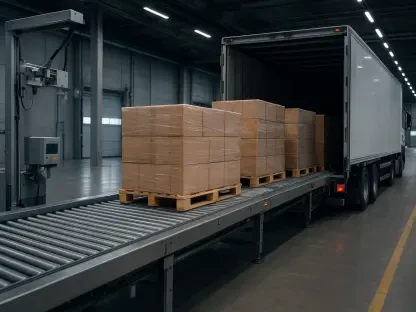
The Incheon International Airport Export Hub has undergone a massive technological transformation to accommodate the sheer volume of advanced silicon components originating from South Korea’s manufacturing belt. Central to this upgrade is the integration of highly sophisticated automated systems designed to handle delicate semiconductor wafers and finished chipsets with minimal human intervention. These robotic sorting and transport platforms utilize artificial intelligence to determine the most efficient path for every pallet, reducing the risk of mechanical jarring and ensuring that fragile electronics are not subjected to unnecessary movement. By replacing traditional manual forklifting with precision-guided vehicles, the hub has managed to increase its throughput capacity while simultaneously lowering the rate of physical damage during the sorting phase. This level of automation is not merely a convenience; it is a necessity in an era where the speed of technological innovation requires a logistics network that can operate around the clock without sacrificing the integrity of the high-value goods it carries.
Beyond the mechanical improvements, the hub has also developed specialized climate-controlled zones specifically engineered to protect electronic components from extreme temperature fluctuations and humidity spikes. Semiconductors are notoriously sensitive to environmental conditions, and even a brief exposure to moisture or excessive heat during a layover can compromise their long-term performance. These new zones maintain a constant, monitored atmosphere that mimics the sterile conditions of a production facility, providing a seamless transition from the factory to the aircraft cabin. Coupled with these environmental safeguards are high-security protocols that include biometric access points and advanced surveillance systems to prevent unauthorized handling of shipments. In a landscape where intellectual property and physical assets are equally valuable, these security measures ensure that every package remains under constant watch from the moment it enters the facility until it is safely loaded onto the cargo jet. This holistic approach to hub management effectively turns the export terminal into an extension of the manufacturing cleanroom itself.
3. Enhancements at the New York Distribution Gateway: Throughput and Storage
As shipments arrive in the United States, the enhancements at the New York distribution gateway play a critical role in preventing the domestic congestion that often stalls international trade. The facility has been redesigned to prioritize the rapid throughput of high-value cargo by creating dedicated bypass lanes for semiconductor pallets, allowing them to skip the standard queue occupied by general merchandise. Advanced cargo sorting processes have been streamlined through the use of digital twin technology, which allows logistics managers to simulate and optimize the flow of goods before they even touch the ground. This proactive management style ensures that the gateway can handle surges in volume without experiencing the bottlenecks that typically lead to multi-day delays. By focusing on speed at the point of entry, the airline ensures that the time saved during the trans-Pacific flight is not lost in the warehouse, maintaining the momentum required for rapid distribution across the American market.
Reducing the wait times for customs clearance has been another major focus of the New York facility upgrades, utilizing integrated data sharing to speed up the regulatory process. By working closely with local authorities and implementing pre-clearance protocols, the airline allows semiconductor shipments to be processed with unprecedented speed, often moving from the tarmac to the delivery truck in a matter of hours. To support this rapid transition, the facility has also increased its storage capacity specifically for sensitive, high-value shipments, providing a secure buffer for goods waiting for final-mile transport. These storage areas are equipped with the same climate-control and security features found in Incheon, ensuring that the integrity of the chips is maintained until the very last moment of the airline’s custody. This investment in local infrastructure demonstrates a commitment to the entire lifecycle of the shipment, acknowledging that the value of the cargo remains high until it reaches the end user’s assembly line or retail shelf.
4. Industry Drivers and Economic Impact: The Demand for Precision
The rapid acceleration of demand for components used in artificial intelligence, electric vehicles, and cloud computing has been the primary driver behind this specialized logistics shift. As of 2026, the complexity of these high-performance chips has reached a point where even minor transit delays can result in millions of dollars in lost productivity or missed market opportunities. For manufacturers of electric vehicle power modules and AI accelerators, the supply chain is no longer just a cost center but a strategic asset that can determine the success or failure of a product launch. This economic reality has forced a transition in the aviation industry, moving legacy airlines away from the high-volume, low-margin bulk freight of the past toward a model focused on high-value, low-volume cargo. This shift allows for more personalized service and a higher level of care for each shipment, reflecting the premium nature of the goods being transported and the critical role they play in the modern digital economy.
The economic impact of preventing minor transit delays in the technology sector cannot be overstated, as the interconnectivity of global manufacturing means that one late shipment can halt production across multiple continents. By providing a fortified trade route for semiconductors, the airline is effectively offering a form of insurance against the volatility of the global logistics market. This stability allows technology companies to maintain leaner inventories and reduce the capital tied up in “safety stocks,” which were previously necessary to hedge against shipping uncertainties. Moreover, the focus on zero-failure delivery models reduces the total cost of ownership for these components by eliminating the waste associated with damaged or compromised goods. As the industry moves further into the second half of the decade, the ability to guarantee the safe and timely arrival of silicon assets will remain a key differentiator for carriers looking to partner with the world’s most influential technology firms.
5. Mandatory Logistics Checklist for Corporate Supply Chains: Actionable Strategies
To take full advantage of these infrastructure upgrades, corporate supply chain managers must adopt a more integrated approach to their logistics planning. The first step in this mandatory checklist involves the utilization of enhanced tracking platforms that connect internal enterprise resource planning software directly to the airline’s new digital interfaces. This integration allows for real-time monitoring of shipments, providing minute-by-minute updates on temperature, location, and handling status, which eliminates the visibility gaps that previously existed during long-haul flights. When companies have access to this level of granular data, they can make more informed decisions about production schedules and customer commitments. Furthermore, the ability to see exactly where a shipment is at any given moment provides a layer of accountability that was previously difficult to achieve in international air freight, making it easier to identify and resolve potential issues before they escalate into major disruptions.
In addition to digital tracking, the checklist emphasizes the critical importance of verifying import and export paperwork to ensure it is perfectly aligned with the faster processing lanes in New York. Logistics managers must ensure that all semiconductor-specific documentation, including origin certificates and technical specifications, is prepared and audited before the aircraft even departs from South Korea. Any discrepancy in the paperwork can lead to a shipment being diverted to a general holding area, nullifying the speed advantages provided by the new infrastructure. Finally, when scheduling a shipment, it is essential to specifically request and confirm that high-value goods are assigned to the new high-security terminal zones. By explicitly designating these safe handling areas in the shipping contract, companies can ensure that their products receive the specialized environmental controls and security oversight that the expanded hubs were designed to provide, thereby maximizing the protection of their high-stakes assets throughout the journey.
6. Summary of Key Operational Goals: Achieving Zero-Failure Delivery
The implementation of this fortified logistics network demonstrated that a zero-failure delivery model was achievable even in a volatile global market. By prioritizing the structural integrity of the supply chain over short-term volume gains, the cargo expansion project successfully mitigated the financial risks associated with transit delays for the world’s most critical technology manufacturers. Logistics managers who integrated their internal software with the airline’s digital platforms reported a significant reduction in visibility gaps, while the use of specialized handling zones virtually eliminated transit-related physical damage. This shift from traditional freight to a boutique, high-security transport model proved to be the necessary evolution for the industry to support the next generation of computing power. The success of the Incheon-New York corridor provided a clear roadmap for how automation and climate-controlled infrastructure could bypass traditional airport disruptions, ensuring that the heartbeat of the tech industry remained steady and uninterrupted.
Companies that embraced these specialized logistics solutions found themselves better positioned to navigate the complexities of modern manufacturing, having secured a reliable path for their most essential components. The project highlighted that the future of air cargo relied on the ability to provide bespoke, hyper-reliable solutions for high-stakes industries like semiconductors and electric vehicle production. Moving forward, the industry learned that the true value of a carrier was measured not just by the weight it could carry, but by the precision with which it could protect the sensitive assets entrusted to it. As global trade continues to evolve, the lessons learned from this cargo hub expansion will likely drive further investments in automated, climate-aware distribution centers across other major trade lanes. This proactive approach to infrastructure established a new benchmark for excellence, proving that when technology and logistics are perfectly aligned, the global supply chain can overcome almost any obstacle.