
Navigating the intersection of heavy machinery and digital intelligence requires a rare blend of logistical grit and visionary thinking. With decades of experience streamlining supply chains and delivery systems, the transition into industrial robotics represents the natural evolution of physical labor. This conversation explores the rise of autonomous lifting solutions, specifically focusing on how massive capital investment is being used to bridge the gap between traditional manual workflows and the high-tech future of automated construction and maintenance. We delve into the complexities of deploying robots in high-risk environments like petrochemical plants, the transformative power of structured operational data, and the ambitious leap from industrial refineries to urban high-rise developments.
With $35 million in total funding and backing from major energy and chemical players, how do you prioritize capital between scaling current deployments and R&D? What specific performance benchmarks determine when a new industrial market is ready for this level of robotic investment?
Securing $35 million in funding allows for a strategic split where we can satisfy the immediate hunger for automation while quietly building the future of Physical AI. We prioritize scaling because our LIFTBOT is already proving its worth at more than 20 industrial sites across North America and Europe, and those partners expect immediate reliability. However, a significant portion of that capital is funneled back into R&D to ensure our systems can eventually handle more than just vertical movement. We look for markets where manual handling and traditional cranes create “chokepoints” in the schedule, as these are the clearest indicators that an industry is ripe for investment. When a sector shows a consistent pattern of delays or safety incidents during material transport, we know the environment is ready for a robotic intervention that offers instant, measurable value.
LIFTBOT is currently operating in high-barrier environments like refineries and chemical complexes. Could you walk through the technical challenges of replacing traditional cranes in these sites and explain how this shift impacts the overall predictability of maintenance schedules and capital projects?
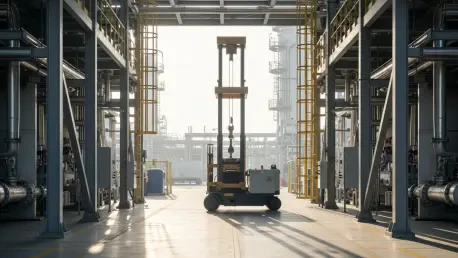
Operating inside a petrochemical plant or a refinery means dealing with extremely tight spaces where a massive traditional crane simply cannot maneuver without significant site disruption. The technical challenge lies in creating a compact, agile robot that provides the same lifting power without the heavy footprint or the need for extensive rigging crews. By replacing these cumbersome manual methods, we give plant managers a level of schedule predictability they have never had before. Instead of waiting for crane availability or dealing with the exhaustion-related slowdowns of manual crews, the robot provides a steady, rhythmic output that keeps maintenance and capital projects exactly on track. This reliability turns the chaotic environment of a “turnaround” into a synchronized operation where every movement is accounted for.
Transitioning from manual material handling to robotic automation involves significant operational changes for site crews. What safety metrics have improved most noticeably in the field, and how do you convince veteran asset owners to move away from legacy manual workflows?
The most noticeable improvement we see in the field is the drastic reduction in strain-related injuries and “near-miss” incidents associated with vertical material transport. Veteran asset owners are often skeptical of “shiny” technology, but they cannot argue with the sensory reality of a safer, quieter, and more organized job site. We convince these stakeholders by showing them that automation isn’t about replacing the worker, but about removing the most hazardous and grueling parts of their day. When they see the robot handling the heavy lifting in 20-plus locations without a single fatigue-related error, the legacy manual workflows quickly start to look obsolete and unnecessarily risky. There is a profound sense of relief for a site supervisor when they realize they no longer have to worry about the physical toll that manual hauling takes on their crew.
Collecting structured operational data in heavy industry serves as the foundation for a Physical AI platform. How does this data improve immediate transparency for plant managers, and what specific steps are required to turn these raw data points into automated solutions for additional workflows?
For the first time, plant managers are getting a transparent, real-time look at the “black box” of vertical logistics, seeing exactly how many loads are moved and at what frequency. This structured operational data serves as the nervous system for our Physical AI platform, transforming raw numbers into a digital map of site productivity. To turn these data points into new solutions, we first aggregate the performance metrics from diverse sites—ranging from power facilities to refineries—to identify common inefficiencies. Once we understand the patterns of how materials flow, we can program the AI to anticipate needs and eventually automate secondary workflows like sorting or horizontal transport. This data-driven approach ensures that our expansion into new tasks is based on the actual physical realities of the site, not just theoretical models.
The Westvue NY project involves integrating advanced robotics into a 24-story residential development. How does the deployment of lifting robots differ between industrial refineries and urban high-rise construction, and what unique logistical hurdles must be cleared to deliver high-quality housing using these technologies?
Moving from a sprawling chemical complex to a 24-story residential tower in the heart of Manhattan requires a massive shift in how we think about space and logistics. In a refinery, you are often fighting heat and hazardous chemicals, but in urban construction, the enemy is the ultra-tight footprint and the rigid “just-in-time” delivery schedules of a city street. The Westvue NY project demands a level of precision where the robot must integrate seamlessly with other AI systems to ensure materials arrive at the exact floor precisely when they are needed. We have to clear logistical hurdles like noise ordinances and the presence of other trades in very confined vertical shafts. By overcoming these, we demonstrate that high-quality housing can be delivered faster and more safely by treating a skyscraper as an industrial assembly site.
What is your forecast for heavy industry robotics?
I believe we are entering an era where robotics and automation will become as foundational to heavy industry as the internet is to modern commerce, mirroring the explosive adoption of AI we see elsewhere. In the next decade, the “silent” work of moving, lifting, and inspecting in hazardous environments will be almost entirely handled by autonomous systems, leaving humans to act as the high-level orchestrators of these fleets. We will see a shift where the data collected by robots during a routine maintenance project will automatically inform the design of the next capital expansion, creating a closed loop of efficiency. As we prove the value of these systems in high-barrier sites today, the barriers to entry across all of construction and manufacturing will continue to fall. Ultimately, the grit of the industrial world will be perfectly balanced by the precision of Physical AI.