



The Evolution: Brooklyn’s Waterfront as a Global Retail Tech Powerhouse
The relentless surge of e-commerce across the New York metropolitan area has pushed the city’s logistical infrastructure to a critical tipping point that demands immediate innovation. As of late, the daily delivery of approximately 2.5 million packages throughout the five boroughs has forced a radical rethinking of how the urban core handles goods. This pressure has transformed the rugged Sunset Park waterfront into a sophisticated laboratory for retail technology, where the 35-acre Industry City campus serves as the primary catalyst. By integrating high-tech development with physical production, this hub successfully bridges the gap between digital consumerism and tangible manufacturing.
The significance of this shift lies in its ability to solve the “last-mile” crisis that has plagued traditional supply chains. This article examines the convergence of logistics firms, robotics startups, and direct-to-consumer brands that have turned Brooklyn into a strategic engine for modern commerce. The following analysis explores how specialized infrastructure and proximity-based collaboration are redefining the economic identity of the city, moving beyond simple storage toward a model of integrated, high-speed fulfillment.
From Industrial Relic to a Modern Logistics and Manufacturing Engine
Understanding the current boom requires looking at the historical decline and subsequent reinvention of New York City’s industrial corridors. For decades, manufacturing moved away from the urban center in search of lower overhead, leaving behind vast, underutilized structures. However, the explosion of independent brands has created a vacuum for localized fulfillment that distant suburban warehouses cannot fill. The demand for speed has shifted the priority from cheap acreage to geographic proximity, making the city’s historical industrial sites more valuable than ever.
This transition marks a departure from the era of decentralized shipping toward a more agile, urban-centric model. As brands seek to minimize transit times, the adaptive reuse of industrial relics has provided the necessary space for a new generation of entrepreneurs. The resurgence of these neighborhoods is not merely a nostalgic return to the past but a forward-looking technological renaissance that leverages existing urban density to support a package-heavy economy.
The Infrastructure and Collaborative Synergy: Powering the Tech Boom
Specialized Physical Infrastructure: A Catalyst for Growth
A major obstacle for any scaling retail tech firm is the lack of specialized physical environments within a major city. Industry City addresses this by offering rare industrial specifications, such as high-capacity floor loads, heavy-duty three-phase power, and enterprise-grade fiber connectivity. Such robust infrastructure has empowered companies like Highline Commerce to expand their operations significantly. By maintaining a 60,000-square-foot footprint, this third-party logistics provider now manages the distribution backbone for over 200 diverse brands. Without these specific industrial bones, the rapid scaling of such complex operations would be physically impossible within the traditional confines of New York real estate.
Accelerating Innovation through Live Testing and Robotics Partnerships
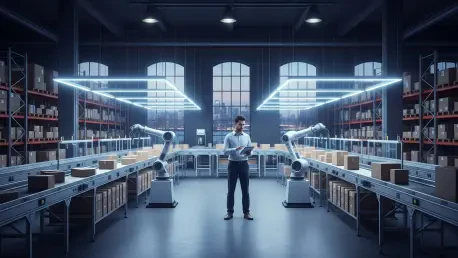
The unique density of the campus fosters a culture of collaborative innovation that is rarely found in fragmented tech sectors. Instead of developing technology in a vacuum, firms leverage their proximity to other tenants to create immediate, real-world solutions. A prominent example is the ongoing partnership between Highline Commerce and Ultra Robotics. By integrating humanoid robots directly into the fulfillment workflow, the facility has automated 30% of its pick-and-scan processes. This live production environment allows for faster iteration and stress testing than traditional research labs in places like Silicon Valley, as developers can observe their technology in action 24 hours a day.
Reclaiming the Urban Center: A Hub for Complex Manufacturing
The intersection of logistics and automation is leading to a broader reclamation of the city’s manufacturing identity. The current era is defined by a localized infrastructure where printing, fulfillment, and robotics operate within a single campus. This integrated approach challenges the misconception that urban manufacturing is too costly to survive. By housing the entire supply chain under one roof, brands effectively reduce transit costs and operational overhead. This model proves that complex physical labor, when augmented by high-tech automation, remains a viable and essential component of the metropolitan economy.
Anticipating the Future: Urban Fulfillment and Autonomous Systems
Looking at the trajectory from 2026 toward 2028, the retail tech sector is expected to become increasingly automated. The industry is moving toward a hub-and-spoke model where central urban locations serve as the primary processing nodes for the entire tri-state area. As robotics technology continues to mature, the percentage of automated fulfillment will likely rise well above the current 30% threshold. This shift could lead to the emergence of “dark warehouses” that operate with minimal human intervention during peak periods. Furthermore, AI-driven inventory management will allow companies to predict consumer demand with surgical precision, reducing the physical footprint required for storage while maintaining record-breaking delivery speeds.
Strategic Frameworks for Navigating the New Retail Tech Landscape
For businesses attempting to navigate this high-speed market, the primary strategic takeaway is the importance of co-location. To remain competitive, brands should prioritize ecosystems that offer both technological resources and the physical room to scale. Companies that leverage logistics providers utilizing advanced robotics will likely see a significant reduction in fulfillment costs over the next few years. Furthermore, startups should view the integrated supply chain model as a blueprint for growth. Success in the modern retail environment is increasingly dependent on being part of a larger, technologically integrated network rather than attempting to manage every logistical component in isolation.
Building a Resilient Future: Intersection of Tech and Industry
The rise of retail technology in Brooklyn signaled a permanent shift in the conceptualization of urban industrial space. Industry City demonstrated that by providing the right mix of infrastructure and collaborative opportunity, a city reinvented its economic foundations. This resurgence supported the immediate logistical needs of a digital economy while ensuring that New York remained a vital player in global manufacturing. The integration of industrial space and cutting-edge robotics provided a clear blueprint for how cities reclaimed their economic vitality. As the line between digital retail and physical fulfillment blurred, these high-tech hubs proved that the heart of urban industry was stronger than ever. Companies that invested in these integrated ecosystems realized long-term stability and faster growth compared to those in decentralized markets.


