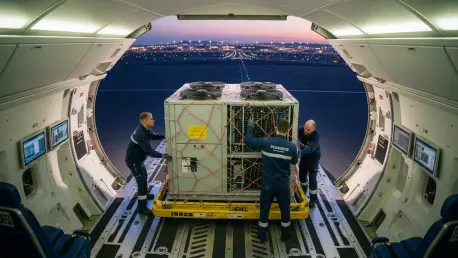

When a massive cargo plane touches down in a global hub today, it is increasingly carrying high-precision data center cooling units rather than the mountain of small retail parcels that defined the previous decade. This shift marks a profound evolution in the global logistics sector, which has moved beyond the post-pandemic surge of consumer e-commerce to become the backbone of complex industrial supply chains. Modern trade environments now prioritize the movement of high-value components over low-margin retail goods. Consequently, logistics providers are recalibrating their networks to support a world where manufacturing agility and energy transitions dictate the flow of capital and goods across borders.
This transition from a B2C-dominant landscape to a focus on industrial and B2B shipping represents a strategic necessity for the industry’s leaders. While the e-commerce boom provided a significant revenue floor, the volatile nature of consumer spending and the rising costs of last-mile delivery have forced a reevaluation of long-term profitability. High-value shipping, characterized by heavier weights and specialized handling requirements, offers the margins necessary to offset the inflationary pressures currently squeezing the logistics world. This environment favors providers who can manage the entire supply chain with precision rather than those merely competing on the lowest price point for small packages.
In the competitive arena of international air cargo, a fierce dynamic exists between DHL, FedEx, and UPS as they vie for control over the most lucrative trade lanes. DHL has strategically leaned into the integrator model, which utilizes a dedicated fleet and proprietary infrastructure to offer a level of predictability that traditional forwarders often struggle to match. By operating its own airline and sorting facilities, the company can bypass the capacity fluctuations of the general freight market. This reliability has become a primary selling point for manufacturers who cannot afford delays in their production lines or infrastructure projects.
Mapping the Global Logistics Landscape and DHL’s Competitive Footprint
The global logistics sector is currently functioning as the central nervous system for an increasingly interconnected yet geopolitically fragmented trade environment. In the wake of massive supply chain disruptions, the industry has recognized that resilience is just as valuable as speed. This has led to a significant realignment where logistics providers are no longer just transportation companies but strategic partners in the manufacturing process. The ability to navigate shifting trade corridors and manage complex customs requirements has become a defining competitive advantage in the current market.
Amidst these changes, the transition from low-margin retail parcels to heavyweight industrial freight has accelerated. This move is driven by the realization that B2B and industrial shipments typically command higher yields and exhibit more stable demand patterns compared to the seasonal fluctuations of the retail sector. As global companies seek to diversify their production bases, they require logistics partners who can provide integrated solutions for heavy machinery and sensitive electronics. This shift has reshaped the operational priorities of major carriers, leading to increased investment in specialized equipment and high-capacity freight networks.
The competition among the three major integrators has intensified specifically in the air cargo segment, where control over the overnight network provides a significant moat. While FedEx and UPS have strong domestic footprints in North America, DHL has leveraged its extensive international reach to dominate cross-border trade. The integrator model allows these companies to maintain a high degree of control over the shipping process, ensuring that time-definite shipments reach their destinations regardless of market volatility. This structural advantage is particularly evident in the current environment, where shippers are willing to pay a premium for guaranteed capacity and transit times.
Strategic Momentum and the Financial Metrics of Success
Identifying the Shift Toward High-Value Industrial Verticals
A central pillar of the current growth strategy involves a deliberate departure from the low-margin e-commerce sector in favor of high-value industrial verticals. This strategic pivot focuses on segments that require specialized knowledge and infrastructure, such as Life Sciences and Healthcare. By developing climate-controlled facilities and specialized handling protocols, the company has successfully captured a larger share of the market for transporting sensitive pharmaceuticals and medical technology. These sectors provide a reliable stream of high-margin business that is less susceptible to the whims of consumer economic trends.
Moreover, the rise of next-generation energy and artificial intelligence infrastructure has created new frontiers for specialized logistics. The transportation of electric vehicle batteries and large-scale wind energy components requires a unique set of capabilities that many standard freight forwarders lack. In the realm of AI, the urgent need to build and expand data centers has led to a surge in demand for on-site logistics management. Managing the sequenced delivery of expensive server components and cooling systems ensures that massive infrastructure projects remain on schedule, driving higher yields for the logistics provider.
Breaking Down Growth Projections and Division Performance Indicators
The financial results of this strategic pivot are evident in the recent performance metrics, which show a 30% surge in operating profit. This significant jump was accompanied by a revenue milestone of 22.4 billion euros, reflecting the effectiveness of moving toward higher-weight shipments. The Express division, in particular, saw income growth of 64%, a testament to the profitability of the heavyweight strategy in the international air freight market. These figures suggest that focusing on yield optimization and asset utilization is paying off even in a complex economic environment.
Current EBIT forecasts remain robust as the company continues to optimize its operations through strategic surcharge mechanisms and cost management. The ability to pass through rising fuel costs via profit-padding surcharges has been a critical factor in maintaining margins. Furthermore, by focusing on weight per shipment rather than just volume, the company has managed to increase its efficiency. This financial momentum is supported by a disciplined approach to capital expenditure, ensuring that every euro invested is targeted toward areas with the highest potential for long-term growth and market dominance.
Navigating Geopolitical Obstacles and Operational Complexities
The current global trade landscape is fraught with volatility caused by trade-restrictive policies and shifting international tariffs. Navigating these complexities requires a high degree of operational flexibility and a sophisticated understanding of international law. For instance, sudden changes in tariff structures can disrupt established trade lanes and impact cash flow. The logistics sector must be prepared to adjust shipping routes and customs strategies on short notice to mitigate the financial impact of these political decisions on both the provider and the end customer.
Operational challenges are further compounded by logistics bottlenecks stemming from regional conflicts, particularly in the Middle East. These disruptions often lead to sudden capacity shortages in the air and ocean freight markets, forcing shippers to find alternative routes. In such scenarios, the integrated network of a major logistics provider serves as a vital safety net. While these disruptions create operational headaches, they also highlight the value of having a dedicated fleet that can pivot quickly to avoid conflict zones while maintaining service quality for urgent shipments.
The Regulatory Environment and Compliance in Global Logistics
Regulatory shifts continue to exert a major influence on the financial health and operational procedures of global carriers. A notable example is the recent U.S. Supreme Court ruling regarding tariff emergency powers, which had a direct impact on cash flow and required the redistribution of funds to customers. Compliance with such high-level legal decisions is non-negotiable and requires a robust internal legal and financial framework. Furthermore, adhering to international safety and security standards for hazardous and high-value cargo is a constant operational requirement that demands continuous training and investment.
Environmental regulations are also playing a larger role in shaping future fleet investments. Fuel-efficiency mandates and carbon reduction targets are forcing logistics companies to accelerate their transition to sustainable aviation fuels and more efficient aircraft. These regulations are not just about compliance; they are increasingly becoming a factor in contract negotiations with sustainability-minded corporate clients. Managing complex cross-border compliance in emerging markets adds another layer of difficulty, as logistics providers must balance international standards with varying local regulations to ensure smooth transitions across every border.
Anticipating the Future of Logistics Through Technology and Innovation
Technological integration has become the primary driver of efficiency in the modern supply chain, with over 700 active AI and robotics projects currently being scaled across the global network. These innovations are designed to automate repetitive tasks and optimize sorting processes, leading to significant time and cost savings. For example, AI algorithms are now used to predict demand patterns and optimize flight paths, ensuring that aircraft are utilized to their maximum capacity. This digital transformation is essential for maintaining a competitive edge in a market where margins are constantly under pressure.
Investment in sustainable technology remains a critical focus as the industry looks toward the end of the decade. The acquisition of fuel-efficient freighters and the expansion of electric delivery fleets are key components of the strategy to meet ambitious growth targets. Additionally, strategic M&A activity, such as the acquisition of regional carriers like Venipak, allows for the consolidation of market shares in emerging regional corridors. These moves ensure that the company remains well-positioned to capitalize on new trade patterns and the increasing demand for high-speed, integrated logistics solutions across all continents.
Conclusion: DHL’s Blueprint for Sustainable Growth in a Volatile Market
The strategic redirection from light e-commerce parcels toward industrial heavyweight freight proved to be a highly effective maneuver for DHL Group as it navigated the complexities of global trade. By prioritizing high-value sectors such as life sciences and AI infrastructure, the company successfully insulated its margins from the volatility of the retail market. This transition was bolstered by the robust performance of the Express division, which capitalized on its unique integrator model to provide reliable capacity during periods of market disruption. The financial metrics reflected a company that understood how to leverage its global footprint to drive profit even when general trade volumes faced headwinds.
Disciplined capital expenditure and a commitment to automation further distinguished the company from its primary competitors, who often pulled back on investments during periods of uncertainty. The focus on integrating AI and robotics into the supply chain enabled operational efficiencies that translated directly into improved EBIT forecasts. As global trade patterns continued to shift, the decision to invest in sustainable aviation and specialized industrial logistics provided a clear path for long-term viability. Ultimately, the pivot toward high-yield B2B sectors established a resilient blueprint that ensured the company remained a dominant force in the global logistics arena.