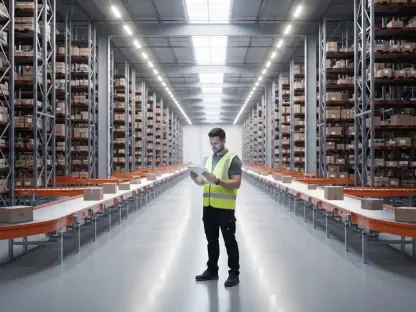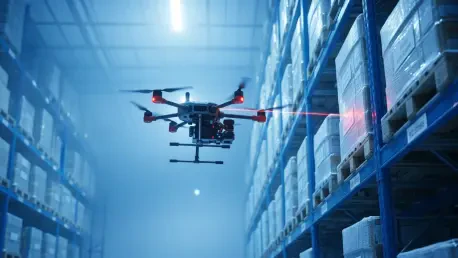

The sight of a warehouse worker precariously perched on a scissor lift with a paper clipboard is rapidly becoming an expensive relic of a less efficient age. Today, the relentless pressure of global supply chains demands a level of accuracy and speed that traditional manual methods simply cannot provide. In massive, high-throughput facilities, the sheer volume of inventory creates a statistical nightmare where human error is not just a risk, but an inevitability. The rise of autonomous aerial systems is transforming these static storage units into intelligent, data-driven ecosystems where stock is tracked in real-time without human intervention.
The End of the Manual Cycle Counting Era
The traditional approach to inventory management has long been plagued by the limitations of human labor and the physical constraints of vertical storage. In the past, companies relied on periodic manual counts that were labor-intensive and often outdated by the time the data reached the central system. This lag created a “reality gap” between the digital ledger and the physical shelf, leading to shipping delays and lost productivity.
Aerial automation has shattered this old paradigm by introducing drones that navigate autonomously through the narrowest aisles. These systems do not require rest or lighting, allowing them to operate during off-peak hours when the warehouse floor is clear of human traffic. By removing the need for manual tallies, facilities are transitioning toward a model of continuous verification that ensures inventory integrity remains flawless throughout the fiscal year.
The High Cost of Supply Chain Blind Spots
Inventory visibility is the vital pulse of any modern logistics operation, yet many facilities still operate with significant “blind spots.” For businesses running on thin margins and just-in-time delivery models, a single misplaced pallet can trigger a catastrophic chain reaction of missed deadlines and fractured client relationships. Traditional cycle counting often feels like a perpetual game of catch-up, where managers are reacting to errors that occurred weeks or months prior.
Autonomous systems address these vulnerabilities by providing a constant stream of high-resolution data. When a warehouse can see its entire inventory in real-time, it eliminates the guesswork involved in replenishment and order fulfillment. This level of clarity is no longer a luxury; it is a fundamental requirement for survival in a market where consumers expect instant availability and precision.
Redefining Efficiency Through Autonomous Data Collection
The transition from manual to automated counting has resulted in a staggering shift in operational speed, often compressing tasks that took months into a matter of hours. High-frequency aerial scans allow for a level of oversight that was previously impossible, imaging entire facilities dozens of times per year. This frequency ensures that discrepancies are identified and corrected the moment they occur, rather than during an annual audit.
Moreover, modern aerial solutions are designed for rapid integration, utilizing advanced computer vision and artificial intelligence to navigate complex environments without the need for floor markers or expensive infrastructure upgrades. This “infrastructure-light” approach allows companies to deploy automation without halting their current operations. Even in specialized sectors, such as cold chain logistics, drones are now engineered to operate in temperatures as low as minus-20 degrees Fahrenheit, proving their adaptability in the harshest industrial climates.
Validating the Impact of Intelligent Automation
Industry leaders are already reaping the rewards of this technological leap, as seen in the deployment of systems like Corvus One at major distribution centers in California. By increasing inventory frequency by 600 percent, these facilities have moved away from labor-intensive manual passes that once required sixty days of dedicated work. These organizations have essentially reclaimed hundreds of labor hours every month, proving that autonomous intelligence is the premier tool for protecting global distribution channels.
Experts in the robotics field agree that the ability to perform these scans during non-active hours is the “holy grail” of logistics management. This shift does not just save money; it creates a more resilient operational foundation. By leveraging autonomous, high-frequency data collection, global retail operations are establishing a new gold standard for accuracy that minimizes risk and maximizes the output of existing facility footprints.
Strategies for Integrating Aerial Systems into Logistics
To successfully integrate these systems, managers should first identify specific data gaps where manual counting errors are most prevalent. Once these “blind spots” are located, the focus should shift toward selecting AI-driven navigation systems that require zero downtime to install. Implementing a phased rollout during night shifts or weekends allows the staff to adjust to the new technology without disrupting the daily flow of goods.
Looking forward, the focus was on upskilling the existing workforce to handle the influx of high-level data. Instead of counting boxes, employees were moved into analytical roles where they optimized space utilization and improved occupancy reporting. This strategic pivot ensured that the warehouse was not just a storage space, but a proactive participant in the global supply chain, ready to adapt to the shifting demands of the future market.