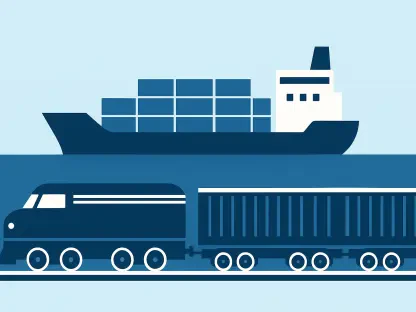

The unassuming wooden platform that carries ninety percent of European commerce has quietly transitioned from a mere technical necessity to the most critical asset in the continent’s drive toward a carbon-neutral future. For decades, the Euro pallet remained a background player in the theater of international trade, a simple tool designed for strength and stackability. However, the current landscape of logistics has elevated this standardized load carrier into a central pillar of the circular economy. As industries grapple with fluctuating resource availability and heightened environmental scrutiny, the humble pallet has become the primary metric by which supply chain efficiency and sustainability are measured. This transformation reflects a broader systemic shift where the movement of goods is no longer just about speed but about the responsible stewardship of every component involved in the journey.
The European logistics sector currently faces a complex web of challenges that demand a departure from legacy thinking. While the physical dimensions of the Euro pallet have remained constant, the operational environment has turned increasingly volatile due to geopolitical shifts and evolving consumer demands. Companies are finding that traditional methods of managing these assets are no longer sufficient to maintain a competitive edge. The industry is witnessing a move away from isolated, proprietary loops and toward integrated, transparent systems that prioritize reuse over replacement. This movement is not merely a response to scarcity but a strategic realization that standardized assets are the key to unlocking true logistical fluidity across national borders.
Modern supply chain management now views the pallet as a dynamic data point rather than a static piece of wood. The emergence of open pooling systems has created a collaborative ecosystem where manufacturers, retailers, and transporters share a common infrastructure to minimize waste and optimize vehicle filling rates. This collective approach is redefining what it means to be a sustainable business in the modern age. By treating the pallet as a shared resource, the industry is setting a precedent for other sectors on how to implement circularity at scale. The focus has shifted from the ownership of the asset to the management of the cycle, ensuring that every pallet in circulation is utilized to its maximum potential before being responsibly recycled.
The Evolution of Euro Pallets: From Logistic Commodities to Sustainability Engines
The Euro pallet has long served as the indispensable backbone of European logistics, providing a universal language for cross-border trade that allows goods to flow seamlessly from the Mediterranean to the Baltic. Its standardized dimensions allowed for the automation of warehouses and the optimization of shipping containers, creating a level of efficiency that fueled the continent’s economic integration. Historically, these pallets were treated as simple commodities, often purchased and discarded or lost in the vast expanse of global supply chains. This view has undergone a radical transformation as the true cost of single-use logic became apparent in both economic and environmental terms.
A fundamental shift in classification has occurred, moving the Euro pallet from a simple tool of logistics to a highly regulated form of tertiary packaging. This change is not just a matter of terminology; it brings the pallet under the direct purview of European waste avoidance and circular economy directives. Consequently, businesses are now legally and ethically required to track these assets with the same precision they apply to their primary products. This regulatory pressure has turned pallet management into a strategic priority, forcing companies to look beyond the initial purchase price and consider the long-term value of a durable, interchangeable asset that can be repaired and reused dozens of times.
The strategic significance of open pooling systems, championed by organizations like EPAL and PAKi Logistics, has never been more evident than in the current market. These collaborative frameworks provide the necessary structure to ensure that the standardized load carrier remains a reliable engine for resource efficiency. By maintaining a massive, interconnected network of exchange points, these organizations facilitate supply security even during periods of regional scarcity. The ability to drop off pallets in one country and pick up an equivalent amount in another eliminates millions of empty-running kilometers, directly reducing the carbon footprint of the entire logistics sector.
Mapping the Trajectory of Open Pooling Systems and Digitalization
Emergent Trends Redefining the Pallet Lifecycle
The transition from manual, paper-based documentation to real-time digital booking represents the single most significant leap in pallet management in recent memory. For years, the industry relied on physical delivery notes and handwritten lists that were prone to error and delayed by weeks. Today, digital inventory management allows for instantaneous transparency across the entire supply chain. This shift enables logistics providers to anticipate shortages and surpluses before they disrupt operations, creating a more resilient network that can adapt to the rapid fluctuations of modern trade.
Corporate behaviors are also evolving as pallet management is integrated into core ESG strategies. Decision-makers no longer view the pallet pool as a hidden cost center handled by the warehouse staff; instead, it is recognized as a measurable component of a company’s sustainability report. This has led to the rise of process discipline, where standardized rules for exchange and quality control are strictly enforced to eliminate friction between industry and trade. When every participant in the loop adheres to the same set of standards, the entire system gains efficiency, reducing the administrative burden and the likelihood of disputes over asset quality.
Market Growth and the Expanding Footprint of Reusable Load Carriers
Analyzing performance indicators for reuse rates reveals a compelling narrative of how organized pooling networks impact the European carbon footprint. High-quality Euro pallets are designed for longevity, and when managed within a professional pool, their lifespan is extended through specialized repair processes. This ensures that the timber used in their construction remains in the economic cycle for as long as possible. Growth projections for the period from 2026 to 2028 suggest a steady increase in the adoption of these reusable systems as companies move away from non-standardized or single-use alternatives to mitigate regional inventory imbalances.
The market is increasingly favoring standardized, interchangeable assets because they offer a level of economic efficiency that proprietary solutions cannot match. Forward-looking data shows that the investment in high-quality standards is paying off through reduced damage rates and lower replacement costs. As businesses seek to stabilize their supply chains against global economic headwinds, the reliability of the Euro pallet pool provides a much-needed constant. This growth is not just limited to traditional retail but is expanding into specialized sectors like pharmaceuticals and automotive logistics, where precision and hygiene standards are paramount.
Navigating Operational Friction in Global Supply Chains
Despite the physical stability of the Euro pallet, the day-to-day management of these assets often encounters significant operational stress. Regional volatility in availability can create sudden bottlenecks, where a surplus of pallets in one manufacturing hub coincides with a desperate shortage in a neighboring retail center. This imbalance is frequently exacerbated by traditional media breaks, where the disconnect between physical movements and digital records leads to a lack of situational awareness. Overcoming the inefficiencies of disconnected spreadsheets and manual lists is essential for maintaining the flow of goods without constant manual intervention.
Addressing these frictions requires a harmonized approach to exchange rules and quality standards. Coordination disputes often arise when different parties have conflicting expectations about what constitutes a usable pallet, leading to time-consuming renegotiations at the loading dock. By adopting a unified digital record and clear, mutually agreed-upon quality criteria, companies can resolve these disagreements before they escalate. Building transparency through digital platforms not only solves operational headaches but also satisfies the increasingly stringent auditing requirements that modern corporations must navigate to prove their compliance with safety and environmental standards.
The Regulatory Landscape: Compliance in the Era of Tertiary Packaging
The regulatory environment in Europe has become a powerful catalyst for change in the load carrier market. New legal frameworks regarding waste avoidance are forcing a comprehensive rethink of how tertiary packaging is handled. Companies are now faced with strict documentation obligations, requiring them to track the environmental footprint of every pallet they use. This shift has effectively transformed pallet management from a background task into a measurable sustainability asset. Compliance is no longer just about meeting technical specifications; it is about proving that the assets are part of a verified circular system that minimizes resource extraction.
Standardized quality assurance plays a critical role in meeting international compliance and safety standards. In an era of automated warehouses and high-speed sorting systems, even a minor deviation in pallet dimensions can lead to costly downtime or safety hazards. The rigorous certification processes overseen by major pooling organizations ensure that every pallet entering the cycle meets the necessary requirements for durability and performance. This regulatory-driven transparency provides a level of certainty that allows businesses to invest in the circular economy with confidence, knowing that their logistical infrastructure is both legally compliant and operationally sound.
The Next Horizon: Smart Logistics and the Future of Circular Asset Management
The integration of emerging technologies like IoT and automated tracking into the physical pallet cycle marks the beginning of a new era for smart logistics. We are moving toward a future where individual pallets can communicate their location, condition, and even the temperature of the goods they carry. This level of granularity will allow for unprecedented optimization of the circular asset pool, reducing the number of lost or idle pallets to near zero. Potential market disruptors, such as decentralized networks and blockchain-based digital platforms, are already challenging traditional models by offering even greater transparency and security for every transaction in the pallet loop.
Future growth areas will likely see the expansion of the open-loop system into more diverse industries and geographic regions as the benefits of standardization become impossible to ignore. While global economic conditions continue to influence the cost and availability of raw materials like timber, the efficiency of the circular model provides a buffer against price spikes. By maximizing the reuse of existing assets, the industry can reduce its dependence on fresh lumber and insulate itself from supply chain shocks. The next several years will be defined by the successful marriage of the physical pallet with digital intelligence, ensuring that the circular economy remains a practical reality rather than a theoretical goal.
Synthesizing the Future of Sustainable Logistics and Resource Efficiency
The comprehensive analysis of the European pallet market demonstrated that the Euro pallet was the fundamental catalyst for modernizing the circular economy. The research indicated that the transition from a commodity-based view to a strategic asset management perspective provided the stability needed during periods of extreme market volatility. It was observed that organizations which prioritized digital transparency and process discipline achieved significantly higher reuse rates than those relying on manual systems. This shift allowed businesses to treat their logistics infrastructure as a quantifiable sustainability advantage rather than an unavoidable operational cost.
The investigation into regulatory trends showed that the classification of pallets as tertiary packaging changed the legal landscape for all stakeholders. Stakeholders discovered that adhering to harmonized exchange rules was the only viable method for satisfying new documentation obligations while maintaining supply security. The data highlighted that the collaboration between pooling providers and industry leaders effectively reduced the carbon footprint associated with empty transports and waste. Ultimately, the industry realized that the longevity of the circular economy depended on the seamless integration of standardized physical assets with sophisticated digital tracking platforms.
Strategic recommendations for the future suggested that businesses should invest heavily in organized pooling networks to leverage both environmental and economic benefits. The report concluded that the move toward smart, IoT-enabled logistics would be the next logical step in eliminating operational friction and ensuring asset traceability. It was finalized that long-term stability in the supply chain required a commitment to quality standards and a departure from fragmented, proprietary loops. By embracing these findings, the logistics sector positioned itself to remain a leader in resource efficiency and sustainable trade for the foreseeable future.