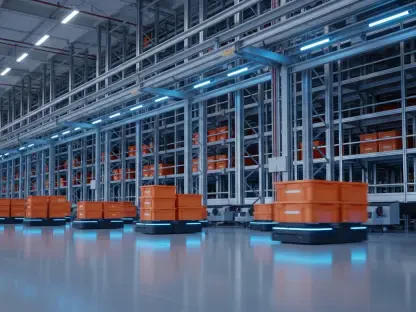

The global supply chain has evolved into a vast, interconnected digital organism where the flicker of a single malicious code can halt the movement of millions of tons of cargo instantly. As physical logistics becomes inseparable from its digital twin, the industry faces an unprecedented reckoning regarding its underlying security architecture. What was once a localized technical concern has ballooned into a multifaceted threat landscape that demands attention at the highest levels of corporate governance. This analysis examines the transition of cybersecurity from a back-office maintenance task to a fundamental pillar of global trade stability, highlighting how the industry is moving toward a more resilient future. The digital backbone of the modern economy is currently under constant surveillance by sophisticated actors, making the integration of robust defense mechanisms more vital than ever before.
Historical Shifts: From Back-Office IT to the Boardroom
Historically, the logistics sector treated digital security as a peripheral utility, much like ensuring the lights stayed on in a distribution center. For decades, the focus remained on protecting administrative office computers while the heavy machinery of the supply chain operated on relatively isolated local networks. This siloed approach worked in an era of manual manifestos and landline coordination, but the rapid adoption of data-driven ecosystems has rendered those traditional defenses obsolete. The modern logistics enterprise now operates through integrated nervous systems composed of Warehouse Management Systems (WMS) and Enterprise Resource Planning platforms.
This historical shift is critical because the consequences of failure have scaled exponentially. In the past, a system outage might have delayed an invoice; today, a breach can paralyze a fully automated hub, leaving robotic fleets and conveyor systems motionless. This realization has forced a transformation in leadership philosophy, as protecting digital infrastructure is now recognized as a direct safeguard for revenue and brand integrity. When digital systems fail, the physical movement of goods stops instantly, turning a technical glitch into a massive operational disaster that can disrupt entire markets.
The Intersection of Physical Operations and Digital Security
The Vulnerability Gap: Balancing Operational Pressure and Security
One of the most persistent hurdles in modern logistics is the “vulnerability gap,” which represents the timeframe between the discovery of a software flaw and the application of its remedy. In the high-velocity environment of global trade, distribution centers often operate around the clock to meet demanding delivery windows. Managers frequently find themselves in a difficult position, hesitant to pause automated lines for security updates that might disrupt tight schedules. This operational friction creates a prime target for attackers who utilize automated scanning tools to find unpatched entry points. Unlike a standard software update on a personal laptop, securing an integrated warehouse requires complex logistical orchestration, making the industry particularly susceptible to opportunistic threats.
Connectivity Risks: The Expansion of the Digital Attack Surface
The aggressive push toward higher levels of automation has introduced a new era of connectivity that serves as both a driver of profit and a catalyst for risk. By integrating management systems with cloud services and diverse IoT devices, firms have achieved remarkable visibility across their operations. However, every new sensor or robotic arm added to the network represents an additional entry point for a potential breach. Moreover, the persistence of legacy systems remains a significant liability for many established players. Operating on an “if it works, don’t fix it” mindset, many organizations keep outdated software online long after security support has ended, leaving their infrastructure exposed to modern threats that these older protocols were never intended to handle.
Defining Maturity: Transitioning from Prevention to Resilience
A mature cybersecurity posture is now defined by the speed of recovery rather than the impossibility of intrusion. Because no digital perimeter is entirely impenetrable, the focus has shifted toward building resilient organizational frameworks. This move involves adopting international standards such as ISO 27001 and implementing rigorous threat modeling to anticipate attack vectors. Industry experts emphasize that a truly advanced organization must maintain a disciplined lifecycle for all digital assets, recognizing that any system incapable of being updated is inherently a security failure. By prioritizing proactive monitoring and automated detection, providers are learning to identify suspicious activity before it can escalate into a catastrophic operational shutdown.
Future Projections: Emerging Security Trends and Regulatory Shifts
Looking ahead at the horizon from 2026 to 2028, several pivotal trends are set to redefine the security landscape of global commerce. Geopolitical instability has elevated logistics infrastructure into a high-value target for state-sponsored entities looking to exert economic pressure. This reality is expected to trigger a wave of new regulatory mandates, with governments likely to enforce stricter cybersecurity standards for all participants in the supply chain. Furthermore, the integration of artificial intelligence in both offensive and defensive strategies will create a perpetual technological race. Firms that thrive will be those that adopt a “security by design” philosophy, ensuring that every new automation project or software rollout incorporates defense mechanisms from the beginning of the planning phase.
Strategic Imperatives: Actionable Recommendations for Logistics Leaders
To successfully manage these evolving risks, leadership must take a more active role in overseeing the organization’s digital health. Recent shifts indicate that resilience is no longer just a technical output but a shared responsibility between technology vendors and operational teams.
- Audit Legacy Infrastructure: Identify and retire any systems that no longer receive security patches to prevent them from becoming an easy gateway for attackers.
- Prioritize Patch Agility: Develop operational protocols that allow for rapid security updates without causing catastrophic downtime in the warehouse.
- Align IT and Operations: Ensure that technical teams and floor managers are in total agreement on risk ownership and emergency response procedures.
- Test Recovery Capability: Regularly conduct simulated exercises to verify how quickly physical operations can be restored after a digital breach occurs.
Sustaining the Resilience of Global Commerce Systems
The strategic elevation of cybersecurity from a technical task to a boardroom priority became an inevitable outcome of the industry’s digital revolution. As logistics providers integrated more automation and connectivity into their core operations, they discovered that the risks of digital failure were intrinsically linked to their physical performance. The stability of global trade eventually came to depend on the ability of organizations to protect their digital nervous systems with the same intensity they applied to fleet management or warehouse safety. By fostering a culture of proactive leadership and resilience, the sector moved toward a more secure future where digital defenses matched the sophistication of the goods being moved. This evolution ensured that the backbone of the global economy remained robust enough to withstand the unpredictable challenges of a volatile and highly connected world.