
The familiar rhythm of the factory floor is evolving from a symphony of isolated machines into a dynamic orchestra where human ingenuity and robotic precision conduct operations in seamless harmony. This transformation is not a distant vision but an emerging reality, driven by the need for production systems that are as adaptable and intelligent as the people who operate them. At the forefront of this evolution, industrial automation leader Comau is pioneering new collaborative robots, or cobots, designed to function as partners rather than mere tools. These developments, part of the European Union’s strategic CONVERGING project, signal a fundamental shift toward a cognitive factory where human expertise is augmented, not replaced, by advanced automation.
When the Assembly Line Becomes a Thinking Partner Are We Ready for the Cognitive Factory
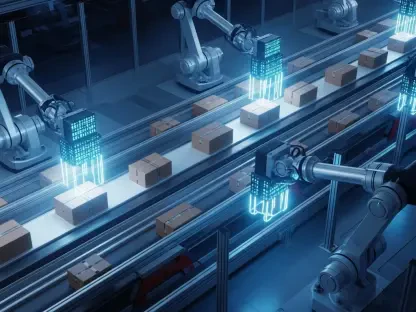
The concept of a cognitive factory represents a significant leap beyond traditional automation. It envisions a production environment where systems can perceive their surroundings, learn from complex data, and adapt to changing demands in real time. This model addresses the limitations of rigid, pre-programmed assembly lines, which struggle to keep pace with the modern consumer’s demand for customization and rapid product innovation. The cognitive factory, therefore, is built on a foundation of interconnected technologies—including artificial intelligence, autonomous vehicles, and collaborative robots—that work together to create a fluid and responsive manufacturing ecosystem.
This evolution is driven by necessity. Industries from aerospace to consumer goods face mounting pressure to shorten production cycles, improve quality control, and manage increasingly complex supply chains. A cognitive approach allows manufacturers to move from mass production to mass customization efficiently. By integrating systems that can think and collaborate, factories can reconfigure themselves on the fly, handle intricate tasks with greater precision, and empower human workers to focus on high-value activities such as problem-solving, quality assurance, and process innovation.
The Imperative for Smarter Human-Centric Production
Modern industrial landscapes are defined by their complexity and the demand for agility. The one-size-fits-all manufacturing model is no longer viable, creating an urgent need for flexible and reconfigurable systems that can handle small-batch production and customized orders without sacrificing efficiency. This challenge requires a new paradigm where the production line can be quickly adapted to new products or processes, a task that traditional, fixed automation cannot easily accomplish. The solution lies in creating systems that blend robotic consistency with human adaptability.
In response to this need, the EU’s CONVERGING project was established as a strategic vision for the future of manufacturing. Its primary goal is to foster the development of human-AI-robot collaboration frameworks that are safe, intuitive, and highly effective. The project brings together industry leaders and research institutions to create a blueprint for the next generation of smart factories. By focusing on synergy, CONVERGING aims to design workspaces where human operators and intelligent machines share tasks seamlessly, leveraging the strengths of both to achieve unprecedented levels of productivity and innovation.
Ultimately, the move toward smarter production is about more than just technological advancement; it is about redefining the role of the human operator. Instead of designing automation to replace human labor, the focus has shifted to augmenting it. Human ingenuity, critical thinking, and fine-motor skills remain irreplaceable for complex and unpredictable tasks. The most effective manufacturing systems are those that integrate these human capabilities with the tireless precision, strength, and data-processing power of robots, creating a collaborative force that is far greater than the sum of its parts.
Comaus Innovations Two Prototypes Pushing the Boundaries of Collaboration
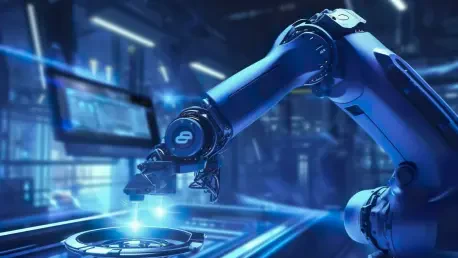
As a key contributor to the CONVERGING project, Comau has unveiled two pilot solutions that exemplify this collaborative approach. The first prototype features a medium-payload “MyCo” cobot designed for the intricate post-processing of additive-manufactured parts. In this application, the cobot performs precise finishing tasks that require consistency and strength, while the human operator provides oversight, handles complex part manipulation, and makes critical quality judgments. This synergy ensures that high-tolerance components are finished to exact specifications in a safe, shared workspace.
A second pilot demonstrates the versatility of Comau’s technology by deploying the same 6-axis MyCo cobot in the demanding aerospace sector. Here, the cobot is tasked with performing remote, non-invasive inspections of aircraft wings, a process traditionally done manually. By automating this critical maintenance task, the system enhances inspection accuracy, eliminates human error, and improves worker safety by removing the need to work in hazardous or awkward positions. Consequently, this innovation promises to significantly reduce aircraft downtime, a key operational metric in the aviation industry.
The Expert Perspective Validating the Future of Collaborative Automation
The viability of these advanced systems was recently demonstrated during the CONVERGENCE project review in Patras, Greece, where Comau’s prototypes were presented to industry experts and stakeholders. The event served as a critical validation point, showcasing how theoretical concepts of human-robot collaboration can be translated into practical, high-impact industrial applications. The successful pilots underscored the maturity of the technology and its readiness for real-world deployment in complex manufacturing and maintenance environments.
“Our design philosophy centers on making the cobot a natural extension of the operator’s intent, ensuring the technology feels less like a complex tool and more like a capable partner,” explained a Comau lead engineer involved in the project. This perspective highlights the critical importance of user experience in the adoption of new automation. For collaboration to be truly effective, the interface between human and machine must be intuitive, seamless, and built on a foundation of trust and safety, allowing operators to leverage the cobot’s capabilities with confidence and ease.
This approach signifies a fundamental shift in industrial automation. The underlying philosophy is no longer about creating tools that simply replace human actions but about developing intelligent partners that augment human capabilities. By handling repetitive, strenuous, or minutely detailed tasks, cobots free human workers to apply their cognitive skills to areas where they add the most value. This partnership model is the key to unlocking the next level of industrial efficiency and innovation.
A Blueprint for Implementing Cobot Solutions in Your Operations
Successfully integrating cobot solutions began with identifying high-impact opportunities within existing operations. The most suitable tasks for human-robot collaboration were often those that were repetitive, required high precision, or posed ergonomic risks to human workers. By pinpointing these specific processes, organizations established a clear value proposition for automation, ensuring that the technology addressed a tangible need and delivered measurable improvements in efficiency, quality, or safety from the outset.
An effective integration strategy extended beyond the cobot itself, treating it as one component within a larger, cohesive ecosystem. This holistic approach involved combining the cobot with advanced AI for real-time decision-making and autonomous guided vehicles (AGVs) for streamlined material handling. The result was a fully connected system where information and materials flowed seamlessly, creating a truly smart and responsive production environment. This integrated framework was what allowed the cognitive factory to function as a single, intelligent unit.
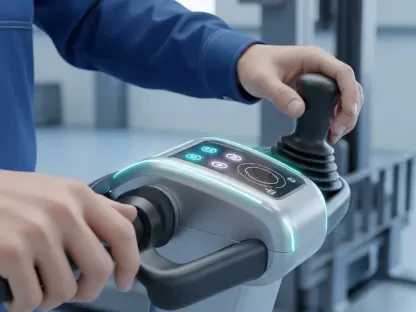
Throughout the implementation, the core principles of safety and usability remained paramount. Designing a human-centric workspace involved more than just installing physical safeguards; it required developing intuitive control interfaces and feedback systems that made the technology accessible to operators without extensive programming knowledge. The success of initiatives like the CONVERGING project was ultimately rooted in this commitment to putting the human operator at the center of the automated system, a decision that proved essential for unlocking the full potential of collaborative manufacturing.