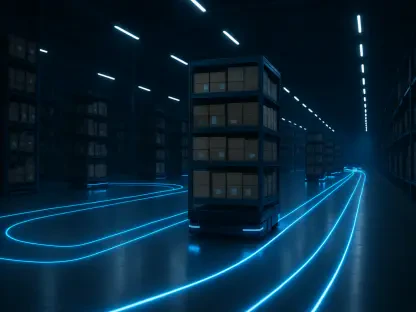

The global supply chain landscape is currently undergoing a massive transformation as logistics providers swap human-led manual labor for hyper-efficient autonomous mobile robots and artificial intelligence. For decades, the legal frameworks governing warehouse agreements were written with a focus on simple floor space and the physical exertion of a manual workforce. Today, these antiquated legal templates are struggling to bridge the gap between human capabilities and the rapid-fire decision-making of sophisticated robotic fleets. The central conflict arises because while the technology is advancing at an exponential rate, the standard boilerplate language found in logistics contracts remains firmly anchored in the practices of a previous generation. To survive this shift, organizations must completely overhaul their definitions of service and develop a more nuanced understanding of the technical risks that come with a fully automated workspace. This requires moving beyond generic storage terms toward highly detailed technical specifications.
Defining Operational Boundaries: Hardware and Service Standards
In a highly automated warehouse environment, a vague or poorly defined description of services is a fast-track to expensive legal disputes and operational paralysis. Modern contracts must transcend simple descriptions of moving pallets and instead provide granular detail regarding the robotic systems deployed on the warehouse floor. This means clearly identifying which party is responsible for purchasing the initial hardware, who manages the ongoing software subscription fees, and what the specific protocols are for preventative maintenance and emergency repairs. Without this level of transparency, it becomes nearly impossible to hold a service provider accountable when a proprietary robotic arm fails or when a software patch disrupts the flow of outbound goods. Clear boundaries ensure that both the customer and the provider understand the technical ecosystem they are operating within, preventing the technological obsolescence that can occur during the lifespan of a multi-year logistics agreement.
A second emerging concern that has gained significant traction involves the hidden risk of technological degradation when inventory is relocated between different logistics facilities. Standard warehouse contracts traditionally grant operators the freedom to move a customer’s stock to various locations at their own discretion to optimize space utilization. However, if a customer specifically selected a provider based on its advanced picking robots and automated sorting systems, moving that stock to a manual or less-advanced warehouse could severely compromise fulfillment speed and accuracy. To mitigate this risk, modern agreements should include a clause for technological parity, which requires the operator to ensure that any alternative facility offers the same level of robotic automation and technical capability as the primary site. This protection prevents a bait-and-switch scenario where a high-tech service level is replaced by an outdated manual process without any adjustment in service fees or performance.
Allocating Liability: From Human Error to Digital Failure
The transition to a robotic workforce forces a fundamental rethink of the legal concept of liability and the traditional standard of care required of warehouse operators. Historically, warehouse companies were held to a reasonable care standard, essentially requiring them to handle goods with the same diligence a prudent person would exercise. This human-centric rule is increasingly difficult to apply when a fulfillment error is caused by a complex algorithmic glitch or a conflict between two different software platforms. Instead of relying on these outdated subjective standards, modern logistics contracts are shifting toward objective technical warranties. These agreements specify exactly how the robots should perform and create clear liability pathways for instances where system errors—rather than human negligence—lead to damaged inventory or delayed shipments. By establishing these rules upfront, companies can avoid the ambiguity that arises when trying to blame a machine for a mistake previously made by humans.
Heavy reliance on digital infrastructure introduces entirely new categories of operational risk that legacy contracts were never designed to effectively anticipate or manage. In the past, performance delays were usually attributed to external power outages, but today a cloud platform failure or a cybersecurity breach can be just as devastating. Contracts must now specifically define whether a massive software failure counts as an uncontrollable force majeure event or if it is a failure of the operator to implement adequate redundancy and security protocols. Since every connected robot on the floor represents a potential entry point for malicious actors, comprehensive data security provisions have moved from being optional add-ons to essential core components of the legal agreement. Modern contracts must mandate regular security audits and specify the exact levels of encryption and firewall protection required to protect the integrity of the automated system and the sensitive inventory data it handles.
Managing Performance: Data Sovereignty and Technical Metrics
As machines increasingly dominate the warehouse floor, the massive volumes of data they generate have become some of the most valuable assets in the entire logistics cycle. Contracts must proactively address the issue of data sovereignty, clearly defining who owns the operational insights, inventory movement history, and diagnostic data produced by the robotic fleet. This is critical for preventing vendor lock-in, a situation where a customer is unable to move to a new provider because their historical data is trapped within a proprietary software environment owned by the warehouse operator. Having clear legal language that ensures data portability allows a company to take its valuable operational history with it if it decides to change partners. This data is not just a record of the past; it is the foundation for future AI-driven forecasting and inventory optimization, making it an essential piece of intellectual property that must be protected during any negotiation for services.
Performance tracking in the age of robotics requires a significant technical upgrade through the implementation of highly specialized and granular service level agreements. While traditional metrics like order accuracy and cycle times remain relevant, they should now be accompanied by technical key performance indicators that measure the health of the automation itself. Modern contracts often include specific targets for system uptime, software latency, and the speed at which technical glitches are resolved by the engineering team. By attaching financial penalties or credits to these technical metrics, customers can ensure they are actually receiving the high-efficiency benefits they were promised when they signed up for an automated solution. This approach protects the customer from paying premium rates for a smart warehouse that is frequently offline or struggling with software bugs, ensuring that the technology is working as intended to provide a genuine and sustained competitive advantage in the marketplace.
Financial Evolution: Sharing Gains and Strategic Solutions
The financial structure of modern automation agreements requires a more sophisticated strategy for sharing the productivity gains achieved through increased robotic efficiency. When a warehouse provider invests in automation that drastically reduces their labor costs, there is often a debate over who should benefit from those savings. Strategic contracts now frequently incorporate glide paths or gain-sharing mechanisms that allow both the provider and the customer to participate in the financial upside of the technology over time. For example, a contract might start with a higher rate to help the provider recover its capital investment in robotics, but then include scheduled price reductions as the systems become more efficient and labor costs continue to drop. This alignment of financial interests encourages the provider to keep the technology updated and ensures the customer sees a tangible return on investment for choosing an automated partner over a traditional manual labor competitor.
To ensure long-term stability, forward-thinking organizations successfully navigated the transition by adopting multi-layered insurance policies and detailed technical exit protocols. They established dedicated software escrow accounts to ensure that source codes remained accessible even if a robotic vendor faced financial distress or went out of business entirely. Furthermore, these companies updated their standard agreements to specifically cover high-value machinery and the unique technical liabilities associated with automated fulfillment centers. By standardizing these protocols, the industry successfully moved away from the reactive wait-and-see approach that characterized early automation efforts. These proactive steps ensured that when partnerships reached their conclusion, the transition of data and physical goods was managed seamlessly. This systemic evolution provided the necessary stability for robotics to become the permanent backbone of modern warehousing, effectively bridging the gap between legacy legal theory and high-tech reality.