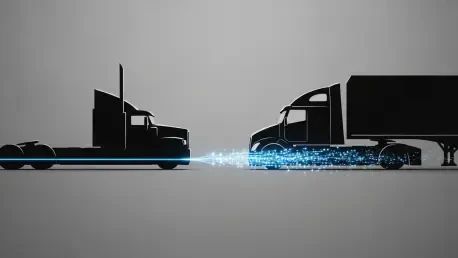

The rhythmic pulse of a diesel engine serves as the heartbeat of American commerce, driving millions of tons of freight across a sprawling interstate network that connects local communities to the global marketplace. This vital artery of trade currently faces a defining crossroads where the nostalgic pull of the past meets the relentless momentum of technological progress. As fleet operators and independent drivers navigate a landscape defined by rising fuel costs and tightening environmental standards, a significant tension has emerged between the advocates of streamlined, high-tech efficiency and those who remain fiercely loyal to the mechanical simplicity of classic trucking. This divide is not merely a matter of aesthetic preference or sentimental attachment to chrome and steel; it represents a fundamental disagreement regarding the future of the industry, the nature of driver autonomy, and the economic strategies required to survive in an increasingly digitized logistics environment.
The Economic and Mechanical Realities of the Road
Operational Costs: The Advantage of Modern Fuel Efficiency
The transition toward modern, high-efficiency equipment remains primarily motivated by the cold, empirical data regarding fuel consumption that dictates the survival of large-scale logistics firms. While the traditional, square-nosed tractors of the past often struggled to exceed six miles per gallon, the contemporary aerodynamic models hitting the highways today are frequently capable of achieving nine miles per gallon or more. In a business environment where the cost of diesel remains one of the largest and most volatile overhead expenses, these efficiency gains represent a massive shift in long-term profitability that no major fleet can afford to ignore. This data-centric approach treats the truck not as a cultural icon, but as a specialized industrial tool designed for maximum profit. Every curve of the bodywork and every integrated software update is engineered to shave cents off the operating cost per mile, creating a competitive edge that is essential for sustainability.
Mechanical Reliability: The Resilience of Traditional Engineering
Despite the undeniable economic advantages provided by these new technologies, many veteran operators maintain a deep and well-founded skepticism regarding the long-term reliability of modern emissions systems. The legacy of problematic engineering, particularly with the implementation of Exhaust Gas Recirculation (EGR) and Diesel Exhaust Fluid (DEF) systems in previous decades, has left a lasting impression on the trucking community. Drivers frequently recount stories of being stranded for days in remote areas because a single faulty sensor triggered a derate mode, rendering a powerful engine nearly useless. For an independent owner-operator, these complex electronic components represent a significant financial risk that could potentially bankrupt a small business. In contrast, the mechanical simplicity of a pre-emissions engine offers a sense of security, as these older machines are often more resilient to harsh environmental conditions and do not rely on fragile sensors.
The Cultural and Psychological Shift in the Cab
Driver Autonomy: The Impact of Pervasive Telematics
The rapid modernization of the trucking industry has brought about an unprecedented level of surveillance that fundamentally alters the daily experience of being behind the wheel for professional drivers. Integrated telematics systems now monitor almost every aspect of a driver’s behavior, from the intensity of braking and acceleration to the exact duration of mandated rest periods and meal breaks. While these systems are marketed as tools for improving safety and fleet efficiency, they often create an environment of invasive micromanagement that strips away the sense of independence once inherent to the job. The transformation of freight transport into a data-driven service has led many to describe the trend as the Uberization of the highway, where human skill is increasingly overshadowed by algorithmic oversight. This constant digital monitoring can lead to increased stress and a feeling of being a replaceable component within a larger software-driven machine.
Professional Identity: The Emotional Connection to the Machine
The emotional and aesthetic bond between a driver and their machine is a powerful force that transcends simple financial calculations or the practical requirements of transporting cargo from one point to another. Iconic models like the Peterbilt 379 or the Kenworth W900 continue to command respect on the highway due to their legendary status and their distinctive, long-hood silhouettes that evoke the golden age of American trucking. For many professionals who spend weeks at a time living within the confines of their cabs, these trucks are much more than just a place of work; they are an extension of their personal identity and a symbol of their commitment to the craft. The tactile sensation of operating a traditional manual transmission and the distinctive roar of a classic engine provide a sensory experience that the hushed, plastic-heavy interiors of modern aerodynamic rigs simply cannot replicate for those who truly love the road.
Reconciling Efficiency with Industry Heritage
Strategic Integration: Evaluating Success in a Global Economy
Determining whether modern efficiency or classic tradition will ultimately prevail depends largely on how an individual operator or a corporate entity chooses to define the core metrics of success in the industry. From a purely analytical perspective, the shift toward newer models is the only logical path forward, as these vehicles offer superior safety features and significantly lower operating costs that align with global economic demands. These streamlined trucks are the essential workhorses for large-scale logistics providers who must prioritize consistency and cost-control across massive fleets to remain competitive. They represent the inevitable evolution of an industry that is under constant pressure to reduce its carbon footprint and adapt to increasingly strict environmental regulations. For those who view trucking as a precision-based logistical science, the modern rig is the ultimate tool for navigating the complexities of the international marketplace.
Future Directions: Actionable Insights for Professional Sustainability
Operators who found a balance between these two worlds often achieved the highest levels of professional fulfillment and financial stability by integrating the best of both eras. They investigated specialized retrofitting options that allowed them to install cleaner-burning components into older frames, effectively bridging the gap between nostalgic aesthetics and modern environmental standards. The most successful independent businesses moved away from a strictly binary choice and instead focused on niche markets where the reliability and character of a classic truck commanded a premium rate. They cultivated a deep understanding of mechanical maintenance while simultaneously adopting modern logistics software to ensure they remained visible to the digital freight networks of the current year. By prioritizing long-term asset value and individual professional pride, these drivers ensured that the spirit of the open road was preserved even as the industry transitioned toward a more automated future.