
With decades of experience navigating the complexities of logistics and supply chain management, Rohit Laila has been at the forefront of the industry’s technological evolution. His passion for innovation offers a unique perspective on the seismic shifts transforming how goods move around the world. As companies grapple with geopolitical tensions, digital disruption, and a heightened focus on sustainability, his insights are more valuable than ever.
In our conversation, we explored the practical realities of diversifying away from traditional manufacturing hubs and the hidden domestic challenges that arise from this strategic shift. We delved into the escalating security threats, both physical and digital, that now target the very AI designed to protect supply chains. Furthermore, we discussed the foundational importance of data quality for successful digital adoption and how circular economic models are reshaping the supply chain from a necessary expense into a powerful engine for value creation.
The “China +1” strategy is becoming standard. What are the first three steps a company should take when vetting and onboarding a new supplier in a region like Mexico or Southeast Asia, and what key metrics should they track to balance cost with resilience?
The initial excitement of diversification can quickly sour if you don’t lay the proper groundwork. The first step, without a doubt, is a comprehensive risk assessment that goes far beyond a simple price sheet. You need to scrutinize their compliance with labor laws, environmental standards, and sourcing transparency, as regulators are intensifying their oversight in these areas. Second, you must meticulously map and model the new logistics routes. It’s not just about the factory; it’s about the ports, the trans-shipment points, and the potential bottlenecks that could erase any cost savings. Finally, the third step is a phased onboarding process. Never shift your entire volume at once. Start with a smaller, manageable portion to test their capabilities, communication, and ability to meet your quality standards under real-world pressure. To track this, you need a balanced scorecard that looks at lead-time variability, not just the average, compliance audit scores, and the total landed cost, which includes any potential tariffs or unexpected transportation fees.
As companies expand domestically, they face aging infrastructure and rising energy costs. Can you walk us through how predictive planning tools can specifically address these dual challenges, and provide a practical example of how a company successfully modernized its logistics network?
This is a critical point that many overlook when they celebrate bringing operations closer to home. You escape one set of problems only to run into another. Predictive planning tools are the answer here because they allow you to be proactive instead of reactive. For aging infrastructure, these tools can analyze historical and real-time data to forecast likely congestion points or infrastructure failures, suggesting alternative routes before a delay even occurs. On the energy front, they can optimize delivery schedules to take advantage of off-peak energy rates or model the most fuel-efficient routes based on traffic and topography. I saw a mid-sized distributor use this to great effect. Their predictive platform flagged a regional bridge for likely maintenance closures and began re-routing shipments through a secondary hub weeks in advance, avoiding a massive bottleneck that crippled their competitors. The same tool identified that electrifying 30% of their local delivery fleet would have a two-year ROI based on rising diesel costs and regional energy incentives, a strategic investment they wouldn’t have made with such confidence otherwise.
With freight theft and sophisticated cyberattacks on AI platforms rising, what does a truly embedded security strategy look like in practice? Could you outline a step-by-step incident response plan for a company that discovers a breach in its AI-driven logistics system?
An embedded security strategy feels less like a gatekeeper and more like a nervous system running through every part of the operation. In practice, this means security is a consideration from the moment a new system or process is designed, not bolted on as an afterthought. It combines physical security, like IoT-enabled locks on containers, with relentless cyber hygiene, such as multi-factor authentication for every single user and frequent, realistic phishing simulations for staff. It’s about proactive monitoring, using AI to detect anomalous behavior within your own AI platforms before a human even notices something is wrong. If a breach does happen, your response must be immediate and decisive. First, you contain it—isolate the affected AI systems to stop the bleeding and prevent the attack from spreading. Second, you assess the damage: Has our routing data been manipulated? Is our inventory data compromised? Third, you eradicate the threat and recover, restoring the system from clean, pre-tested backups. Finally, you communicate transparently with all stakeholders, because how you handle the crisis is just as important as stopping the attack itself.
The article highlights accelerating AI adoption for navigating tariffs and trade flows. Considering the critical need for high-quality data, what data governance and standardization processes must be in place first? Can you share an anecdote about a project that struggled due to poor data integration?
You’ve hit on the single biggest reason why expensive digital transformation projects fail. AI is not magic; it’s a powerful engine that runs on the fuel of data. If you feed it garbage, you’ll get garbage results, just much faster. Before you even think about implementing a sophisticated AI tool, you must establish firm data governance. This means creating a single source of truth for all critical information and enforcing strict standardization protocols. Everyone in the organization, from procurement in Shanghai to logistics in Ohio, must use the same format for part numbers, location codes, and even dates. It sounds tedious, but it’s the bedrock of success. I remember a project with a major retailer that was trying to use AI to optimize their global inventory. The project was six months behind schedule and bleeding money because their U.S. and European divisions used different product codes for the same items. The AI couldn’t reconcile the data and was generating nonsensical recommendations. It was a painful, multi-million-dollar lesson in the importance of getting your data house in order first.
Circular models like reuse and reverse logistics are gaining traction. Beyond sustainability, how do these practices directly turn the supply chain into a value driver? Please provide a metric-driven example showing how a circular model improved a company’s bottom line and competitiveness.
For years, the supply chain was viewed as a cost center—a necessary evil to get product from A to B. Circular models completely flip that script. When you design a system for reuse, repair, and efficient reverse logistics, you’re not just being green; you’re creating new revenue streams and building incredible customer loyalty. Instead of a product’s life ending at the sale, you’re creating a continuous loop of value. Think of a company that makes high-end electronics. By implementing a robust reverse logistics program, they were able to recover 70% of returned units. After minor repairs and refurbishment, these products were sold on a secondary market at a 55% profit margin, creating an entirely new business line. This not only boosted their bottom line but also reduced their demand for new raw materials by over 20%, insulating them from price volatility and strengthening their overall competitiveness. The supply chain became a profit generator.
What is your forecast for the single most disruptive supply chain innovation that will emerge by 2026, and how will it fundamentally change the balance between resilience and efficiency for U.S. companies?
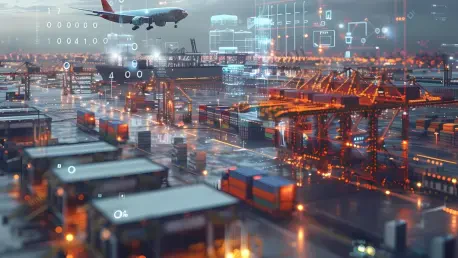
By 2026, the most disruptive innovation won’t be a physical robot or a drone, but the widespread adoption of fully integrated, AI-powered digital twins of the entire supply chain. Today, many companies struggle with the tradeoff between efficiency, which often means lean and fragile, and resilience, which means costly redundancies. A true digital twin eliminates this compromise. It allows a company to run thousands of “what-if” scenarios in real-time. What happens if a key supplier’s factory is shut down by a storm? What is the financial impact of a new tariff? The digital twin can model these disruptions instantly and, using predictive AI, recommend the optimal, pre-vetted alternative plan to maintain flow. This transforms risk management from a reactive, backward-looking exercise into a proactive, strategic advantage. It will give U.S. companies the ability to be both incredibly efficient and profoundly resilient, adapting to global shocks with a speed and intelligence that is simply not possible today.