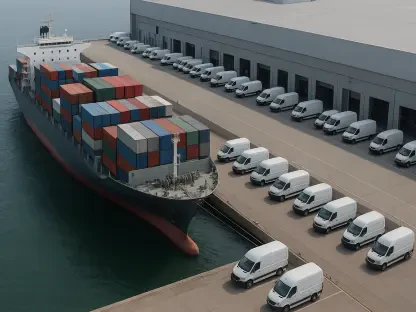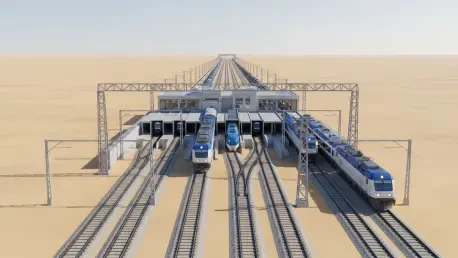

The sheer scale of the Barstow International Gateway project represents one of the most ambitious re-engineering efforts in the history of American freight rail logistics, transforming 4,500 acres of arid landscape into a sophisticated engine of global trade. What began as a $1.5 billion concept has rapidly matured into a $4 billion master-planned reality, signaling a profound shift in how the nation manages the influx of international goods. This massive investment by BNSF Railway serves as a definitive response to the chronic bottlenecks that have historically plagued the San Pedro Bay ports, offering a vital pressure release valve for the entire Southern California supply chain. By moving the primary point of freight sorting and transloading 130 miles inland, the facility effectively extends the reach of the maritime gateway directly into the high desert, creating a seamless link between global shipping lanes and the American heartland.
The strategic importance of the location in Barstow cannot be overstated, as it sits at the precise convergence of three critical rail subdivisions: the Needles, Mojave, and Cajon lines. This geographic alignment provides the facility with unparalleled access to BNSF’s Southern Transcon route, which functions as the high-speed artery for cargo moving toward the Midwest and beyond. The selection of this site reflects a sophisticated understanding of rail geometry and regional topography, allowing the railroad to bypass the congested “spaghetti bowl” of tracks nearer to the coast. As a first-of-its-kind integrated complex, the hub combines a state-of-the-art rail yard with expansive intermodal and transload facilities, ensuring that the transition from sea to land is as fluid and efficient as modern engineering permits.
Modernizing the flow of international cargo requires a departure from traditional, fragmented logistics models toward a more holistic, centralized approach. The Barstow International Gateway is designed to serve as the ultimate staging ground where international containers are processed with industrial precision before they ever reach the national highway system. This foresight aims to mitigate the volatility of global trade by providing a stable, high-capacity environment for cargo handling that is insulated from the urban congestion of the Los Angeles Basin. Consequently, the project represents more than just an infrastructure expansion; it is a fundamental reimagining of the logistics nexus, positioning the High Desert as the indispensable hub for the next generation of North American commerce.
Redefining the High Desert as a Global Logistics Nexus
Tracing the evolution of this project reveals a significant escalation in both scope and capital commitment as BNSF recognized the growing necessity for a centralized inland terminal. The transition from the original $1.5 billion estimate to the current $4 billion budget highlights the increased complexity of the facility, which now includes more advanced automation and a much larger physical footprint than initially envisioned. This massive injection of private capital underscores the railroad’s confidence in the long-term viability of the High Desert as a primary distribution point. By committing such substantial resources, the company is effectively anchoring the future of California’s logistics industry in a region that was once considered a secondary transit point, now elevated to the status of a global nexus.
Barstow’s unique position at the junction of the Needles, Mojave, and Cajon subdivisions creates a natural logistics funnel that is unmatched by any other location in the western United States. The Cajon Subdivision, known for its challenging grades, serves as the primary gateway over the mountains, while the Needles Subdivision provides the high-speed path eastward, and the Mojave Subdivision connects the facility to the burgeoning markets of Northern California. This “Y-junction” allows for the efficient sorting and reassembling of trains, ensuring that every locomotive and railcar is utilized to its maximum capacity. This strategic placement ensures that the facility can handle diverse freight flows from multiple directions simultaneously, acting as a massive switchboard for the entire Western rail network.
This 4,500-acre master-planned facility is poised to revolutionize the movement of international cargo by integrating diverse logistics functions into a single, high-performance ecosystem. In the past, containers would often sit in port-adjacent yards or move through multiple disconnected facilities, adding time and cost to the supply chain. The Barstow hub eliminates these redundancies by providing a centralized location for ship-to-rail transitions, storage, and sorting. This integrated model is expected to provide the consistency and speed required by modern shippers, who increasingly demand real-time visibility and rapid transit for their goods across the American heartland.
Engineering a New Era of Integrated Freight Operations
Streamlining Ship-to-Rail Transitions Through Advanced Transload Workflows
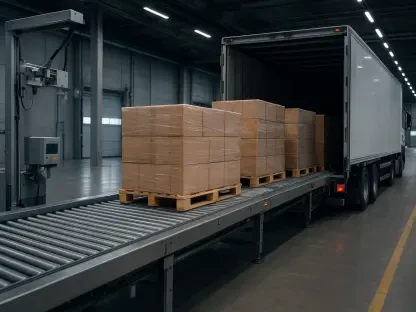
The operational core of the Barstow International Gateway lies in its ability to facilitate the rapid exchange of freight between international ISO containers and domestic boxes. This process, often referred to as transloading, is essential for optimizing the volume of goods moved per railcar, as domestic containers are typically larger and better suited for the North American rail network. By conducting this “block swap” within a centralized 16,000-foot track yard, BNSF can build massive, high-efficiency trains that are ready for long-haul transit without the need for additional stops. This streamlined workflow reduces the complexity of terminal operations and ensures that cargo moves from the docks to the desert with minimal dwell time at the ports.
Automation and zero-emission technology are at the forefront of this new operational paradigm, with the facility utilizing automated gate systems and electric cargo-handling equipment to maximize fluidity. The implementation of an Automated Gate System (AGS) allows trucks to enter and exit the terminal with unprecedented speed, using sensors and optical recognition to verify loads instantly. Meanwhile, wide-span electric rail-mounted gantry cranes will move containers with a level of precision and speed that traditional diesel equipment cannot match. These technological advancements are not merely about environmental compliance; they are critical components of a high-throughput strategy designed to handle the millions of containers that pass through the Southern California gateway annually.
Despite the advanced engineering within the Barstow facility, the overall efficiency of the pipeline remains tethered to the performance of the Alameda Corridor. Industry analysts have pointed out that potential bottlenecks at the northern end of the corridor could impact the flow of trains reaching the High Desert hub. While the Barstow facility provides the necessary capacity to process freight, the “spaghetti bowl” of tracks leading out of the ports must remain clear to ensure the ship-to-rail transition remains uninterrupted. Maintaining a delicate balance between the high-capacity inland terminal and the constrained coastal infrastructure is one of the most significant challenges facing logistics planners as they work to modernize the regional freight network.
Decarbonizing the Supply Chain via Sustainable Infrastructure Mandates
A primary environmental driver of the project is the massive modal shift it facilitates, moving freight from heavy-duty trucks to high-efficiency rail. By shifting international cargo onto trains at the port and transporting it directly to Barstow, the project is projected to eliminate hundreds of millions of truck miles from California’s highways. This reduction in truck traffic directly correlates with a decrease in tailpipe emissions and a lessening of the physical wear and tear on the state’s interstate system. The environmental benefits of this shift are cumulative, with projections suggesting that the elimination of truck miles will grow significantly as the facility reaches full operational capacity, providing a cleaner alternative for long-haul goods movement.
The integration of Tier 4 switcher locomotives and battery-electric technology represents a significant leap forward in reducing the localized air quality impact of rail operations. Under regional air quality agreements, BNSF has committed to utilizing the cleanest available locomotive technology to manage the movement of cars within the yard. The testing and deployment of battery-electric switchers, in particular, serve as a real-world laboratory for zero-emission heavy industry. These initiatives demonstrate that high-capacity freight hubs can coexist with stringent environmental standards, provided there is a sustained commitment to technological innovation and infrastructure investment.
California’s rigorous climate regulations have historically posed challenges for heavy industry, but the “green” design of the Barstow hub serves as a template for future developments. By incorporating electric plug-ins for refrigerated units and prioritizing zero-emission yard equipment, the facility aligns itself with the state’s long-term goals for a carbon-neutral supply chain. This proactive approach to sustainability not only ensures regulatory compliance but also enhances the facility’s appeal to shippers who are increasingly seeking to reduce the carbon footprint of their own operations. The success of this model will likely influence the design of similar logistics hubs across the country, as the industry moves toward a more sustainable and electrified future.
Fueling Regional Prosperity and Long-Term Economic Resilience
The economic impact of the Barstow International Gateway on the San Bernardino County labor market is expected to be transformative, with the creation of tens of thousands of jobs. Projections indicate that the construction phase alone will support roughly 62,000 roles, providing a massive short-term stimulus to the regional economy. More importantly, the facility is slated to provide 15,000 permanent operational positions, offering long-term career paths in a high-growth sector. These roles range from high-tech equipment operators and logistics managers to skilled maintenance technicians, creating a diverse and resilient workforce that will support the city’s economic vitality for decades to come.
Legislative support has played a crucial role in accelerating the project’s timeline, particularly through the application of Senate Bill 149. This certification by the state government allows the project to bypass many of the traditional judicial and administrative delays that often stall large-scale infrastructure projects in California. By streamlining the environmental and permitting review processes, the legislation has enabled BNSF to move from planning to implementation with greater certainty and speed. This alignment between private investment and public policy highlights the recognized importance of the Barstow hub to the state’s overall economic health and its critical role in the national supply chain.
Beyond the direct employment and tax revenue benefits, the project includes significant private investment in community-centric infrastructure. BNSF has committed to funding essential projects such as the replacement of the Hinkley Road bridge and the implementation of comprehensive flood mitigation measures along the Mojave River. These improvements provide tangible benefits to local residents by enhancing safety, improving traffic flow, and protecting the area from seasonal flooding. By addressing these long-standing infrastructure needs, the project fosters a more collaborative relationship between the railroad and the community, ensuring that the industrial expansion contributes to the overall well-being of the High Desert region.
Navigating the Geographical Debate and the Drayage Dilemma
A significant point of discussion among logistics experts is the geographical trade-off between the High Desert and alternative locations like the Central Valley. While Barstow offers direct access to the main rail lines and affordable land, some argue that sites in the Central Valley might be closer to a larger population of end consumers and agricultural exporters. The debate centers on which region acts as the most efficient “center of gravity” for California distribution. Those in favor of the Barstow site point to its superior rail connectivity, while critics express concern that the 130-mile distance from the coast could introduce new logistical complexities for certain shippers.
The “drayage dilemma” remains a primary concern for industry analysts who track the profit margins of short-haul rail operations. Moving freight 130 miles by rail to an inland hub requires a significant volume of cargo to remain cost-competitive with direct trucking. Expert observers have raised questions about the added costs of drayage for shippers who may still need to move their goods from Barstow to other parts of Southern California. These experts suggest that the success of the hub will depend on BNSF’s ability to offer a price point and level of service that outweighs the costs associated with the additional handling and transit distance.
The competitive landscape in the region is further complicated by the emergence of other projects, such as the Mojave Inland Port and the Rosedale Ranch project in Kern County. These alternative sites are also vying for a share of the burgeoning freight market, each offering its own set of advantages in terms of location and rail access. The Mojave Inland Port, for instance, focuses on Union Pacific connections and a smaller, more specialized footprint. As these projects move toward completion, the industry will be watching to see how the market distributes freight between these competing hubs and whether the massive scale of the BNSF facility will allow it to dominate the regional logistics landscape.
Strategic Takeaways for Industry Leaders and Logistics Planners
The development of the Barstow International Gateway signals a major shift in the logistics industry toward large-scale, integrated inland facilities. For years, the trend favored smaller, urban-adjacent yards, but the increasing constraints on coastal land and the rise of mega-ships have made these facilities less efficient. Industry leaders are now recognizing that “bigness” provides the necessary room for the sophisticated sorting and transloading operations required to maintain supply chain velocity. This shift favors locations that can offer expansive acreage and direct access to primary rail corridors, allowing for the type of massive-scale processing that is impossible in more congested urban environments.
Shippers have a unique opportunity to leverage the Barstow hub for “reverse transloading,” a strategy that could significantly improve the efficiency of exports to Asian markets. In this model, domestic containers carrying American goods are moved to the facility, where the cargo is transferred into international ISO containers for the return trip to the ports. This process helps balance the flow of containers and ensures that empty boxes are not being moved back to the coast unnecessarily. By optimizing this reverse logistics flow, shippers can reduce their costs and improve the overall sustainability of their export operations, creating a more balanced and efficient global trade cycle.
Local municipalities can draw important lessons from the Barstow experience on how to align industrial growth with community needs. The success of such a massive project requires more than just a business plan; it demands a comprehensive strategy for infrastructure integration and public safety. By securing private funding for bridge replacements and flood control, Barstow has demonstrated how a city can use a major industrial project to address local infrastructure gaps. Municipal leaders should look for opportunities to partner with private developers to ensure that new logistics hubs provide long-term benefits to the residents while supporting the broader goals of regional economic development.
The Future of the High Desert Hub and Global Trade Fluidity
The Barstow International Gateway stood as a testament to the evolving nature of the American supply chain, representing a bold attempt to synchronize global trade with local environmental and economic priorities. By the time the facility reached its first milestones of operation, the benefits of its integrated design were already becoming apparent in the improved throughput of the Southern California ports. The project proved that an inland terminal of this magnitude could serve as a foundational element of a 21st-century logistics network, providing the resilience and capacity needed to handle the shifting demands of international commerce. It successfully moved the needle toward a more organized and predictable freight system, proving that the desert could indeed be the key to unlocking coastal congestion.
BNSF’s $4 billion private investment reflected a calculated bet on the future of carbon-neutral, high-capacity rail as the backbone of the U.S. economy. This commitment to sustainable infrastructure set a high bar for the industry, showing that environmental stewardship and operational efficiency are not mutually exclusive goals. The implementation of battery-electric locomotives and zero-emission cargo-handling equipment demonstrated that heavy industry could meet the most stringent climate mandates while simultaneously increasing its productivity. This paradigm shift was essential for the long-term viability of the rail sector, ensuring that it remained a competitive and environmentally responsible choice for shippers in an increasingly climate-conscious world.
The “High Desert” strategy proved to be a successful intervention in the complexities of the Southern California freight network, offering a blueprint for future infrastructure projects. By untangling the “spaghetti bowl” of tracks and reducing the reliance on long-haul trucking, the Barstow International Gateway created a more fluid and reliable pathway for goods moving across the continent. The project’s ability to balance regional economic prosperity with global trade efficiency solidified its status as a cornerstone of the modern supply chain. Ultimately, the hub’s legacy was defined by its ability to transform a geographic bottleneck into a high-speed gateway, ensuring the continued vitality of the American logistics system for years to come.
As the industry moved forward, stakeholders recognized the importance of diversifying terminal operations to include both high-capacity sorting and localized distribution. The lessons learned from the Barstow International Gateway encouraged further investment in advanced rail technologies and automated sorting systems across the national network. Further reading and research into the success of this facility suggested that the next phase of supply chain evolution would involve the expansion of similar “inland port” models in other key transit corridors. This ongoing research provided a roadmap for how to continue optimizing the flow of goods while minimizing the environmental impact, ensuring that the global trade network remained both efficient and sustainable.