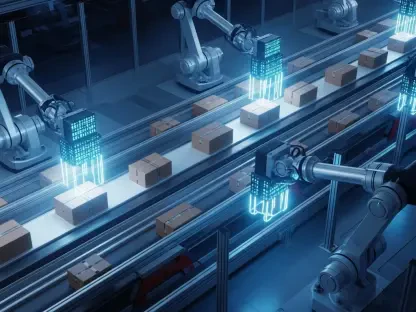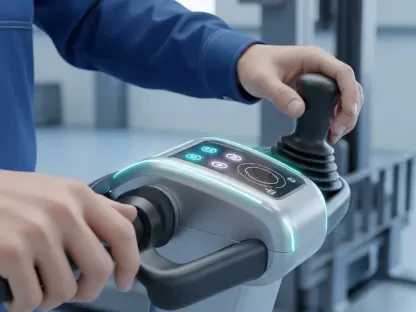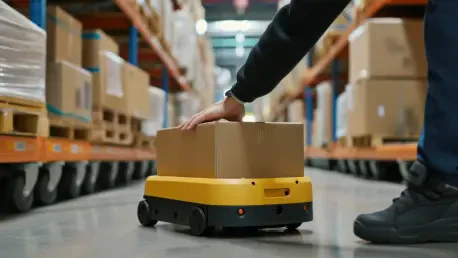

The modern distribution center operates less like a predictable assembly line and more like a chaotic, self-organizing ecosystem of robots, machines, and human workers. The enMotion WES+ platform represents a significant advancement in the intralogistics and warehouse management sector, aiming to bring order to this complexity. This review will explore the evolution of this technology, its key features, performance metrics, and the impact it has had on creating highly efficient, automated distribution centers. The purpose of this review is to provide a thorough understanding of the platform’s current capabilities and its potential future development in unifying and optimizing intralogistics.
The Rise of Intelligent Orchestration
The enMotion WES+ platform emerged as a direct response to the inherent limitations of traditional Warehouse Management Systems (WMS). These legacy systems, often built around rigid, batch-based processing, were designed for a previous era of logistics. They struggle to cope with the dynamism and complexity of today’s automated facilities, where fleets of diverse robots and intelligent machinery operate alongside human teams. This created a critical gap in the market for a more agile and intelligent control layer.
As an AI-powered multi-agent orchestration engine, enMotion WES+ was conceived to fill this void. Its core principle is to move beyond static, pre-planned execution and embrace a fluid, real-time model of management. Instead of simply managing inventory and order flows in discrete steps, it acts as a central intelligence, continuously optimizing the deployment of every resource—human and robotic—to meet shifting demands. This paradigm shift is essential in an industry where speed, accuracy, and efficiency are paramount competitive advantages.
Core Architecture and Differentiating Features
A Central Nervous System of Real-Time Data
The foundation of the platform’s intelligence is its ability to ingest and process a continuous stream of real-time data. Information flows constantly from a vast network of sources, including autonomous mobile robots (AMRs), sensors, conveyors, and specialized “AutoIDPoints” that capture data from scanners and scales. This creates a high-fidelity, moment-by-moment digital awareness of the entire operation, forming a kind of operational nervous system.
This granular visibility allows the system to make decisions with full contextual awareness. For instance, it can track the precise location of a carton on a conveyor, monitor the battery level of an AMR, and know the current workload of a human picker simultaneously. By maintaining this comprehensive picture, the platform moves beyond simple task execution to intelligent, data-driven orchestration, ensuring that every action is optimized based on the most current conditions within the facility.
The Power of Postponement and Dynamic Tasking
One of the platform’s most distinctive features is its “just-in-time” approach to task assignment, a strategy rooted in what its creators call “postponement theory.” Unlike conventional systems that assign large blocks of work at the beginning of a shift or wave, enMotion WES+ deliberately delays assigning a mission to a resource until the last possible moment. This calculated delay is a strategic advantage.
By waiting, the system ensures that every decision is informed by the most up-to-the-minute warehouse data. This allows it to dynamically route tasks to the most suitable resource, navigate around emerging bottlenecks, and prioritize work to consistently meet Service Level Agreements (SLAs). This continuous, real-time evaluation and assignment process is the engine that drives its efficiency, transforming the warehouse from a sequence of static tasks into a fluid, adaptive organism.
From Local Silos to Global Optimization
Legacy automation solutions often lead to the creation of inefficient operational silos. When a robot vendor’s software manages its own fleet, it optimizes for its tasks alone, a phenomenon known as “local optimization.” This approach fails to consider the broader needs of the facility, frequently causing congestion and process imbalances elsewhere.
In contrast, enMotion WES+ provides “global optimization.” It acts as a master conductor, harmonizing the activities of all resources across the entire distribution center. By maintaining a holistic view, it balances workloads between different functional areas and ensures that robots, machinery, and human staff work in concert. This unified approach eliminates the friction between operational silos, maximizing the utilization and productivity of every asset in the facility.
Validating Success with Digital Twin Simulation
A key strategic component of the enMotion WES+ platform is its sophisticated use of digital twin technology. By creating a precise virtual replica of a client’s facility, the system allows for the risk-free simulation and validation of new workflow strategies. This enables operators to test different automation configurations, adjust resource allocations, and model the impact of process changes without disrupting live operations.
This simulation capability serves a dual purpose. It not only de-risks the implementation process but also provides a powerful tool for demonstrating tangible ROI before any physical changes are made. The ability to model outcomes and prove efficiency gains gives stakeholders the confidence to move from simulation to real-world deployment quickly and effectively, ensuring that optimization strategies are sound from the outset.
Humans as an Integrated Resource Node
Perhaps one of the most innovative aspects of the platform’s philosophy is its treatment of human workers. Within the orchestration network, there is no fundamental distinction between a human and a robot. Both are treated as abstract “resource nodes,” defined by a specific set of capabilities, such as movement speed, carrying capacity, or picking accuracy.
This abstraction allows the system to assign tasks based on pure efficiency. The AI evaluates the requirements of a mission and dispatches it to the most appropriate resource available at that moment, whether it is a person with a cart, an AMR, or a fixed conveyor. This approach fosters seamless human-robot collaboration and ensures that human labor is deployed with the same analytical precision as any automated component, elevating overall facility performance.
Driving Industry Evolution and New Trends
Platforms like enMotion WES+ are at the forefront of a broader industry evolution. A significant trend is the decoupling of orchestration software from the underlying automation hardware. This move toward vendor-agnostic systems empowers operators to select best-of-breed robotics from multiple suppliers without worrying about incompatible control systems. It liberates businesses from vendor lock-in and allows them to build more flexible, scalable, and future-proof automation ecosystems.
Moreover, this shift is accelerating the industry’s reliance on AI to manage increasingly complex logistics environments. As facilities integrate more diverse forms of automation, the task of coordinating them becomes impossible for human-led or rule-based systems. AI-driven orchestration is no longer a luxury but a necessity for achieving the levels of efficiency and throughput required to compete in the modern marketplace.
A Case Study in Unlocking Hidden Throughput
The real-world impact of this technology is best illustrated through its application. In one notable case, a client was struggling with a cross-belt sorter that was achieving only 30-35% of its potential throughput. The bottleneck was not the hardware but the legacy WES, which fed it work in inefficient, batch-based waves.
After replacing the outdated software with the enMotion WES+ platform—while keeping the exact same physical sorter—the results were transformative. The new system’s ability to orchestrate a dynamic and continuous flow of goods to the sorter increased its utilization to an impressive 92%. This case study powerfully demonstrates how intelligent orchestration can unlock massive performance gains hidden within existing hardware, delivering profound operational improvements without costly capital investment.
Navigating the Hurdles of Implementation
While the benefits are clear, the adoption of such advanced technology is not without its challenges. A primary hurdle is the technical complexity of integrating a diverse array of robotic systems, especially when they must coexist with legacy infrastructure. Overcoming proprietary protocols and vendor-specific constraints requires deep integration expertise to create a truly unified system.
Beyond the technical aspects, successful implementation also hinges on organizational readiness. The platform’s effectiveness is directly tied to the quality and availability of data, necessitating a robust underlying data infrastructure. Furthermore, transitioning to an AI-driven operation requires effective change management to align human workflows with new, dynamic processes and foster trust in the system’s decisions.
The Future Trajectory of AI-Driven Logistics
Looking forward, the trajectory for AI-driven orchestration points toward even greater intelligence and autonomy. Future iterations of these platforms will likely incorporate more advanced predictive analytics, enabling them to anticipate bottlenecks or equipment failures before they occur. This will allow for proactive adjustments, further enhancing operational resilience.
The long-term vision extends beyond the four walls of the warehouse. The logical next step is deeper integration across the entire supply chain, connecting warehouse orchestration with transportation management, inventory planning, and even manufacturing schedules. This would create a truly adaptive, self-optimizing logistics network capable of responding to disruptions and opportunities with unprecedented speed and intelligence.
The Enduring Value of Unified Orchestration
The review of the enMotion WES+ platform revealed a technology that fundamentally redefined warehouse execution. Its success was rooted in its ability to shift the operational paradigm from static management to dynamic, real-time orchestration. By leveraging a foundation of continuous data, just-in-time tasking, and global optimization, it unlocked significant efficiencies that were previously unattainable with legacy systems. The platform’s strategic use of digital twins and its innovative integration of human workers as resource nodes further solidified its value. Ultimately, its implementation in complex, automated distribution centers established a new benchmark for what unified orchestration could achieve, leaving a lasting impact on the pursuit of logistical excellence.