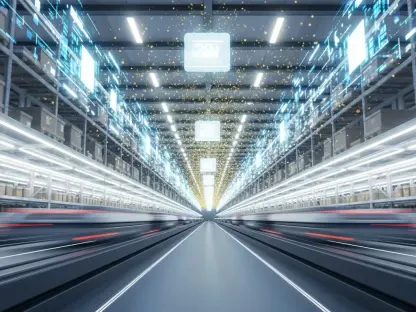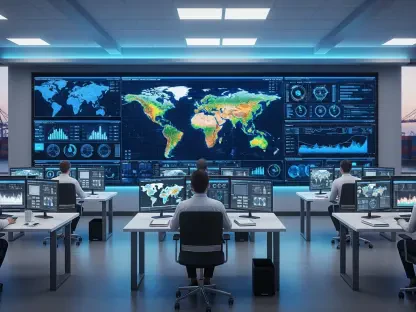

Traditional logistics facilities often struggle with the rigid constraints of hard-coded automation that fails the moment a single variable in the supply chain shifts unexpectedly. Modern distribution centers are now moving toward a more fluid intelligence where software does not just follow instructions but actively interprets the physical environment. This shift marks the rise of AI-native orchestration, a digital layer that transforms warehouses into responsive ecosystems capable of managing unpredictable throughput demands without human intervention.
Unlike legacy systems that rely on fixed decision trees, these AI-native platforms function as a centralized brain for the entire facility. They move away from the “if-this-then-that” logic of the past, opting instead for machine-learning models that prioritize tasks based on real-time urgency and resource availability. This evolution is particularly critical as global commerce demands faster turnaround times, forcing a move toward unified digital layers that can control a wide array of hardware through a single interface.
Introduction to AI-Native Orchestration Systems
The core principle of an AI-native system lies in its ability to treat the warehouse as a dynamic data set rather than a static map. These systems analyze historical patterns and current workflows to predict where congestion might occur before a single robot moves. By shifting from rigid logic to machine-learning-based decision-making, operators can achieve a level of flexibility that was previously impossible in highly automated environments.
This technological leap is essential for integrating diverse hardware into a cohesive operation. In the past, adding a new type of robot meant redesigning the entire workflow; however, modern orchestration layers allow for a “plug-and-play” approach. This integration ensures that the digital infrastructure remains the primary driver of efficiency, regardless of how many different brands or types of machinery are operating on the floor.
The Core Framework of Atomix Technology
The Atomixer Orchestration Platform: Bridging the Gap
The Atomixer platform serves as a proprietary software bridge that connects advanced robotic fleets with aging Warehouse Management Systems. While many facilities still rely on legacy databases for inventory tracking, this orchestration layer translates those high-level orders into granular, real-time robotic tasks. This capability is vital for companies that want to modernize their operations without undergoing a complete and costly overhaul of their existing IT infrastructure.
In terms of performance, the platform excels at sub-second task allocation, ensuring that no robot remains idle for longer than necessary. By maintaining high throughput through constant optimization, the software minimizes the energy waste associated with inefficient travel paths. This real-time responsiveness is what allows modern facilities to scale up during peak seasons without the typical performance degradation seen in traditional software.
The “1+4” Modular Robot Architecture: Technical Versatility
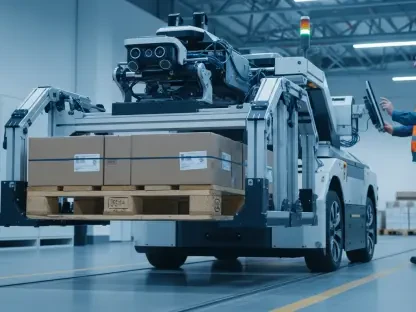
The technical strategy behind the “1+4” architecture involves managing four distinct robot families, such as 4-way pallet shuttles and tote AMRs, under one unified command. This modularity means that a warehouse can deploy a specific subsystem for high-density storage while simultaneously using another for rapid picking. Each robot family is treated as a specialized tool within a broader kit, allowing for a tailored approach to various facility footprints.
These modular subsystems are designed for scalability, enabling businesses to start with a small fleet and expand as their logistical needs grow. The performance of these robots in handling and storage operations is significantly enhanced by their ability to share data through the orchestration layer. This ensures that a pallet shuttle and an AMR can hand off goods to one another without the need for manual checkpoints or complex physical conveyor belts.
Key Trends in Heterogeneous Fleet Management
A major trend in the industry is the move toward “fleet-agnostic” orchestration, where the software does not care about the manufacturer of the hardware. This allows different robot types to work in a shared space, effectively breaking down the silos that once limited warehouse design. When robots from various vendors can communicate through a unified protocol, the facility becomes more resilient to supply chain disruptions and equipment shortages.
The integration of Multi-Agent Path Finding algorithms has also revolutionized how traffic is managed within these spaces. By calculating the most efficient routes for hundreds of agents simultaneously, these algorithms reduce operational bottlenecks and prevent the “traffic jams” that often plague large-scale automation. Furthermore, the industry is seeing a shift toward partner-based delivery models, which simplify the adoption of these complex technologies for global enterprises.
Real-World Applications and Industrial Impact
High-demand sectors like food and beverage, manufacturing, and cold-chain logistics have become the primary testing grounds for AI-native systems. In these environments, precision and speed are non-negotiable, and the ability of the software to manage temperature-sensitive goods or fragile inventory is a major competitive advantage. Global brands such as Coca-Cola and Nestlé have already adopted these systems to ensure their supply chains remain robust under pressure.
These implementations serve as benchmarks for the industry, proving that flexible automation can be customized for varied logistical demands. System integrators now use these platforms to build bespoke solutions that fit the unique constraints of different regions, whether it is a high-rise facility in a dense urban area or a sprawling distribution center. This adaptability ensures that the technology remains relevant across a wide spectrum of industrial applications.
Challenges and Constraints in Automated Warehousing
Despite the progress, technical hurdles remain, particularly regarding the need for sub-second latency in complex, multi-agent environments. When hundreds of robots are moving at high speeds, even a millisecond of delay in communication can lead to collisions or system-wide stalls. Maintaining a reliable high-speed network across a massive industrial site is a significant engineering challenge that requires robust local edge computing.
Market obstacles also persist, as the initial investment for a fully AI-native setup can be substantial. There is also a glaring need for more standardized communication protocols between third-party machinery to ensure true interoperability. Currently, developers are focused on simplifying the user interface for warehouse staff, aiming to lower the barrier to entry so that workers without advanced technical training can manage the systems effectively.
Future Outlook for AI-Driven Logistics
The evolution of the self-optimizing warehouse is moving toward a state where human intervention is only required for high-level oversight. Future breakthroughs in predictive maintenance will likely allow these systems to identify potential hardware failures before they happen, scheduling their own repairs during low-activity periods. This level of autonomy will fundamentally change the cost structure of global shipping and storage.
Autonomous inventory reconciliation is another area poised for significant growth, as AI-native systems become better at tracking items with perfect accuracy in real-time. Long-term, these advancements will bolster global supply chain resilience by reducing the reliance on manual labor in dangerous or repetitive roles. This shift will likely lead to a reorganization of the workforce, where employees focus on managing the intelligence behind the machines rather than the goods themselves.
Final Assessment and Summary
The review of AI-native orchestration revealed a technology that has successfully moved from experimental pilots to a reliable industrial standard. The efficiency gains provided by the unified digital layer were evident in the high throughput rates and the seamless coordination of diverse robotic fleets. A 71% customer renewal rate served as a strong indicator that the market valued the reliability and scalability of these intelligent systems over traditional, rigid automation.
Industry leaders took note of the potential for these frameworks to redefine modern infrastructure through decentralized decision-making. Future developments were expected to focus on lowering the cost of entry and improving the interoperability of third-party hardware. Ultimately, the adoption of these platforms represented a necessary step toward building a more resilient and autonomous global supply chain.