
The Strategic Shift: AI as the Core of Industrial Resilience
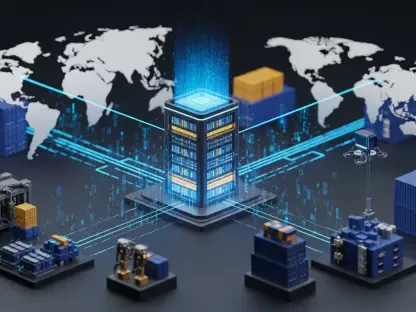
The modern industrial landscape is currently experiencing a profound structural transformation where digital intelligence has transitioned from a specialized tool to the primary infrastructure of global commerce. Today, nearly 95% of industry leaders view Artificial Intelligence as the essential component for future success, with 97% already embedding these technologies into their daily operational workflows. This shift represents a move away from human-centric oversight toward a model where automated systems handle the immense complexity of modern trade. As volatility becomes the standard rather than the exception, the ability to process massive datasets in real-time has become a mandatory requirement for survival in a competitive market.
From Fragility to Agility: The Evolution of Global Sourcing
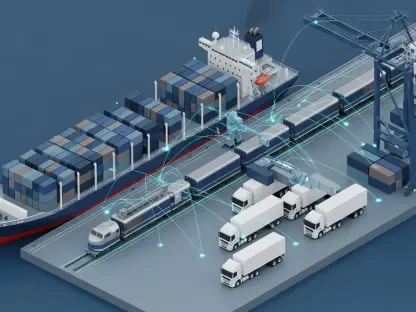
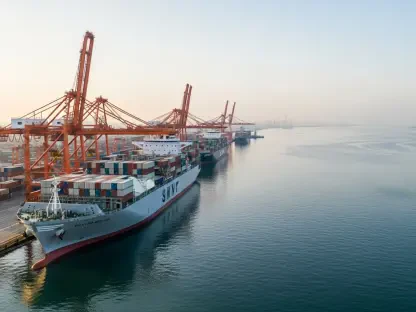
The traditional supply chain architecture, once defined by rigid cost-minimization and “just-in-time” delivery, proved remarkably vulnerable during recent periods of global instability. For decades, organizations prioritized low-cost offshore labor while ignoring the risks of extended, non-transparent logistics networks. This historical reliance on stable geopolitical climates has been replaced by a digital-first strategy that prioritizes resilience and flexibility. By moving away from reactive management and embracing data-driven foresight, firms are building a new foundation that can withstand the sudden shocks of a fragmented world economy.
The Digital Integration: Transforming Daily Operations
Revolutionizing Logistics and Quality Control
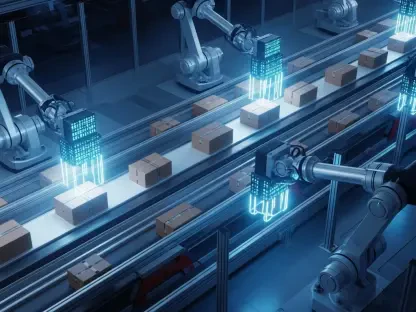
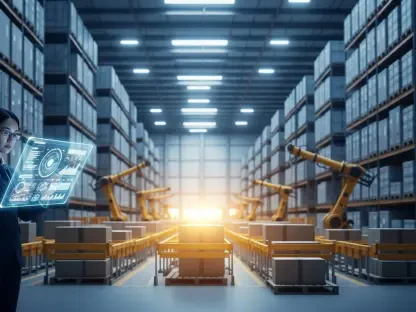
Artificial Intelligence is now the driving force behind a massive efficiency surge in inventory management and quality assurance. Current data indicates an 18-point jump in AI adoption for these core tasks as companies realize that human cognition cannot keep pace with the velocity of modern logistics. Machine learning algorithms now provide predictive insights that allow firms to identify potential defects and stock imbalances before they manifest as costly delays. This level of precision ensures that resources are allocated with maximum efficiency, directly improving the bottom line while reducing waste across the entire production cycle.
Solving the Sourcing and Planning Crisis
Despite these technological advancements, many organizations continue to face a significant crisis in administrative complexity and supplier relations. Over 80% of executives currently find that managing a diverse vendor base has become an unsustainable drain on both time and financial capital. Manufacturing planning remains a persistent bottleneck, often slowed by legacy communication methods and fragmented data silos. AI-driven sourcing platforms are bridging this gap by automating the vetting process and streamlining contract management, effectively removing the “complexity tax” that has long hindered industrial agility.
Navigating Geopolitical Volatility and Sustainability
The intersection of global politics and environmental mandates has fundamentally altered how goods are moved across borders. More than 70% of firms now integrate geopolitical risk assessments into their long-term strategies, while nearly all leaders must adapt to the rising costs of raw materials through smarter sourcing. Furthermore, sustainability has evolved from a corporate social responsibility goal to a core metric for 73% of the industry. AI facilitates this transition by tracking carbon footprints and identifying ethical suppliers, ensuring that environmental accountability is baked into every procurement decision rather than treated as an afterthought.
The Horizon of Manufacturing: Reshoring and Regionalization
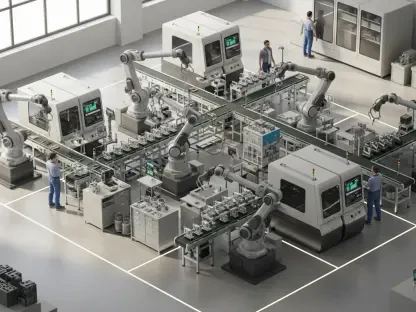
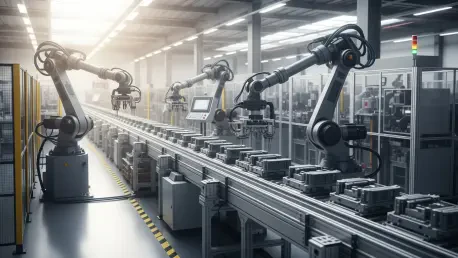
The industry is witnessing a decisive move toward the regionalization of production to minimize the risks associated with long-distance trade. Approximately 81% of manufacturing leaders are now focused on strengthening their domestic footprints, particularly within North America, to ensure shorter lead times and greater control. This trend toward “reshoring” is supported by the development of highly automated regional hubs that leverage AI to maintain cost parity with traditional offshore locations. We are seeing the emergence of a more localized manufacturing model that values proximity to the end consumer over the marginal gains of low-cost labor.
Strategic Imperatives for a New Industrial Era
To remain competitive in this redesigned environment, businesses had to elevate supply chain management to a central strategic pillar. The successful integration of AI into core workflows became a non-negotiable step for those aiming to reduce systemic complexity. Organizations that prioritized diversifying their geographic footprints and adopting streamlined digital sourcing platforms were better positioned to handle market fluctuations. Furthermore, making environmental responsibility a mandatory criterion for supplier selection allowed forward-thinking firms to meet both regulatory demands and consumer expectations for transparency and ethical production.
Conclusion: The New Standard for Global Trade
The transition of AI from an experimental novelty to a foundational industrial requirement established a new paradigm for global trade. Leaders moved toward regionalized production and intelligent automation to solve the deep-seated sourcing crises that once plagued the sector. This evolution was not merely about technology but about creating a resilient, ethical, and localized manufacturing ecosystem. Ultimately, the focus shifted toward building adaptive networks that could thrive amidst uncertainty, ensuring that the industrial foundation remained strong enough to support the next generation of global economic growth.