
The transition of artificial intelligence from a peripheral experimentation tool to the central nervous system of global commerce represents one of the most profound industrial shifts witnessed in recent memory. Logistics providers are no longer viewing automation as a luxury but as a core requirement for survival in a global economy that demands unprecedented speed and absolute transparency. The pressures of the modern era have solidified a new standard where operational friction is synonymous with failure, forcing companies to adopt intelligent systems that can anticipate market volatility rather than merely reacting to it. As the industry marches toward 2034, the focus is shifting toward deep integration where predictive analytics, machine learning, and autonomous decision-making processes work in a seamless loop to satisfy the expectations of the modern consumer. This evolution is happening at a time when precision and productivity are no longer optional for survival in a fast-paced world, making it clear that those who fail to adapt will quickly find themselves obsolete in a hyper-competitive market.
Boosting Operational Throughput: Scaling Efficiency and Safety
The global logistics sector is currently standing on the precipice of a massive valuation shift, as the market for AI in supply chain management is expected to more than double in size. Between 2026 and 2034, this specific technology segment is projected to grow from approximately $37.84 billion to nearly $85 billion, fueled by a collective industrial need for greater precision. This surge in spending reflects a broader realization that human analysts alone can no longer manage the complexities of modern hyper-connected supply chains. Companies are increasingly turning to intelligent algorithms to handle capacity planning and demand forecasting with a level of accuracy that was previously impossible. By integrating these systems into every layer of their logistics framework, businesses are aiming for what is often described as supersonic delivery speeds. This push for efficiency is driving a fundamental rethink of how goods are moved, stored, and delivered across the entire planet, ensuring that the global infrastructure can keep up with the demands of an increasingly digital society.
Predictive Planning: Demand Forecasting and Inventory Management
Advanced machine learning tools are fundamentally altering inventory management by processing massive, chaotic datasets to identify emerging consumer habits and seasonal shifts with high precision. By predicting these trends, companies avoid the heavy financial drain of overstocking while ensuring they have enough inventory to meet peak demand periods without interruption. This level of foresight allows for a more agile response to sudden market fluctuations, which would typically catch traditional systems off guard. Furthermore, the integration of these predictive tools enables firms to negotiate better terms with suppliers by providing highly accurate procurement forecasts months in advance. The result is a leaner, more resilient supply chain that operates with a degree of precision that was previously considered unattainable. By reducing waste and optimizing storage, AI systems directly contribute to the bottom line while also improving the overall reliability of the global shipping network.
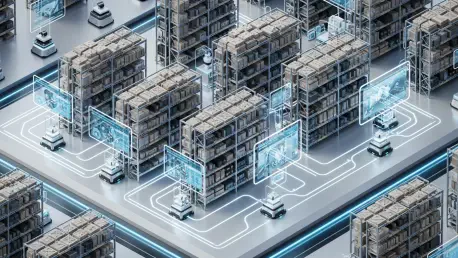
In addition to inventory calculations, AI is playing a vital role in enhancing physical safety and optimizing the internal flow of goods within large-scale warehouse environments. Automated systems analyze floor traffic patterns in real-time to identify high-risk zones where human workers and autonomous robots are likely to cross paths, reducing accidents. By reorganizing the physical layout of storage based on the frequency of item retrieval, these intelligent platforms minimize the manual burden on warehouse staff and increase production levels. This ergonomic optimization not only boosts productivity but also contributes to higher employee retention rates by creating a less strenuous and more predictable working environment. As these systems continue to evolve, they are incorporating more advanced sensors to monitor worker fatigue and health, further cementing the role of technology as a safeguard. Ultimately, these safety improvements lead to a more stable workforce and a significant reduction in liability costs for operators.
Expanding Access: Cloud Integration and Cost Flexibility
Historically, advanced supply chain technology was reserved for large corporations with deep pockets, but the rise of cloud-based AI has effectively leveled the playing field for everyone. This democratization allows small and medium enterprises to access sophisticated analytical tools without the burden of expensive hardware or specialized IT staff. The pay-as-you-use model provides the financial flexibility these smaller companies need to scale their operations as their business grows. Smaller firms can now utilize the same high-level demand forecasting and route optimization algorithms as their multi-billion-dollar competitors, enabling them to provide faster delivery times. This shift is not just about cost reduction; it is about providing the technical agility required to scale operations rapidly in response to growth. By removing the barrier of entry, cloud integration is fostering a more competitive and diverse logistics market where innovation can come from players of any size.
The convergence of 5G connectivity, the Internet of Things, and blockchain has created a continuous stream of real-time data known as a digital utility network. Sensors and GPS monitors now track everything from a package’s precise location to the ambient temperature of containers holding sensitive goods like pharmaceuticals. AI algorithms use this data to map out every phase of the supply chain, ensuring that high-value items are monitored with minute-by-minute accuracy. This level of granular visibility provides shippers with a digital twin of their entire operation, allowing for simulations that can predict outcomes and optimize resources. If a delay occurs, the system can automatically reroute the cargo to a more efficient transit path without requiring human intervention. This synergy between data collection and intelligent processing is particularly transformative for the logistics of perishable items, where timing is critical. As the network expands, it will ensure that even remote parts of the supply chain are fully integrated.
Navigating Barriers: Security Risks and Regional Competition
Despite the optimistic growth projections, the path to universal AI adoption in logistics is fraught with significant hurdles that organizations must navigate with caution. Concerns regarding data security and the high costs of replacing legacy infrastructure remain the primary restraints for many companies looking to modernize. Furthermore, the regional landscape is shifting, as traditional powerhouses in North America face increasing competition from rapidly developing tech hubs in Asia. This geopolitical and technical complexity means that the successful integration of AI is as much about strategic planning and risk management as it is about the technology itself. As firms move toward integrated ecosystems, they must balance the drive for efficiency with the need for robust privacy protections and workforce retraining. Understanding these barriers is essential for any business planning to remain competitive in the global market as we approach the middle of the next decade, where the divide between the leaders and laggards will widen.
Security Hurdles: Multi-Tenancy and Data Privacy
Concerns about data security remain a significant hurdle for many organizations, particularly when it comes to the multi-tenant architecture used by many cloud providers. Many systems involve several customers sharing the same server resources, leading to fears that sensitive corporate data could be accessed by competitors or malicious actors. These anxieties regarding unauthorized access and potential data leaks over the internet act as a restraint, as some companies hesitate to fully commit their proprietary information. Companies are rightfully protective of their trade secrets and customer lists, fearing that a single breach in a shared environment could compromise their competitive advantage. To address these risks, developers are focusing on privacy-enhancing technologies like federated learning, which allow models to learn from data without exposing it. However, the transition to these secure methods is ongoing, and building trust remains a core challenge for the industry.
Another major barrier is the presence of legacy systems that were never designed to interact with modern, data-intensive technologies like deep learning. Many established logistics firms still rely on aging software architectures that are difficult to update and even harder to integrate with real-time AI processing. This technical debt creates a situation where the cost and complexity of a full-scale digital transformation can be prohibitively high for many companies. Integrating AI often requires a fundamental overhaul of existing business processes and the cleaning of decades of disorganized data to ensure accuracy. Without a clean and structured data foundation, even the most advanced AI algorithms will produce inaccurate or misleading results, stalling the implementation process. As a result, the transition to intelligent logistics is often a slow and incremental process rather than a sudden revolution. Companies must carefully weigh the costs of modernization against the risks of being left behind by more agile competitors.
Market Shifts: Regional Powerhouses and Specialized Sectors
North America remains a dominant player in this space, largely because the United States was an early adopter of AI for warehousing and manufacturing functions. The region benefits from a high density of major tech providers and a strong existing infrastructure for the Internet of Things, allowing firms to maintain a lead. Meanwhile, the Asia Pacific region is catching up rapidly, driven by the massive manufacturing capacity of China and the burgeoning tech sector in India. These nations are focusing heavily on modernizing their infrastructure to support the integration of intelligent systems into their shipping and manufacturing hubs. The sheer scale of trade and production in this part of the world makes it a fertile ground for AI-driven logistics solutions to flourish. In terms of industry types, the Fast-Moving Consumer Goods sector is seeing the most rapid adoption of AI-driven logistics due to the precision required for perishable items. These regional and sectoral shifts are creating a more balanced and competitive global market.
Major tech firms and niche specialists are moving away from providing isolated tools and are instead building holistic planning ecosystems to manage the supply chain. These platforms are designed to orchestrate the entire logistics lifecycle, from the first mile to the final delivery, rather than just solving one specific problem. As these integrated solutions become the industry standard, the global supply chain will transform into a more transparent, resilient, and efficient network. One of the most visible changes will be the deployment of specialized AI for autonomous last-mile delivery using drones and ground vehicles. These systems navigate complex urban environments in real-time, reducing delivery times and operational costs for logistics providers. This shift toward integrated planning and autonomous delivery is fundamentally changing how the world interacts with the movement of goods. By 2034, the global logistics network will be defined by its ability to balance economic performance with high levels of social and environmental responsibility.
In the final analysis, the global logistics sector successfully transitioned into an era where artificial intelligence served as the primary driver of operational excellence and resilience. Industry leaders prioritized the standardization of data protocols, which allowed for the seamless exchange of information across international borders and improved response times. Organizations moved beyond simple automation to embrace cognitive logistics, utilizing machine intelligence to augment human decision-making in high-stakes environments. The focus shifted toward building transparency into every layer of the supply chain, ensuring that sustainability and ethical standards were maintained without compromising speed. By establishing robust cybersecurity frameworks and investing in comprehensive workforce retraining, the industry effectively mitigated the risks of rapid digital adoption. These actions created a global trade environment that was not only more efficient but also significantly more prepared for future market shifts. The integration of intelligent systems provided a more stable and predictable foundation for the movement of goods worldwide.