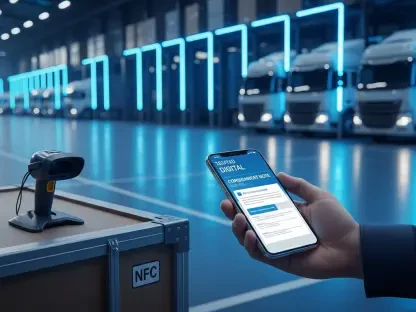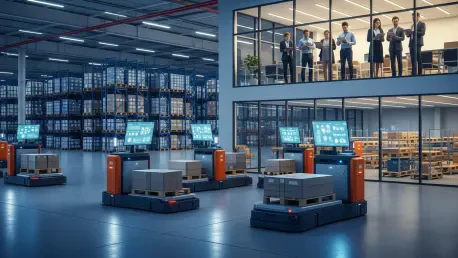

The relentless pressure to deliver goods faster than ever before has forced global supply chains to abandon experimental blueprints in favor of robust, execution-heavy frameworks that yield immediate returns on investment. This shift characterizes the current state of the global supply chain, where the focus has moved decisively toward execution-oriented strategies. Organizations are no longer content with abstract technological concepts; they now demand high-impact operational segments like intelligent transformation and autonomous robotics.
Senior-level leadership plays a critical role in this redefinition of logistics standards by prioritizing outcomes over potential. The current transition serves as a bridge, connecting the experimental pilots of the past with the full-scale production requirements of today. By moving away from hype, the industry is establishing a new landscape where operational reality dictates the pace of innovation.
Driving the Shift Toward Scalable Digital Transformation
Emergent Trends in Intelligent Automation and Robotic Integration
Intelligent automation has evolved into a core operational necessity, driven by the rise of AI-embedded operations that eliminate the cycle of pilot purgatory. Consumer behavior now favors extreme precision and speed, which in turn necessitates the integration of autonomous systems capable of handling complex logistics without constant human intervention. This demand has transformed robotics from a luxury into a standard requirement for competitive warehouse management.
The emergence of the partnership in execution model has set a new standard for technology implementation. Rather than viewing software and hardware as isolated purchases, companies are entering into collaborative agreements with technology providers to ensure seamless integration. This model emphasizes shared accountability and ensures that new tools are optimized for the specific operational challenges of the end user.
Measuring Success Through Performance Metrics and Growth Projections
Market data forecasts a significant economic impact from the widespread adoption of robotics and AI through the end of the current cycle. Key performance indicators are shifting to distinguish successful end-user transformations from mere theoretical models. Metrics such as throughput efficiency, error reduction rates, and system uptime are now the primary tools for evaluating the success of digital initiatives.
Growth projections for the supply chain technology sector remain strong, supported by high levels of investment and rapid adoption rates. Organizations that demonstrate the ability to scale their digital infrastructure are seeing the highest returns. These transformations are not just improving internal processes but are also reshaping the competitive landscape of the entire industry.
Overcoming the Implementation Gap in Advanced Logistics
Addressing the implementation gap requires a focus on both technical and cultural obstacles that often prevent companies from scaling innovation. Strategies for navigating the complexities of cross-organizational collaboration have become essential for success. Organizations must foster a culture of shared accountability to ensure that digital tools are used to their full potential across all departments.
Solutions for upskilling the workforce are being prioritized to meet the demands of a high-tech, practitioner-driven environment. Employees must be trained to work alongside autonomous systems and manage data-driven workflows. By bridging the gap between solution providers and end users, companies ensure that technology delivers a tangible return on investment rather than becoming a sunken cost.
Navigating the Regulatory and Standards Environment for Smart Technologies
Emerging laws and global standards are beginning to exert a significant influence on autonomous warehouse operations. Data security and ethical AI compliance have become central themes in modern procurement and logistics practices. Companies must adhere to industry-wide benchmarks and transparency requirements to maintain their market position and ensure long-term viability.
Regulatory pressure is also driving the adoption of sustainable and accountable supply chain partnerships. As governments introduce stricter requirements for corporate responsibility, organizations are looking for tools that provide greater visibility into their operations. These standards are not just hurdles but are becoming the foundation for trust in the global market.
The Road Ahead: Redefining Global Supply Chain Resilience
Anticipating future market disruptors involves understanding the long-term role of generative AI in logistics planning. This technology is expected to move beyond data analysis to provide more sophisticated, predictive insights that can help organizations navigate economic shifts. Peer-to-peer learning and the transparency of case studies will play an increasingly important role in shaping future innovation cycles.
Global economic conditions continue to influence capital investment in supply chain technology, yet the demand for resilience ensures that innovation remains a priority. Emerging niches in intelligent transformation are likely to provide the next wave of growth for the industry. By identifying these opportunities early, organizations can secure their place in the future of global commerce.
Synthesizing Practical Insights for Sustained Operational Excellence
The core shift from industry hype to proven, results-driven applications provided a definitive path for organizations seeking sustained operational excellence. Senior leaders who fostered innovation through partnership and tangible execution successfully navigated the transition to a digital-first environment. These organizations recognized that investing in scalable digital infrastructure was the only way to remain competitive in a rapidly changing world.
The 2026 milestone acted as a critical turning point for the future of global commerce, setting the stage for more integrated and efficient operations. Companies that adopted these practical insights moved beyond the limitations of legacy systems and embraced the potential of advanced technology. This period of transformation proved that the successful scaling of digital tools was the most effective way to build a resilient and accountable supply chain.