
The historical reliance on static spreadsheets and manual intervention in global supply chain management has finally reached a breaking point, giving way to a sophisticated landscape where algorithms dictate the flow of goods with surgical precision. This transition marks the end of an era defined by reactive logistics and the beginning of a period where predictive intelligence serves as the primary driver of commercial viability. As the global economy becomes increasingly interconnected, the ability to manage complexity through automated systems has shifted from a competitive advantage to a baseline requirement for survival. Companies are no longer asking if they should integrate artificial intelligence, but rather how quickly they can deploy it to mitigate the inherent volatility of international trade routes.
Modern supply chain frameworks are undergoing a radical metamorphosis, moving away from legacy operational models that prioritized historical data toward dynamic ecosystems that thrive on real-time information. In the past, logistics was often viewed as a back-office cost center, a necessary but cumbersome part of the business that focused on moving items from point A to point B. However, the rise of omnichannel fulfillment and the expectation of near-instant delivery have forced a total redesign of these systems. The current model emphasizes a holistic view of the entire value chain, where every movement of cargo is tracked, analyzed, and optimized by specialized software that never sleeps. This structural shift is underpinned by the necessity of just-in-time delivery, which requires a level of coordination that far exceeds human cognitive capacity.
The Evolution of Global Logistics into an Autonomous and Data-Centric Ecosystem
The transition toward autonomous logistics represents a fundamental change in how the industry perceives time and resource management. Legacy models typically operated on weekly or monthly cycles, relying on periodic reviews to adjust inventory levels or shipping schedules. In contrast, the data-centric framework of today operates in milliseconds, processing vast streams of information from across the globe to make continuous micro-adjustments. This evolution is particularly visible in strategic planning, where the integration of advanced analytics allows firms to simulate thousands of potential disruptions—from geopolitical shifts to sudden weather patterns—ensuring that the supply chain remains resilient regardless of external shocks.
At the center of this transformation is a diverse array of segments ranging from smart warehousing to back-office hyperautomation. Smart warehousing has moved beyond basic shelf management to include fully integrated environments where robotic systems coordinate with one another to maximize floor space and picking speed. Meanwhile, autonomous transport is beginning to reshape the middle and last miles of delivery, utilizing self-driving technology to reduce the human error and fatigue that have historically plagued long-haul logistics. Even the mundane administrative tasks of the back office, such as invoicing and customs documentation, are being revolutionized through hyperautomation, which eliminates the bottlenecks caused by manual data entry and document reconciliation.
The market landscape is currently dominated by a mix of specialized vendors and established technology giants, each contributing different layers of the modern logistics stack. Companies like GreyOrange have become leaders in the hardware-centric side of warehouse automation, developing sophisticated robotics that can adapt to changing warehouse configurations. On the software side, Blue Yonder has set the standard for AI-driven supply chain planning, offering tools that synchronize demand and supply with unprecedented accuracy. These specialized firms operate alongside behemoths like Amazon and SAP, who provide the vast infrastructure and enterprise resource planning systems that allow smaller modules to communicate within a unified network. This synergy creates a robust environment where niche innovation and massive scale can coexist to solve the most pressing challenges of the industry.
The technological foundations supporting this ecosystem are built upon the convergence of machine learning, computer vision, and natural language processing. Machine learning serves as the predictive engine, identifying patterns in historical shipping data to forecast future bottlenecks before they manifest. Computer vision has become the eyes of the warehouse, allowing automated systems to inspect goods for damage or verify the accuracy of a packed pallet with far greater precision than a human observer. Natural language processing bridges the gap between structured logistics data and the unstructured reality of global communication, enabling systems to read and understand complex trade documents, emails, and carrier updates automatically. Together, these technologies form a cohesive intelligence layer that empowers the supply chain to function with a degree of autonomy that was previously the stuff of science fiction.
Analyzing the Shift Toward Proactive Intelligence and Market Expansion
The logistics industry has officially moved past the stage of reactive management, where leaders simply responded to crises as they occurred. The current trend focuses on proactive intelligence, a philosophy that prioritizes the identification and resolution of problems before they impact the bottom line. This shift is largely driven by advanced demand forecasting, which has moved far beyond the limitations of older statistical models. By synthesizing internal sales data with external variables like market sentiment and localized economic indicators, logistics systems can now position inventory exactly where it will be needed, often before the customer has even placed an order. This anticipatory approach reduces waste and ensures that capital is not tied up in stagnant stock.
Dynamic Trends Redefining Fulfillment and Operational Efficiency
One of the most significant developments in operational efficiency is the rise of agentic AI and the refinement of human-in-the-loop warehouse management systems. Agentic AI refers to systems that are not just programmed to follow a set of rules but are designed to achieve specific goals by making their own decisions. In a warehouse setting, an agentic system might autonomously reroute a fleet of robots to handle a sudden surge in orders or reallocate pickers to high-priority zones without waiting for a human manager to intervene. However, the human element remains crucial; modern systems are designed to provide managers with a high-level overview, allowing them to step in only when complex ethical or strategic judgments are required, thus blending mechanical speed with human intuition.
Consumer behaviors have also undergone a rapid evolution, demanding a level of transparency and speed that traditional logistics could never provide. The modern customer expects to see the exact location of their package in real-time and demands delivery windows that are measured in hours rather than days. This demand for instant gratification has forced logistics providers to rethink their urban fulfillment strategies, often utilizing micro-fulfillment centers located in the heart of metropolitan areas. These centers use AI to manage highly localized inventory, ensuring that popular items are always within a few miles of the end-user. This change in consumer psychology has turned logistics from a background function into a central component of the brand experience.
Opportunities for specialized fulfillment are expanding into high-priority sectors, such as medical logistics and emergency response. Drones are increasingly being utilized to deliver critical items like blood samples, vaccines, and transplant organs, bypassing the congestion of traditional road networks. These autonomous aerial vehicles are controlled by AI systems that can calculate the safest and fastest flight paths while accounting for changing weather conditions and airspace regulations. This use case demonstrates how AI is not just about improving profit margins but also about enhancing the capability of society to respond to urgent needs in real-time. As the technology matures, these specialized delivery methods are expected to become a standard part of the logistics toolkit for high-value and time-sensitive goods.
Projected Growth and the Shifting Economic Landscape of Logistics Tech
The economic impact of AI integration is reflected in market data that shows a significant reduction in operational waste. One of the most telling performance indicators is the decrease in deadhead miles, which refers to the distance a truck travels without a load. By using machine learning to coordinate shipments across different carriers and shippers, the industry has managed to optimize backhaul routes, ensuring that vehicles are rarely empty. This not only saves money for the carriers but also significantly reduces the overall carbon footprint of the transport sector. Additionally, the move toward leaner inventory management has allowed companies to reduce their storage costs by up to twenty percent, freeing up liquidity for further technological investment.
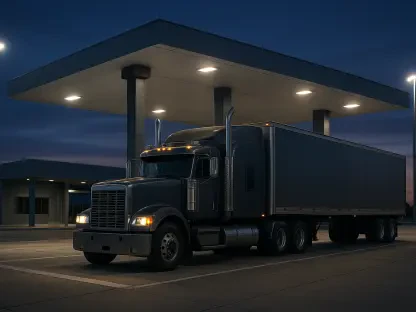
Growth projections for the autonomous freight sector are particularly aggressive, with significant market expansion expected from 2026 to 2030. The light truck market is predicted to see a surge in autonomous and semi-autonomous models, as manufacturers overcome the technical hurdles associated with urban navigation. This growth is driven by the realization that autonomous systems can operate longer and safer than human drivers, who are subject to fatigue and strict hours-of-service regulations. As road infrastructure becomes more connected, allowing vehicles to communicate with traffic signals and other cars, the efficiency of autonomous freight will only increase. This period is expected to be a turning point where the sight of a self-driving delivery vehicle becomes a common occurrence on suburban streets.
Quantifying the return on investment for these technologies often focuses on predictive maintenance and dynamic pricing models. Predictive maintenance uses sensors to monitor the health of a vehicle or warehouse machine, predicting a failure before it happens and allowing for repairs during scheduled downtime. This prevents the catastrophic costs associated with an unexpected breakdown in the middle of a peak shipping season. Similarly, dynamic pricing models allow logistics providers to adjust their rates in real-time based on capacity, demand, and fuel costs. This ensures that every shipment is priced optimally for both the provider and the customer, maximizing margins while maintaining competitiveness in a crowded market.
Navigating Technical Hurdles and Social Responsibilities in Automation
Despite the clear benefits, the implementation of AI in the supply chain is fraught with technical hurdles that require careful navigation. One of the primary obstacles is the persistence of data silos, where information is trapped within different departments or legacy software systems that cannot communicate with one another. When data is fragmented, the AI cannot gain a holistic understanding of the supply chain, leading to flawed predictions and inefficient decision-making. Overcoming this requires a fundamental restructuring of digital infrastructure, moving toward unified data lakes where information from every part of the organization is accessible and standardized. This process is often expensive and time-consuming, but it is necessary for a truly intelligent system.
The limitations of legacy forecasting models, such as ARIMA, have also become more apparent in an era of high volatility. These older models rely heavily on historical trends and struggle to account for the sudden, unpredictable shifts that have become the new normal. The result is often the bullwhip effect, where small fluctuations in consumer demand lead to massive, inefficient swings in production and inventory levels as they move up the supply chain. By replacing these static models with real-time supply coordination powered by AI, companies can dampen these fluctuations. This creates a more stable flow of goods, where each participant in the chain has a clear and accurate picture of what is actually happening at the retail level.
The socio-economic challenge of job displacement remains a significant point of concern for policymakers and industry leaders alike. As more warehouse and transport tasks become automated, the demand for traditional manual labor is decreasing, creating an imperative for massive workforce retraining programs. The goal is to move workers from roles that are physically taxing or repetitive to positions that focus on managing and maintaining the new automated systems. This transition is not just a social responsibility but a practical necessity, as the supply chain of the future will require a workforce that is proficient in data literacy and technical troubleshooting. Organizations that prioritize the human element of this transition are likely to see higher morale and more successful long-term adoption of new technologies.
Mitigating algorithmic bias is another critical responsibility that comes with the adoption of automated decision-making. If an AI system is trained on historical data that reflects past prejudices—such as biased pricing in certain regions or unfair risk assessments of specific suppliers—it will simply replicate and scale those errors. This can lead to unfair treatment of smaller vendors or inaccuracies in how risk is calculated across the global network. To prevent this, companies must implement rigorous ethical auditing processes, ensuring that their models are transparent and that the data used to train them is diverse and representative. Ensuring fairness in these algorithms is essential for building a supply chain that is not only efficient but also ethically grounded and trusted by all stakeholders.
Standardizing AI: Compliance, Security, and Governance in the Supply Chain
As logistics networks become more connected, they also become more vulnerable to cyber threats and regulatory scrutiny. The impact of global data privacy laws, such as the GDPR in Europe and similar frameworks in other regions, has a profound effect on how logistics data is handled. Companies must ensure that the personal information of customers, as well as sensitive trade data, is collected and stored in a way that is compliant with these evolving regulations. This requires a sophisticated approach to data governance, where every piece of information is tagged and tracked throughout its lifecycle. Failure to maintain compliance can result in massive fines and a loss of trust that can be devastating in the logistics industry.
Implementing robust security measures is no longer just about physical locks on warehouse doors; it is about protecting the digital integrity of the entire supply chain. A breach in a logistics network can lead to the theft of sensitive cargo data, the hijacking of autonomous vehicles, or the total shutdown of a global shipping operation. To mitigate these risks, organizations are adopting zero-trust security frameworks, where every user and device must be continuously verified before they are granted access to the network. Furthermore, the use of blockchain technology is being explored as a way to create an immutable record of every transaction and movement, making it much harder for malicious actors to tamper with shipment records or introduce counterfeit goods into the system.
The role of ethical auditing in AI-driven decision-making processes has become central to corporate governance. Stakeholders are increasingly demanding to know how algorithms make the decisions that affect their livelihoods, from pricing to the allocation of shipping capacity. This has led to the rise of explainable AI, which allows humans to understand the reasoning behind a machine’s output. By conducting regular audits, companies can ensure that their AI systems are not only working correctly but also adhering to the company’s core values and ethical standards. This transparency is vital for maintaining the social license to operate in an era where the public is increasingly skeptical of automated systems.
Compliance with environmental regulations is another area where AI is playing an essential role, helping companies balance the energy costs of computation with the fuel efficiency gains of optimized routing. While the training of massive neural networks requires significant electricity, the long-term benefit of reducing millions of miles of unnecessary truck travel can result in a net reduction in carbon emissions. AI systems can now monitor the fuel consumption and emissions of an entire fleet in real-time, providing managers with the data they need to make greener choices. This focus on sustainability is not just about following the law; it is also about meeting the expectations of a growing number of eco-conscious consumers who want to know the environmental cost of the products they buy.
Anticipating the Next Frontier: Agentic Systems and Green Logistics
The next stage of evolution in the supply chain involves a move toward fully autonomous, self-correcting logistics agents that can mitigate risk in real-time without any human intervention. These systems go beyond simple automation by possessing a degree of situational awareness that allows them to react to unexpected events, such as a sudden port closure or a supplier failure. For example, if an AI agent detects a delay in a critical component, it could autonomously search for an alternative supplier, negotiate a price, and reroute the transport to ensure that production remains on schedule. This level of self-governance will fundamentally change the role of supply chain managers, shifting their focus from daily firefighting to long-term strategic growth.
Sustainability has become a primary driver of innovation, with AI playing a central role in the shift toward green logistics. Eco-conscious routing algorithms are now being used to select the path that produces the least amount of carbon, rather than just the one that is the fastest or cheapest. This often involves a multi-modal approach, where an AI system decides when to use rail, sea, or road transport based on the current environmental impact of each option. Furthermore, AI is being used to optimize the loading of containers and trucks, ensuring that every square inch of space is used effectively and reducing the total number of trips required. This commitment to carbon footprint reduction is becoming a key differentiator in the marketplace, as companies strive to meet ambitious net-zero targets.
The democratization of AI is another powerful trend, as subscription-based tools and no-code platforms empower small and medium-sized enterprises to compete with global giants. In the past, the high cost of custom AI development meant that only the largest companies could afford to optimize their supply chains. However, the rise of software-as-a-service models has made advanced logistics tools accessible to businesses of all sizes. A small boutique retailer can now use the same sophisticated demand forecasting and route optimization tools as a multi-billion-dollar corporation, leveling the playing field and fostering a more competitive and diverse market. This democratization is essential for the health of the global economy, as it ensures that innovation is not restricted to a handful of massive firms.
Potential disruptors are also emerging in the form of IoT-enabled road infrastructure and smart port systems that communicate directly with the logistics network. Imagine a world where a shipping container can talk to the crane that will lift it, or a truck that can reserve its own parking space in a crowded urban center. These smart systems will provide a level of granular detail that was previously unimaginable, allowing for the perfect synchronization of every moving part in the chain. As ports and highways become more intelligent, the friction that currently exists at the transition points of the supply chain will begin to disappear. This integrated infrastructure will be the backbone of the next generation of global trade, enabling a seamless flow of goods that is faster, safer, and more efficient than ever before.
Final Assessment: Turning AI Potential into Scalable Competitive Advantage
The transition of artificial intelligence from an experimental novelty to a foundational requirement for industrial operations proved to be the defining characteristic of this period. Leading organizations recognized that the era of manual logistics was over and that future success depended entirely on their ability to harness the power of data. Those who successfully integrated AI into their core operations achieved a level of resilience that allowed them to navigate the complexities of global trade with confidence. The shift in thinking moved from viewing technology as a series of isolated tools to seeing it as a unified intelligence layer that permeated every aspect of the business. This paradigm shift was the catalyst for a more responsive and efficient global economy.
Strategic investment recommendations during this phase prioritized visibility, resilience, and lean asset management. Companies that focused on creating a transparent supply chain, where every stakeholder had access to a single source of truth, were able to build stronger partnerships and respond more effectively to disruptions. Resilience was built not through the hoarding of inventory, but through the development of flexible systems that could adapt to change in real-time. Lean asset management, supported by predictive analytics, allowed firms to maximize the utility of their physical equipment, reducing costs while increasing service levels. These priorities provided a roadmap for sustainable growth and a framework for managing the uncertainties of the modern world.
The long-term outlook for the global supply chain was shaped by a commitment to a more responsive and ethically grounded approach to automation. As the industry moved toward a future where autonomous agents and green logistics were the norm, the focus remained on balancing efficiency with social and environmental responsibility. The success of the sector depended on its ability to retrain its workforce and ensure that the benefits of AI were shared across the entire value chain. By moving toward a model of collaborative intelligence, where machines and humans worked together to solve complex problems, the industry created a more stable and prosperous environment for all. This transformation was not just about the adoption of new software; it was about the creation of a smarter, more sustainable, and more equitable global network.
Ultimately, the mastery of AI integration became the primary differentiator between the leaders and the laggards in the global marketplace. The organizations that were able to turn the potential of these technologies into a scalable competitive advantage found themselves at the forefront of the new economy. They moved beyond simple automation to create truly intelligent systems that could learn, adapt, and grow in complexity over time. This journey required a significant commitment of resources and a willingness to embrace change, but the rewards were a level of operational excellence and market dominance that was previously thought to be impossible. The supply chain of the future was not something that simply happened; it was something that was built through vision, innovation, and a relentless focus on the power of data.